What are the most visited US national parks to visit?
The National Park Service tracks hundreds of millions of visits every year, and the same seven parks sit at the top of that list almost without exception. Those seven are Great Smoky Mountains, Grand Canyon, Zion, Yellowstone, Rocky Mountain, Yosemite, and Acadia.
They are the most visited US national parks because they deliver landscapes that are genuinely difficult to find anywhere else on earth.
Which US national park should you visit first?
That depends on where you are traveling from and what kind of landscape moves you. Travelers coming from the eastern United States or Canada will find Great Smoky Mountains the most accessible starting point.
Those flying into Las Vegas or Los Angeles are better placed to begin with Zion or Yosemite. First-time visitors from Germany and other parts of Europe tend to anchor their American national park trip around the Grand Canyon, and that instinct is rarely wrong.
Do US national parks require reservations?
Several of them now do, at least during peak season. Yosemite, Zion, Rocky Mountain, and Acadia have all introduced timed entry systems or permit requirements for specific trails and viewpoints.
Checking the National Park Service website before you travel is no longer optional. It is the difference between walking into one of the most spectacular places on earth and being turned away at the gate.
Every year, tens of millions of people from across the United States, Canada, Germany, and beyond pack their bags and head to the most visited US national parks.
This guide breaks down what makes each park worth the trip, when to go, what to prioritize, and how to avoid the mistakes that turn a dream visit into a frustrating one.
Great Smoky Mountains National Park
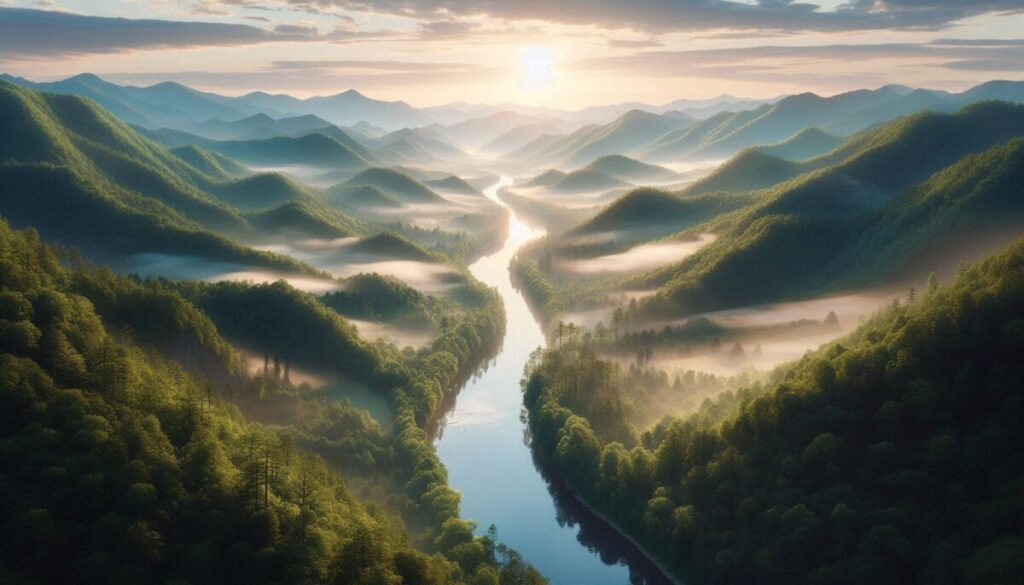
Great Smoky Mountains is the single most visited US national park, and it has held that position for years. Straddling the border of Tennessee and North Carolina, it pulls in over 12 million visitors annually, a number that surpasses the Grand Canyon and Yellowstone combined.
The fact that it charges no entrance fee plays a major role in that figure, but the landscape does the real work.
The Smokies are ancient mountains, among the oldest on earth, and they carry that age in the way mist settles into the valleys and old-growth forest closes around the trails. Waterfalls appear with almost no warning.
In spring, wildflowers cover the slopes in waves of color that move up the mountain as temperatures rise. In October, the ridgelines burn in amber and crimson in a way that draws leaf-peepers from across the eastern United States and beyond.
For travelers flying into Atlanta, Charlotte, or Knoxville, this is often the most accessible major national park on the entire list. Canadian visitors making an Eastern Seaboard road trip can weave it into an itinerary alongside the Blue Ridge Parkway without any significant detour.
The sweet spot for visiting is midweek in late April or midweek in October, arriving at key viewpoints like Clingmans Dome well before sunrise to beat both the crowd and the haze.
Grand Canyon National Park
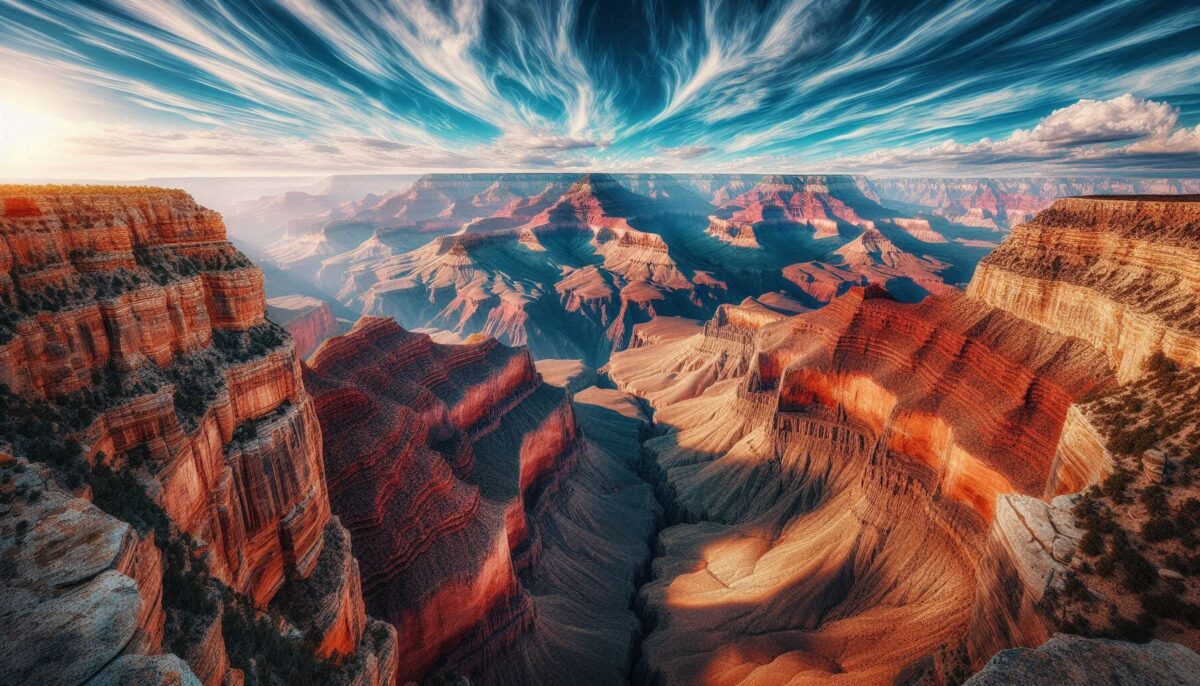
No photograph prepares a person for the Grand Canyon. It is a documented phenomenon that park rangers acknowledge openly.
The depth, the width, the layered color of the rock walls running back 277 miles, it simply exceeds what the human brain expects from visual media. The first view from the South Rim reliably stops people in their tracks regardless of how many pictures they have seen beforehand.
The South Rim is the practical choice for most visitors.
It operates year-round, runs a reliable shuttle system between viewpoints, and offers trail access ranging from easy rim walks to serious backcountry descents. The North Rim is quieter and more dramatic in certain respects but closes through winter.
The most critical thing any visitor to the Grand Canyon needs to understand is the heat inversion. Unlike most terrain, the canyon gets significantly hotter as you descend, not cooler. The trail down feels easy, which leads many visitors to go farther than is safe. The return climb in midday summer heat with insufficient water is where rescue operations happen. Hikers going below the rim should start before dawn, carry far more water than seems necessary, and plan their turnaround point around time elapsed rather than distance covered.
German travelers have a particular relationship with the Grand Canyon. It occupies a space in European travel culture almost like a mythological destination, something discussed for years before the visit actually happens. The reality, by nearly universal account, exceeds whatever expectation had been built up.
Zion National Park
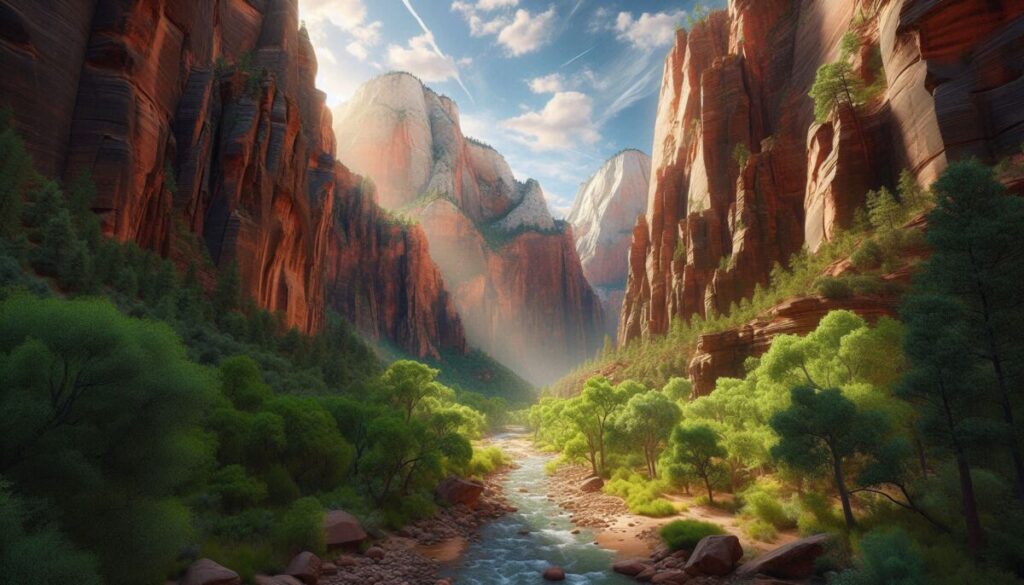
Zion consistently surprises first-time visitors. The expectation, reasonably enough, is desert.
What the park actually delivers is a narrow canyon with a river running through it, sheer walls of red and orange Navajo sandstone climbing hundreds of feet above the canyon floor, and a riverine environment that makes the whole setting feel unexpectedly alive.
The Virgin River carved this canyon over millions of years and continues to sustain the greenery that gives Zion its distinctive character among the desert parks of the American Southwest.
The main canyon operates on a mandatory shuttle system during peak months, which solves the parking problem but requires visitors to think about timing differently.
The first shuttle of the day is consistently the best option. Boarding early means reaching the upper canyon in cooler morning hours and working back down at a relaxed pace as the day warms.
Winter is Zion’s best kept secret. Between January and February, visitor numbers drop sharply, trails that are packed shoulder to shoulder in summer become genuinely peaceful, and the canyon walls develop a frost that catches the light in entirely different ways.
Temperatures are manageable with proper layering, and the sense of having one of the most beautiful places in the United States largely to oneself is something that summer visitors rarely experience.
Zion also connects naturally to the broader Southwest circuit.
Bryce Canyon sits to the northeast. Capitol Reef is within reach. The North Rim of the Grand Canyon becomes accessible with a longer drive south. For international visitors planning a dedicated American Southwest road trip, Zion is the natural anchor point.
Yellowstone National Park
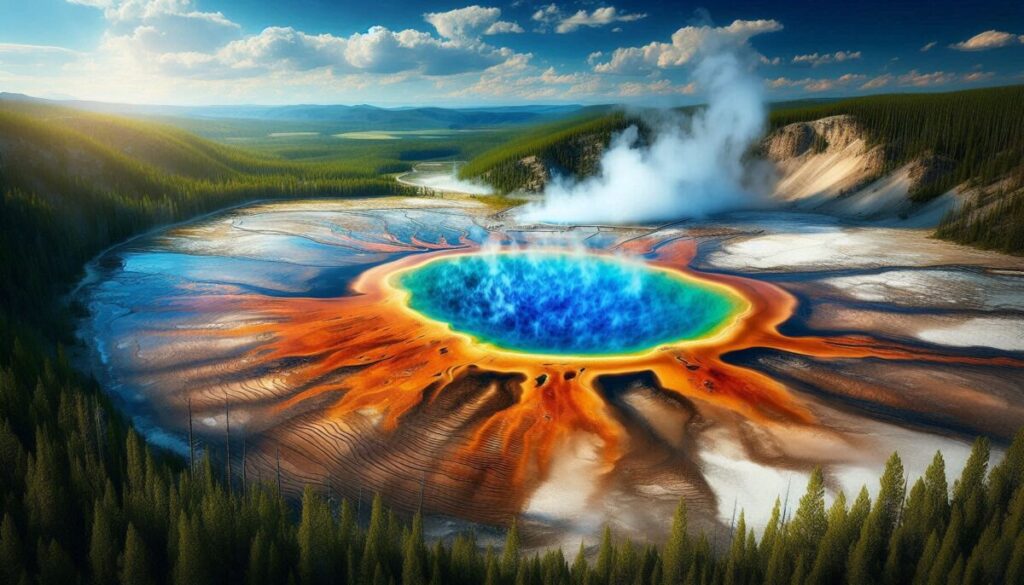
Yellowstone sits on top of one of the largest active volcanic systems on the planet, and that geological reality shapes everything a visitor encounters.
The ground steams. Pools of superheated water bubble in colors that seem impossible until you learn they are produced by heat-tolerant microbes living in water hot enough to cause severe burns.
Geysers erupt on schedules that rangers have tracked for generations. The whole place operates according to forces that have nothing to do with human convenience, which is a large part of what makes it so compelling.
Old Faithful is the landmark most visitors come to see, and it delivers reliably. But the boardwalk trails extending through the Upper Geyser Basin and around the Grand Prismatic Spring are where the real depth of the experience lies.
Grand Prismatic, viewed from the elevated overlook trail rather than the low boardwalk, reveals the full ring structure of its colors, deep blue at the center grading out through green and yellow to the orange and red of the microbial mats at the edges.
Lamar Valley in the park’s northeastern corner is where wildlife viewing reaches its peak. Bison herds cross the road in numbers that stop traffic for extended periods. Bears appear along river corridors in spring.
The gray wolf, reintroduced to Yellowstone in 1995, has established several packs in the valley, and sightings happen regularly for visitors who arrive before dawn with binoculars and the patience to stay and watch.
For travelers deciding when to go, the Yellowstone national park guide on Tadexprof covers the best month to visit in detail, with seasonal breakdowns that help visitors plan around specific wildlife activity and weather patterns.
Rocky Mountain National Park
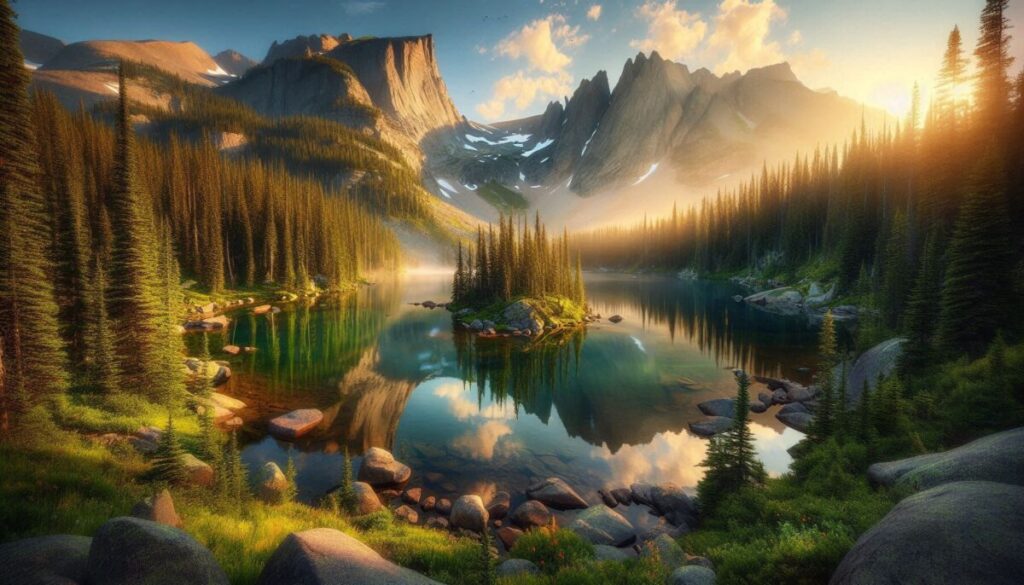
Rocky Mountain National Park sits close enough to Denver to make a weekend trip realistic, which is both its great advantage and the source of its summer crowding problem.
The park protects a stretch of the Colorado Rockies that includes over 60 peaks above 12,000 feet, and Trail Ridge Road, the main scenic drive, crosses the Continental Divide and climbs into open alpine tundra at an elevation that noticeably affects visitors who have flown in recently.
Altitude sickness is a real concern here, and anyone arriving from lower elevations should pace themselves on the first day.
Emerald Lake is among the most photographed locations in the park. The trail is short but at elevation, and the payoff is a mountain lake that reflects the surrounding peaks in near-perfect stillness during the early morning hours before wind picks up. By mid-morning the trail is busy. Before sunrise it belongs to whoever made the effort to get there.
Autumn transforms the park in ways that rival anything the summer season offers.
Elk move through Moraine Park in large numbers during the September rut, and the sound of bulls bugling across the valley at dusk is an experience that stays with visitors long after the trip ends.
The aspen groves turn gold in late September and early October, adding a layer that draws photographers from across the country.
For Canadian visitors who travel regularly in Banff and Jasper, Rocky Mountain National Park will feel like recognizable terrain with an American character. The scale is similar. The wildlife is largely the same. The infrastructure and visitor culture are distinctly different.
Yosemite National Park
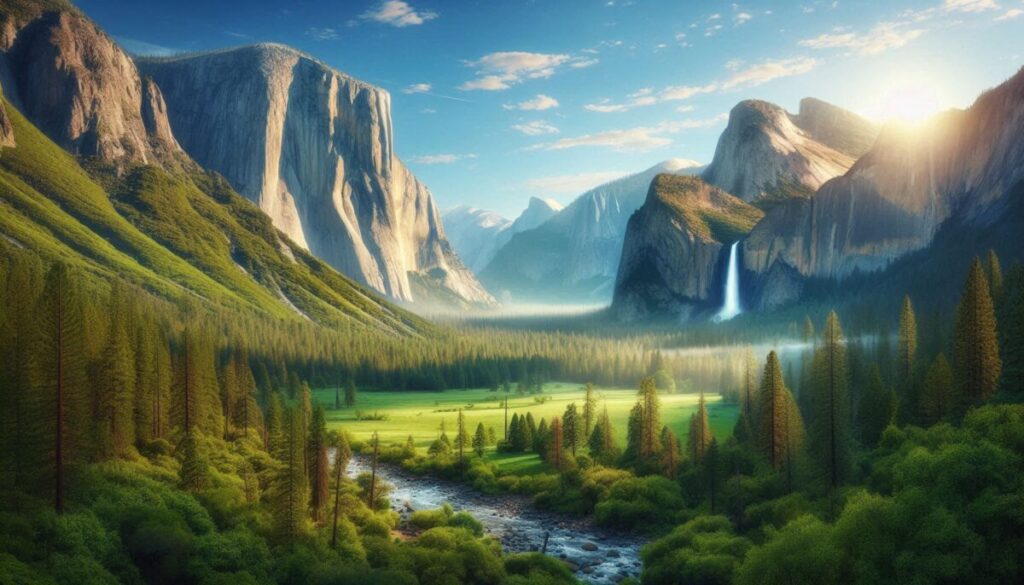
Yosemite Valley is, by most accounts, one of the most visually concentrated landscapes on earth. El Capitan rises nearly 3,000 feet from the valley floor as a single unbroken granite face. Half Dome anchors the far end of the valley.
Yosemite Falls drops in three stages down the northern wall. In spring when snowmelt feeds every waterfall at full volume, the whole place operates at a level of visual intensity that is difficult to process all at once.
The challenge Yosemite presents is volume. The valley is physically small relative to the fame it carries, and everything concentrates accordingly. Roads back up. Parking fills before 9 a.m. on summer weekends. The experience for an unprepared visitor can be genuinely frustrating in a setting that should produce nothing but wonder.
The solution requires commitment. Visit on weekdays. Arrive before sunrise. Park in one spot and use the free valley shuttle for the rest of the day.
May is an excellent month, when waterfalls run at full power from snowmelt and summer crowds have not yet arrived. October offers golden light, comfortable temperatures, and noticeably thinner crowds.
Some years the park implements timed entry reservations during peak hours, and checking the NPS website in advance saves a great deal of frustration at the entrance gate.
Tioga Road, the high mountain route through the park’s northern backcountry, opens in summer and provides access to Tuolumne Meadows, a vast high-elevation meadow surrounded by granite domes that represents a completely different experience from the famous valley below. Most Yosemite visitors never reach it, which means it offers something rare in this park: genuine quiet.
Travelers planning to visit multiple parks should read the complete US national parks list on Tadexprof, which covers all 63 parks and helps with building a longer itinerary around the ones that fit a particular travel style.
Acadia National Park
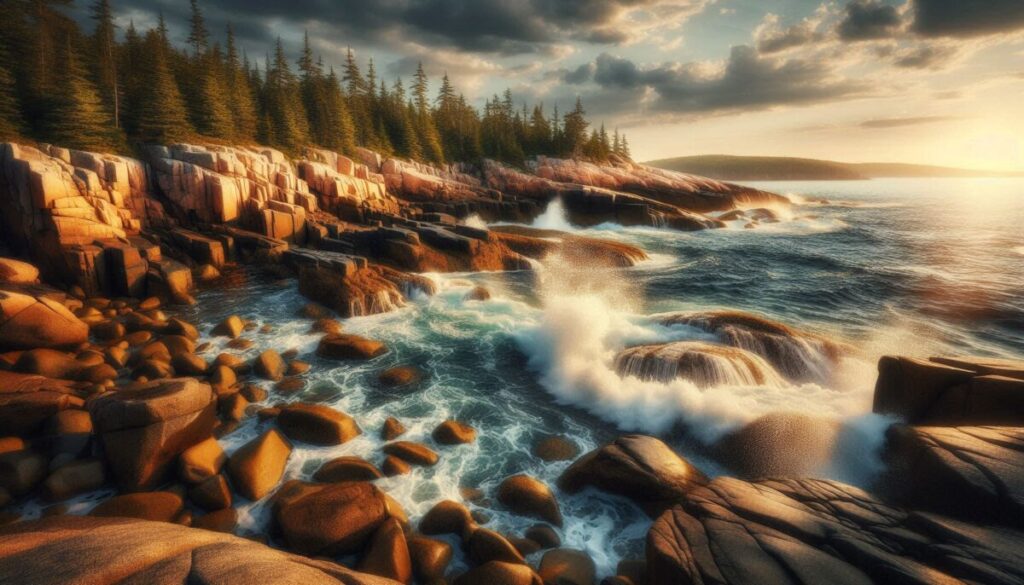
Acadia occupies a category of its own among the most visited US national parks simply because it is coastal, northeastern, and unlike anything else on this list.
The park sits on Mount Desert Island off the coast of Maine, and its landscape combines ocean, rocky shoreline, dense spruce and fir forest, and smooth granite summits that rise directly from the sea.
European visitors, particularly those from northern Germany and Scandinavia, frequently remark that Acadia feels more familiar than foreign, closer in character to the coasts of Norway or the German Baltic shore than to anything in the American interior.
Cadillac Mountain, the highest peak on the eastern seaboard, is one of the first places in the continental United States to receive direct sunlight at sunrise during certain months of the year.
The park now requires advance reservations for sunrise access on Cadillac, and those reservations fill weeks ahead. The view from the summit at first light, with the Atlantic spreading out below and the scatter of islands catching the early color, justifies every bit of planning it takes to get there.
The Carriage Roads are among the most thoughtfully designed recreational features in the entire national park system.
Forty-five miles of gravel paths, built by John D. Rockefeller Jr. in the early twentieth century and permanently closed to motor vehicles, wind through the forest past hand-built stone bridges and along ridgelines with open views to the ocean.
Cycling them on a quiet morning delivers the kind of experience that does not require superlatives to describe.
Fall is Acadia’s peak season and its most spectacular one.
Visitors coming from Canada or from Germany specifically to experience New England autumn color will find that Acadia, combined with a drive along the Maine coast through the surrounding villages, delivers the full version of what that season looks like in the American Northeast.
The most visited US national parks are popular because they are genuinely extraordinary. The crowds are real but manageable with the right approach.
Going early, traveling midweek, targeting shoulder seasons, and giving each park more than a single rushed day separate visitors who leave feeling transformed from those who leave feeling like they spent a lot of money sitting in traffic near beautiful scenery.
These parks reward patience and preparation in equal measure, and they have been doing so for over a century.
Most visited National Parks: Resources
- The 5 Best US National Parks Of 2025 That Had The Most Visitors – Explore
- 7 Most Visited National Parks In The US: Top Guide 2026 – BR
- The World’s Best National Parks to Visit in 2026 – MN
- Tadexprof – Tourism and Travel – Category