Wind Cave National Park is in the Black Hills of western South Dakota, along US Highway 385 between the towns of Hot Springs and Custer.
There is no entrance fee to drive through the park or hike its surface trails.
The cave itself requires a guided tour, with tickets ranging from $14 to $45 per adult depending on the experience.
The park sits about an hour south of Rapid City and shares the Black Hills with Mount Rushmore and Custer State Park, which puts it inside one of the more logistically convenient corners of the American West for visitors building a multi-day itinerary.
Most people arrive expecting a cave and leave surprised by everything above it.
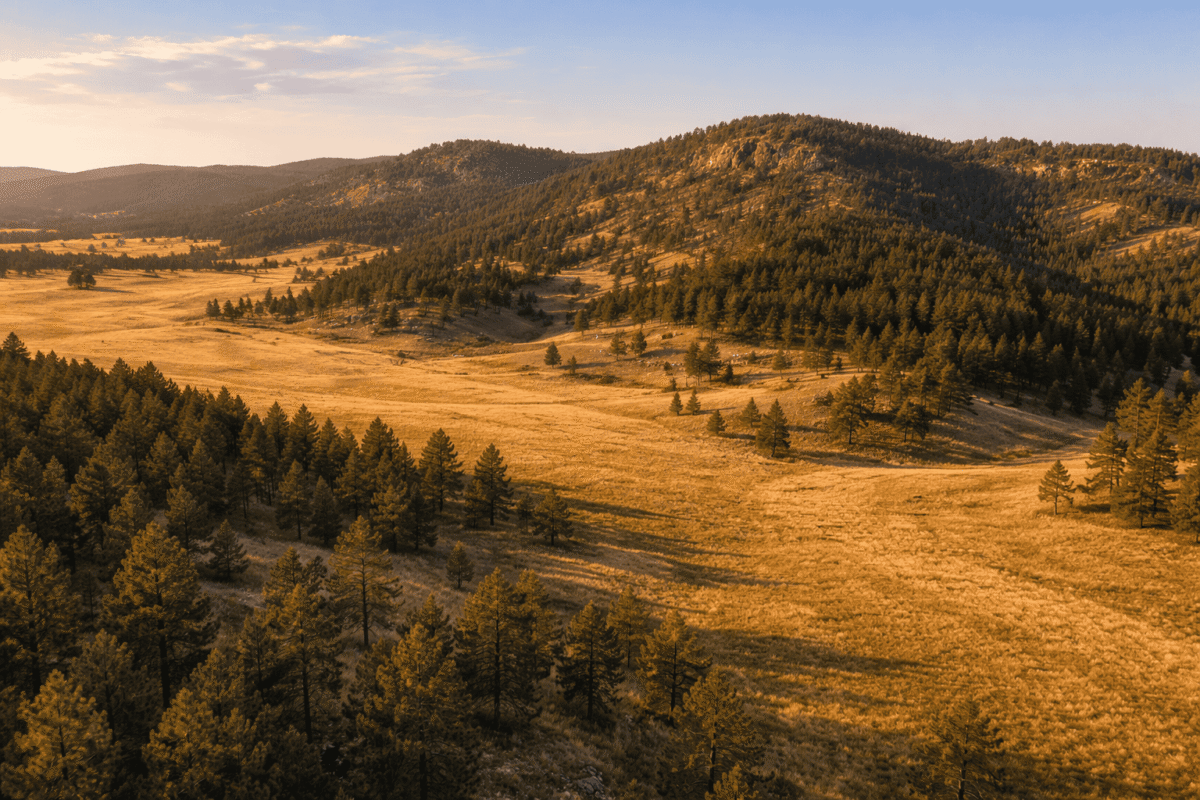
Wind Cave National Park protects two genuinely distinct landscapes: one underground and one on the surface, and the surface half gets underestimated almost every time.
Wind Cave’s Importance
Wind Cave is one of the longest and most complex cave systems on earth, with more than 130 miles of mapped passages and surveyors still finding more.
What makes it scientifically significant is not its length but its geology.
The cave contains roughly 95 percent of the world’s known calcite boxwork, a formation that looks like a honeycomb of thin mineral fins projecting from the walls and ceilings.
Boxwork forms when calcite fills cracks in rock and the surrounding limestone erodes away over millions of years, leaving a delicate lattice behind.
It is not common anywhere else on the planet in any meaningful concentration, which makes Wind Cave less a typical cave destination and more of a geological anomaly that happens to be accessible to the public.
The cave stays at 54 degrees Fahrenheit year-round, which is the first thing rangers mention when advising visitors to bring a jacket in July.
The passages are narrow, the ceilings require frequent ducking, and the stairs are steep and sometimes wet.
It is a physically active experience even on the most accessible tours, and the park service is direct about advising visitors with claustrophobia or heart and breathing conditions to consider whether the cave is right for them.
Cave Tours Guide
The park offers several guided tour options, all of which begin at the visitor center. The Garden of Eden Tour is the shortest and most accessible, running about an hour.
The Natural Entrance Tour is the most popular and starts at the cave’s original surface opening, taking visitors about 20 stories underground through a range of passage types and boxwork formations.
The Fairgrounds Tour covers a different section of the cave and offers some of the most dramatic rooms in the system. Both run about 90 minutes and cost $16 for adults.
For visitors who want something more physical, the Wild Cave Tour is a four-hour crawl through undeveloped sections of the cave with no paved paths, no electric lighting, and a minimum age of 16. It costs $45 and sells out regularly.
The Candlelight Tour recreates what early cave explorers experienced by lighting the passages with candles only, which is the kind of interpretive experience that sounds gimmicky until you are standing in a century-old darkness with a flame as your only reference point.
Roughly half of all tour tickets can be reserved in advance through recreation.gov, up to 120 days out. The remaining tickets go on a first-come, first-served basis at the visitor center the day of the tour.
From March through October, same-day tickets frequently sell out one to two hours before tour times. Reserving in advance is the practical choice for anyone on a fixed schedule.
Things People Miss
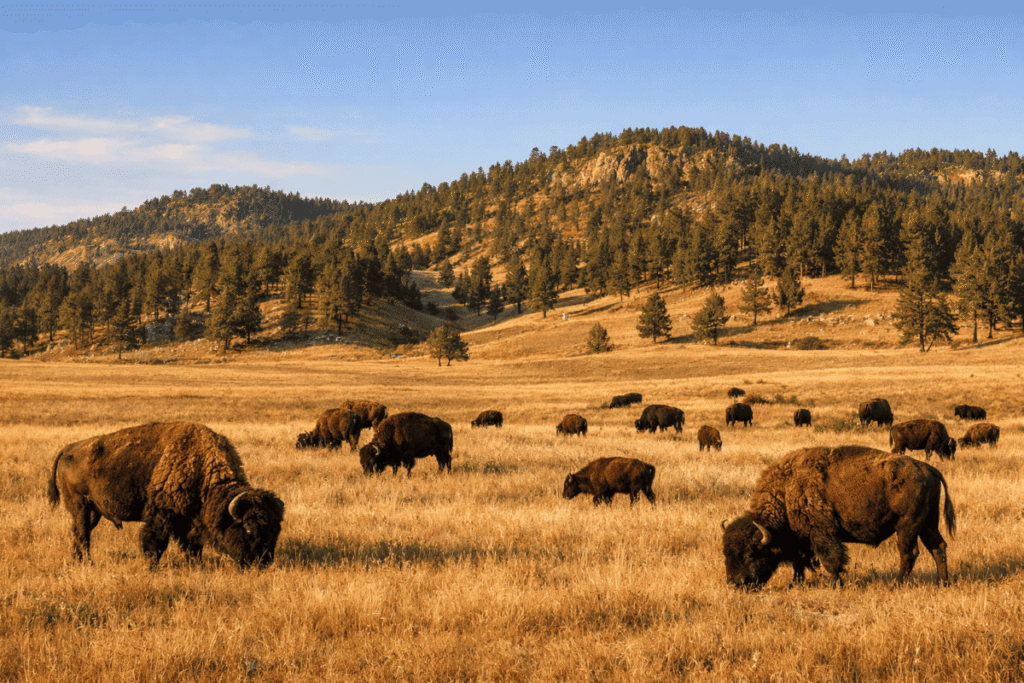
Most people don’t know this about the cave, Wind Cave protects more than 30,000 acres of mixed-grass prairie and ponderosa pine forest, one of the last intact remnants of that ecosystem in North America.
Bison, elk, pronghorn, prairie dogs, and black-footed ferrets all live here.
The black-footed ferret is one of the most endangered mammals on the continent and was reintroduced to Wind Cave as part of a recovery program.
Seeing one in the wild is not guaranteed but is possible, particularly near the prairie dog towns in the southern section of the park.
The park has 30 miles of hiking trails. The Rankin Ridge Trail, a one-mile loop north of the visitor center, offers the best elevated views over the Black Hills and takes most hikers under an hour.
The Highland Creek Trail is the most demanding at 8.6 miles, moving through multiple ecosystems and offering genuine solitude even in peak season.
Wildlife viewing from the road is reliable throughout the park, and bison in particular appear frequently enough that the park service advises building extra time into any drive for the possibility of stopping.
The Elk Mountain Campground has 62 sites and is open year-round.
Fees run $24 per night in season and drop to $12 when water is turned off, generally from October through May.
It is one of the more affordable camping options in the Black Hills region, which becomes relevant when you factor in that nearby Custer State Park and the Mount Rushmore corridor can push accommodation costs considerably higher during summer.
Wind Cave Trip Planning
Wind Cave rarely fills an entire itinerary on its own, and that is not a criticism. It is a half-day to full-day destination that fits naturally into a multi-park sequence.
Badlands National Park is about an hour and a half to the east and makes a logical pairing on the drive in or out. Mount Rushmore is 35 miles north.
Custer State Park shares its northern border with Wind Cave and is worth a separate full day for its own wildlife loop and the Cathedral Spires section of Needles Highway.
For visitors building a longer western road trip and thinking about how the Black Hills fit alongside the Utah parks or the northern Rockies, the national park map by state is a useful tool for visualizing the distances and clustering the stops into a sequence that makes logistical sense before you book anything.
The America the Beautiful annual pass at $80 does not waive cave tour fees, which is worth knowing in advance.
It covers entrance fees at other federal lands but Wind Cave charges no entrance fee to begin with, so the pass is most useful here for the campground discount it provides to senior and access passholders.
When to go
Spring and fall are the most comfortable seasons for both cave touring and surface hiking. Summer brings the highest visitation, with school groups particularly heavy from April through June.
The cave stays the same temperature year-round, so the underground experience does not change with the season. What changes is how long you wait for a tour and whether the trails above have snow on them.
Winter is genuinely quiet. The visitor center stays open, the cave tours run on a reduced schedule, and the campground remains open at half price.
For visitors willing to layer up and accept shorter daylight hours, the Black Hills in winter offer a version of the park that most people never see.
Wind Cave does not compete with Yellowstone or the Grand Canyon for name recognition, and it does not need to.
What it has is a geological record unlike anywhere else on earth, a prairie ecosystem that North America has mostly lost, and a visitor experience calm enough that you can actually pay attention to both.
That combination is harder to find in the national park system than it should be.