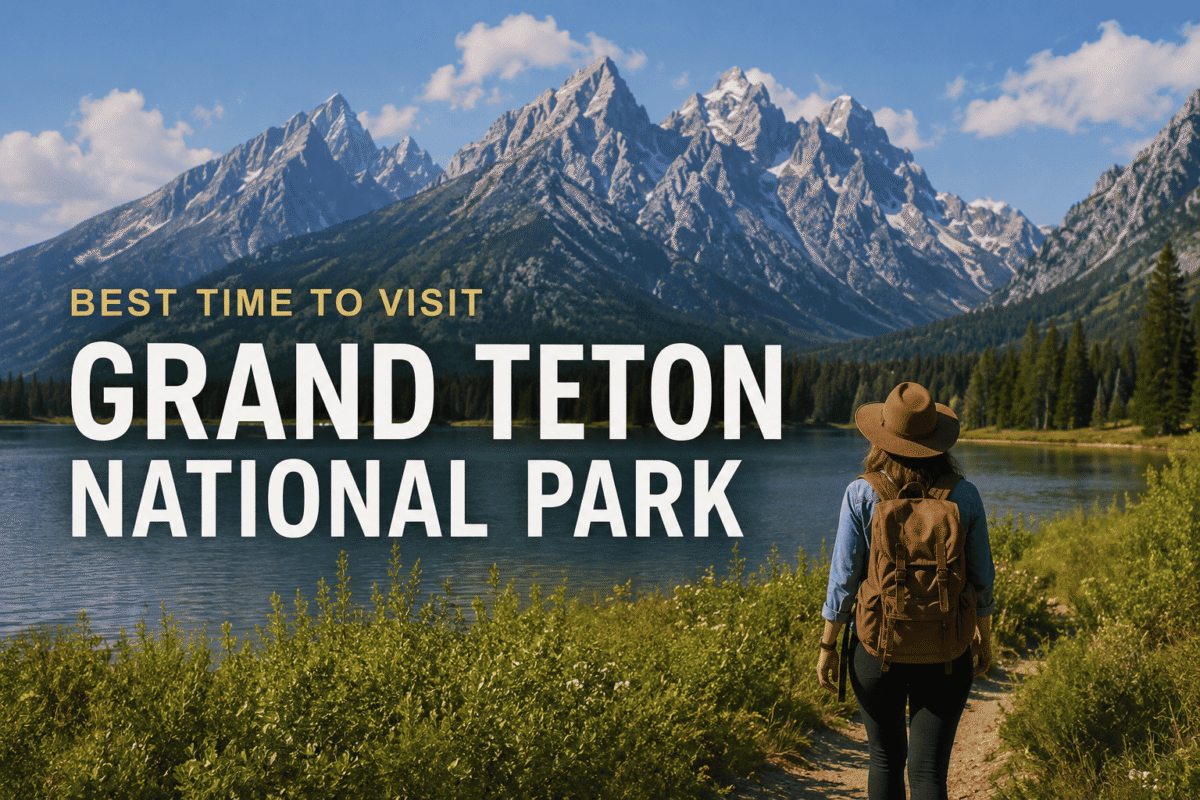
The best time to visit Grand Teton National Park depends entirely on what you want out of the trip.
If full park access, warm weather, and open trails are the priority, mid-June through August delivers all three.
If you want fewer crowds, lower hotel rates, and wildlife behaving in ways that peak summer visitors rarely witness, late September is the answer most experienced visitors give.
The park is open 24 hours a day year-round, but its seasonal character changes so dramatically that choosing the wrong window can mean closed roads, shuttered lodges, and trails buried under snow.
This guide breaks it down by season so you can match your travel window to your actual goals.
Summer Season
From late June through August, Grand Teton is fully operational.
Every visitor center, lodge, campground, trail, and guided activity is open and running.
Average highs climb into the low 80s Fahrenheit in July, which is warm enough for lake activities and long hiking days but far cooler than most of the country’s summer heat.
For German visitors accustomed to temperatures in Celsius, that translates to around 27 to 28 degrees, making it genuinely comfortable walking weather compared to the sweltering conditions of Central Europe in July.
The trade-off is crowds. July is the busiest month in the park’s calendar.
Parking lots at Jenny Lake, Phelps Lake, and Lupine Meadows fill by 8 AM. Entrance lines back up.
Popular trailheads require arriving before sunrise if you want any sense of solitude.
Accommodation inside the park books out months in advance and costs significantly more than it does in shoulder seasons.
The solution that experienced visitors use consistently is simple: be on trail before 7 AM and back at the car before the afternoon thunderstorms that are common in July and August.
Summer is also the best window for climbing.
The Teton peaks, including the Grand Teton itself, are most accessible from late June through early September when snow has melted from the high routes and weather windows are more predictable.
For hikers who want to go above treeline without winter mountaineering skills, this is the season that makes it possible.
The best hikes in Yellowstone National Park guide on Tadexprof covers the northern park’s trail network in detail for readers combining both parks in one trip, which is the most common western US itinerary in the region.
September
The third week of September is when the park shifts into something different, and many who have visited in both summer and fall return exclusively for autumn.
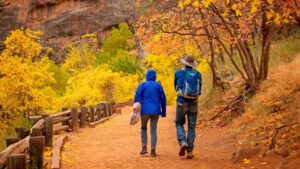
The aspen trees turn gold. The elk rut begins, and the sound of bulls bugling at dawn and dusk across the valley is one of those wildlife experiences that photographs and sound recordings cannot fully convey.
Bull moose become more active and visible.
Bears enter hyperphagia, feeding heavily before hibernation, which makes them easier to spot along riverbanks and meadows.
Summer crowds clear out after Labor Day, but most park services remain open through September.
Temperatures drop to comfortable hiking range, with daytime highs around 65 to 70 degrees Fahrenheit, and mornings carry a chill that makes the first hour on trail genuinely pleasant rather than a race against afternoon heat.
Hotel rates in and around the park fall from their July and August peaks, and reservation availability opens up considerably.
For Canadian and American travelers who have flexibility around school-year schedules, this is the most efficient window the park offers.
October tightens things further. The crowds thin even more, but facilities begin closing in sequence.
Lodges inside the park shut down through October, and by November the Teton Park Road closes entirely for the season.
October rewards travelers who plan ahead and do not rely on in-park accommodation, but it requires checking which services are still running before arrival.
June
June is the sweet spot between warm summer conditions and slower visitation.
Wildflowers bloom across the valley floor, and wildlife is active in the open meadows with newborn calves visible alongside their mothers.
Elk, moose, and bison calf in May and June, which makes wildlife viewing in those weeks different in character from any other time of year.
The risk in June is weather unpredictability and trail access.
Higher elevation trails, including those leading into the canyons, are often still snow-covered in early June.
Road conditions can vary by year, and some facilities are still opening sequentially as the season ramps up.
Travelers visiting in the first two weeks of June should check current road and trail conditions through the Grand Teton National Park official NPS page before departure, since the opening schedule varies annually.
Mosquitoes are also a genuine June consideration.
The same conditions that make the park bloom in early summer create the insect population that follows.
Pack repellent and treat it as a planning necessity rather than an afterthought.
Spring Season
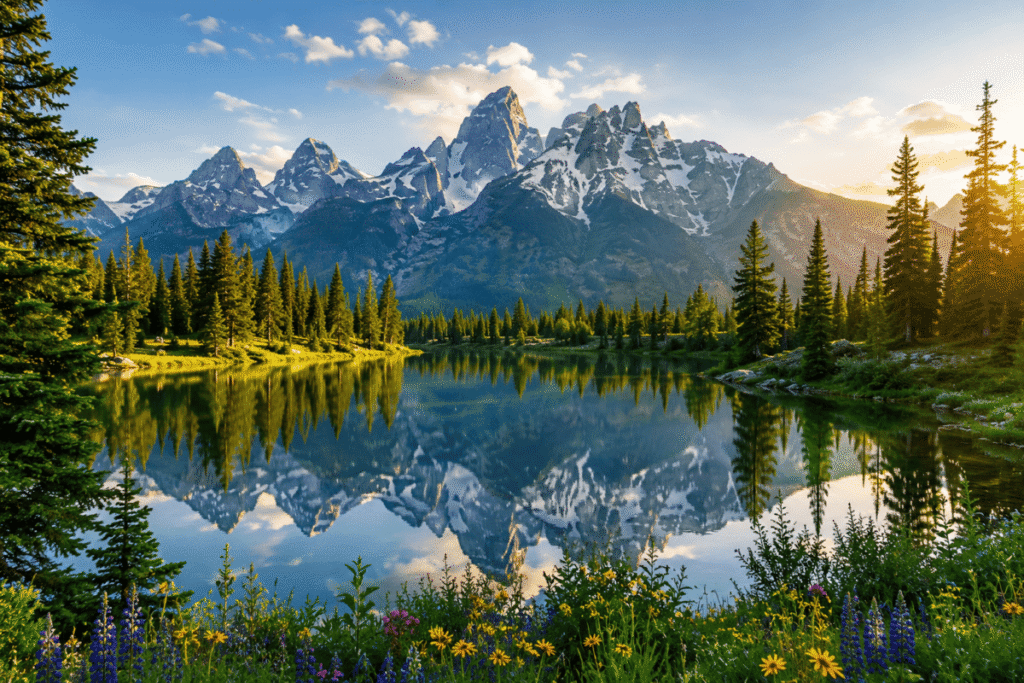
May is the transition month. The inner Teton Park Road reopens at the beginning of May, restoring access to Jenny Lake, Leigh Lake, and Signal Mountain Lodge after the winter closure.
Crowd levels are at their lowest point of the entire season, and baby animals are appearing across the valley.
Bears emerge from dens, elk calves appear in late May, and the landscape still carries the green of snowmelt before summer dries it out.
The significant limitation is that valley floor trails at lower elevations may still be muddy and snow-covered until mid-May, and temperatures can swing dramatically, sometimes 40 degrees between a cold morning and a warm afternoon.
April is not recommended for first-time visitors. Most roads are still closed, lodges have not opened, and the access is limited enough to make the visit logistically frustrating unless your specific goal is near-solitary time in a park that winter has returned to itself.
For readers planning a combined Yellowstone and Grand Teton itinerary, both parks follow similar shoulder-season logic.
The best time to visit Yellowstone National Park guide covers those seasonal patterns in the northern park, and the two can be read together when building a multi-park Wyoming trip.
Winter Period
From November through April, Grand Teton becomes a different park entirely.
The Teton Park Road closes on November 1 and does not reopen until around May 1.
In that window, the road becomes a groomed trail for cross-country skiers, snowshoers, and fat bikers.
What was a traffic-jammed two-lane road in July becomes a silent corridor through snowbound wilderness where you can stand for minutes without seeing another person.
The National Elk Refuge holds between 7,000 and 8,000 elk between December and April, and horse-drawn sleigh rides through the refuge provide access to a herd that size in a way that no other US wildlife experience replicates.
Coyotes and wolves become easier to spot against a white backdrop.
Jackson Hole Mountain Resort sits just outside the park boundary and is considered one of the finest ski mountains in North America, with vertical drop and terrain diversity that draws serious skiers from across the United States, Canada, and Europe.
Winter temperatures are genuine.
Daytime highs typically sit between 5 and 25 degrees Fahrenheit, and visitors coming from Germany or other European climates should plan for conditions that are colder and drier than most Alpine winter destinations.
All in-park lodges close for the season, and accommodation shifts entirely to Jackson, which has ample hotel inventory and a functioning restaurant and bar scene that carries the social energy the park itself goes quiet on.
If you are planning the lodging strategy for either season, the best hotels near Grand Teton National Park guide on Tadexprof covers both in-park and gateway options in full.
Travel Planning Tips
Budget matters differently by season. Summer means the highest rates for everything, with in-park lodges commanding prices that reflect their location monopoly during peak demand. Fall rates drop noticeably.
Winter outside the park is the most affordable accommodation window, though ski-season pricing at Jackson Hole resort hotels can offset those savings depending on where you stay.
Travel insurance is worth pricing for any Grand Teton trip, particularly for international visitors unfamiliar with US emergency medical billing.
A hiking injury requiring helicopter evacuation in a remote area of the park results in costs that have no European equivalent in terms of scale.
A policy with emergency evacuation coverage is one of the better investments in the trip planning budget.
The park does not have a wrong season. What it has are seasons built for different people with different goals.
The summer visitor and the September wildlife photographer and the January cross-country skier are all having real Grand Teton experiences.
Knowing which one matches what you are actually looking for before you book is what separates a trip you enjoy from one you spend adjusting your expectations inside.