Alaska national parks are about 23 including preserves, monuments, and heritage sites managed by the National Park Service, making it the single most protected landmass in the American system.
If you are planning a trip and wondering which ones you can actually visit, how much it costs, and whether the America the Beautiful Pass is worth buying before you fly north, this post answers all of that directly.
Why Everyone Goes to Denali First
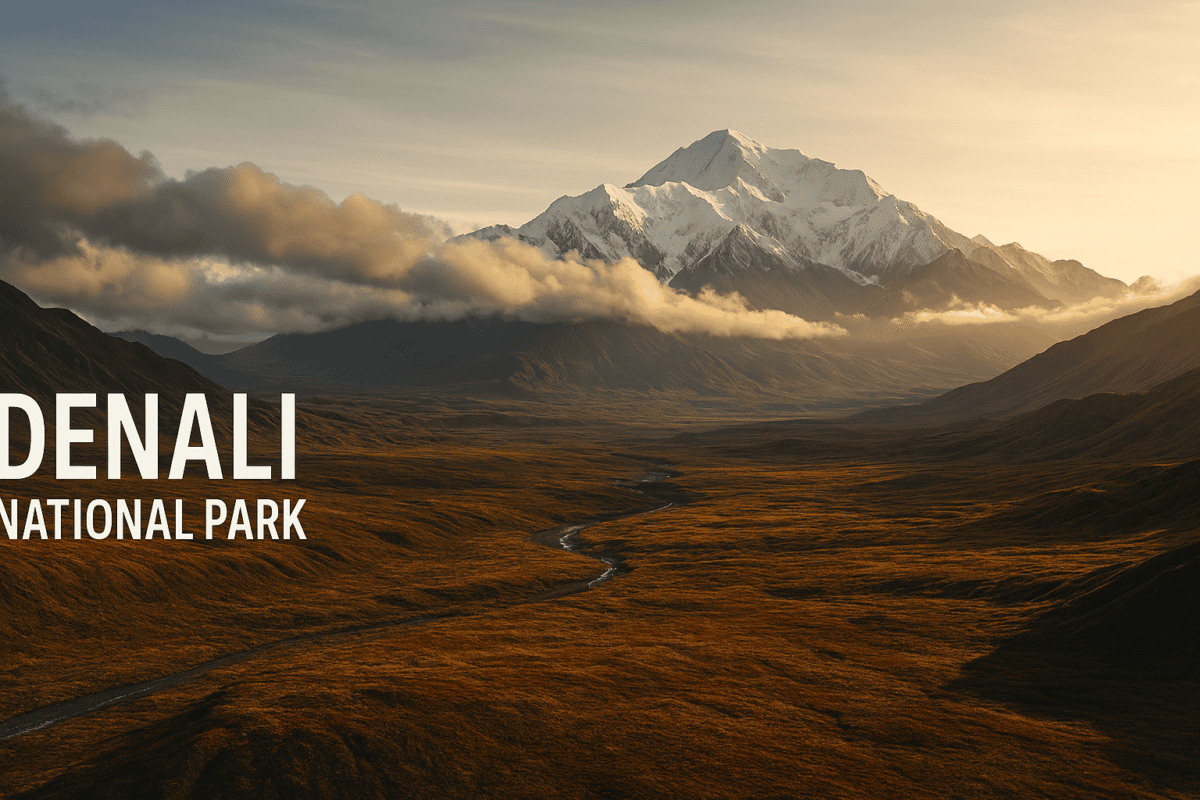
Most travelers land in Anchorage and go straight to Denali. That is understandable. Denali National Park sits within driving distance of the city, it contains North America’s highest peak at 20,310 feet, and it has the infrastructure tourists expect.
What it does not have is roads. There is exactly one, stretching 92 miles into the interior, and private vehicles can only drive the first 15 miles without a permit or a park bus. That constraint is by design.
The NPS has kept the rest of the park deliberately inaccessible, which is both a philosophical statement and a logistical warning. If you arrive at Denali expecting Yellowstone-style drive-through wildlife viewing, you will leave frustrated and lighter in the wallet.
Costs to Visit Alaska’s Parks
The honest financial picture of an Alaska parks trip requires some planning before you book flights. Entry to Denali costs $15 per person and is valid for seven days.
Kenai Fjords, outside Seward on the southern peninsula, charges the same rate. However, a significant number of Alaska’s protected units charge nothing at all because they lack the visitor infrastructure to collect fees.
Glacier Bay, one of the most spectacular on the continent, has an entry fee during cruise ship season but remains functionally free for independent travelers arriving by small plane or charter boat.
For anyone doing a multi-park trip across the US, the America the Beautiful Annual Pass at $80 covers entrance fees at every fee-charging federal site for a full year. If you are visiting Denali, Kenai Fjords, and one or two other parks with fees in the same calendar year, the pass pays for itself in a single Alaska trip.
What International Visitors Need to Know
German travelers, who represent one of the largest international visitor segments in Alaskan tourism, should know that the pass is available at the first fee-collecting park you enter and is valid immediately.
Canadians crossing into Alaska overland through the Yukon corridor often underestimate trip length. Wrangell-St. Elias, which sits near the Alaska-Canada border and covers 13.2 million acres, is larger than Yellowstone, Yosemite, and Switzerland combined.
Driving through the region without stopping at Wrangell-St. Elias is a genuine missed opportunity, particularly for visitors arriving through Whitehorse.
The Parks Almost Nobody Visits
Beyond the well-known parks, Alaska’s real editorial story is the places almost nobody visits. Aniakchak National Monument, on the Alaska Peninsula south of Katmai, receives fewer than 200 visitors per year.
It contains a six-mile-wide volcanic caldera formed 3,500 years ago and is accessible only by small charter aircraft from King Salmon. Gates of the Arctic, above the Arctic Circle and entirely roadless, is where wilderness becomes something more philosophical than recreational.
There are no trails, no visitor centers in the field, and no park rangers positioned along a path to help you. The park exists as intact ecosystem, not amenity.
For experienced backcountry travelers from the Pacific Northwest or Alberta who feel the continental US parks have become overcrowded, these Alaskan units represent the last version of the frontier that actually requires competence to enter.
Katmai and the Bear Experience
Katmai National Park deserves specific mention because it produces one of the genuinely extraordinary wildlife experiences available on the planet. Each July and early September, brown bears gather at Brooks Falls to intercept sockeye salmon running upstream.
At peak season, dozens of bears fish the same 200-foot stretch of river simultaneously, and the NPS live-streams it through its Fat Bear Week program. Reaching Katmai means flying into King Salmon and chartering a floatplane to Brooks Camp.
The logistics are not cheap. A round-trip charter runs several hundred dollars per person, and the lodge inside the park books up months in advance. But the experience is categorically different from anything in the lower 48, which is precisely why it attracts serious wildlife photographers from Europe and North America willing to spend accordingly.
Kenai Fjords
Kenai Fjords, just outside Seward, is the park that provides Alaska’s most accessible version of dramatic coastal scenery.
Nearly 40 glaciers flow from the Harding Icefield, and day cruise operators run regularly from Seward Harbor into the fjords where visitors see calving glaciers, orca pods, and Steller sea lions in a single half-day tour.
The cruise operators are private, not NPS-run, and prices vary considerably. Booking directly through the NPS-listed concessioners rather than aggregator platforms usually saves money and avoids cancellation complications in a region where weather changes rapidly.
How to Plan the Geography Before You Go
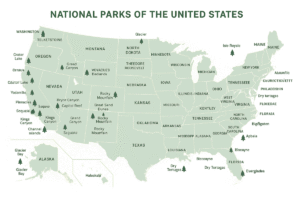
For the trip planning mechanics, the national park map by state on Tadexprof gives a useful visual overview of how Alaska’s parks are distributed geographically before you start building an itinerary.
Planning matters here more than anywhere else in the system because the distances involved are genuine. Kobuk Valley and Bering Land Bridge sit in the northwest Arctic, accessible from Nome or Kotzebue. Klondike Gold Rush National Historical Park is in Skagway, deep in the Inside Passage.
These parks do not cluster conveniently. Treating Alaska as a single road trip the way one might approach Utah’s Mighty Five is a planning error with expensive consequences.
Before traveling to any of Alaska’s parks, checking the NPS alerts page for current conditions is worth doing. Trail and access closures in Alaska are not inconveniences. They are often safety directives tied to bear activity, river flooding, or weather systems that can ground small aircraft for days.
The official listing of all Alaska NPS units, with access information and planning resources, is maintained at nps.gov/state/ak.
Important Note
What Alaska demands of the traveler, ultimately, is intellectual honesty about what kind of trip you want. If the goal is a comfortable wilderness encounter with predictable infrastructure, Denali and Kenai Fjords deliver that.
If the goal is something closer to genuine remoteness, the state has more of it than any other jurisdiction in North America, and most of it is still uncrowded simply because getting there requires effort.
That ratio is disappearing in the lower 48. In Alaska, for now, it holds.