Where is bryce canyon national park?
Bryce Canyon National Park is located in southwestern Utah, about 80 miles east of Zion National Park and roughly 270 miles south of Salt Lake City.
The closest major airport is Las Vegas Harry Reid International, approximately three hours to the southwest.
Salt Lake City International is about four hours north and makes the better arrival point if you are combining Bryce with Arches or Canyonlands on a longer Utah loop.
Bryce Canyon National Park: Fame
Hoodoos are irregular columns of rock formed through centuries of frost weathering and stream erosion. Water seeps into cracks in the limestone, freezes overnight, expands, and breaks the rock apart layer by layer.
Hoodoos exist on every continent, but Bryce Canyon sits at an elevation where the temperature crosses the freezing point over 200 times a year, more frequently than almost anywhere else on the planet.
That relentless freeze-thaw cycle, combined with the iron and manganese minerals in the local Claron limestone, produces the largest concentration of hoodoos on earth.
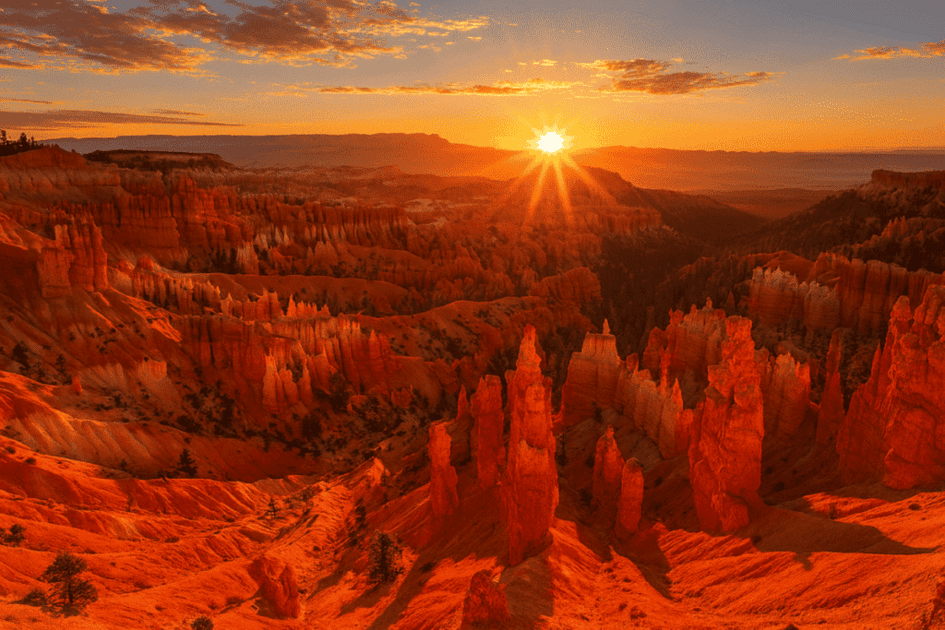
The colors range from deep orange to soft pink to pale white, and they shift with the angle of the sun throughout the day.
The same viewpoint at sunrise looks nothing like it does at noon or at dusk. This is a park that punishes the visitors who only give it an hour.
Entry Fee and Booking
The standard vehicle entrance fee is $35, valid for seven consecutive days. The America the Beautiful annual interagency pass at $80 covers entry at all US federal lands and is worth purchasing for any multi-park trip.
Passes are available at the entrance gate or in advance at recreation.gov. From April through mid-October the park runs a free shuttle connecting the visitor center to all major viewpoints and trailheads.
Using it during summer removes the parking problem entirely, which at Sunset Point and Sunrise Point during peak season is not optional advice but a practical necessity.
Campsites must be reserved online in advance. There is no walk-up availability at either North or Sunset campground during the busy season.
Best Things to Do in Bryce Park
The queen’s garden and navajo loop
Most visitors stand at the rim, photograph the hoodoos, and leave. The people who go below the rim on the Queen’s Garden and Navajo Loop combined trail understand what the park is actually offering.
This under-three-mile loop descends from Sunrise Point into the amphitheater floor, puts you walking among the hoodoos at eye level, passes through narrow rock tunnels, and climbs back up through Wall Street, a slot canyon with walls rising 100 feet on both sides.
It takes between one and a half to three hours depending on how often you stop. Most people stop often. This is the single trail that justifies the entire trip.
Catch sunrise from sunset point
Sunrise Point and Sunset Point sit within easy walking distance of each other along the rim. At sunrise, the low eastern light hits the hoodoos directly and turns the orange and red formations into something close to fire.
Thor’s Hammer, the park’s most photographed hoodoo, is best seen from Sunset Point in early morning when the shadow play across the amphitheater is at its most dramatic. Arrive at least 30 minutes before sunrise.
The crowd is smaller at this hour than any other time of day and the light is worth the alarm.
Stay for the night sky
Bryce Canyon is one of the darkest places in the continental United States. The high elevation, the dry desert air, and the absence of nearby urban light pollution produce a night sky where the Milky Way is visible to the naked eye on clear nights.
The park holds an annual Astronomy Festival each June with ranger-led programs and telescope viewings. Outside the festival, full moon hikes run through much of the summer and fall with a park ranger.
If you have never seen a genuinely dark sky, this is one of the most accessible places in North America to experience one.
When to Visit
Spring from April through June is the most balanced season for a first visit. The shuttle starts running in early April, temperatures are mild, wildflowers cover the upper plateau, and the crowds have not yet peaked.
Fall from September through October is the season most experienced park visitors prefer, with stable weather, excellent light, and aspens turning gold on the plateau above the orange hoodoos below.
Summer works but requires early starts to avoid afternoon thunderstorms that build quickly over the high plateau from July onward.
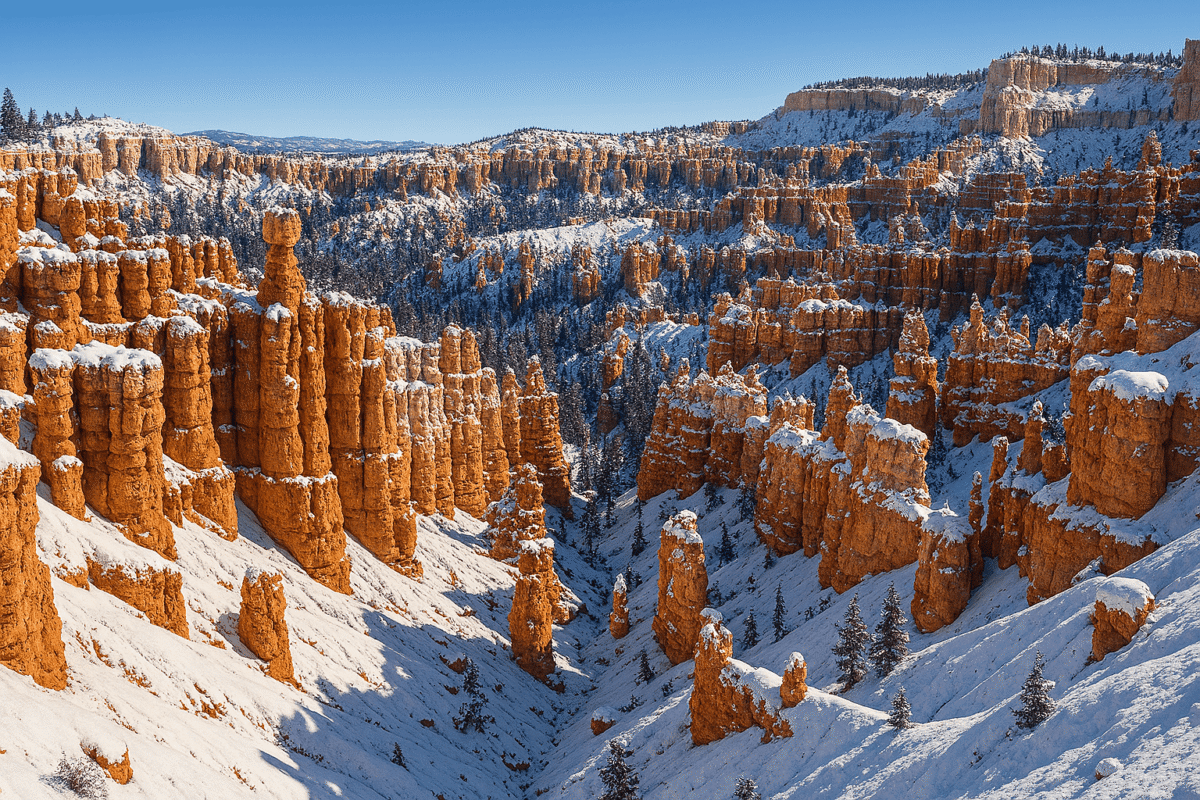
Winter covers the hoodoos in snow and produces a visual combination that no other season can match, though the shuttle does not run and some facilities close. Check current road conditions and any active alerts on the
Check current road conditions and any active alerts on the official Bryce Canyon conditions page before your visit, regardless of the season.
Bryce Canyon with Other Utah Parks
Bryce Canyon sits 80 miles east of Zion, and most visitors do both parks on the same trip. If Zion is still on your planning list, our guide to Zion National Park covers permits, the best season for the Narrows, and everything you need to know before you arrive.
For the wider southwest circuit that includes Arizona, our Grand Canyon National Park guide breaks down both rims and how to structure multiple days at one of the most visited places on the planet.
Bryce Canyon does not need days to make its impression. It needs your full attention for the hours you give it.
Go below the rim, watch the light change at least twice, and stay long enough after dark to see what the sky looks like without a city behind it.
That is the complete Bryce Canyon experience, and it fits inside a single well-planned day if you arrive knowing what you are there for.