Congaree National Park is in central South Carolina, about 20 miles southeast of Columbia, and it is completely free to enter.
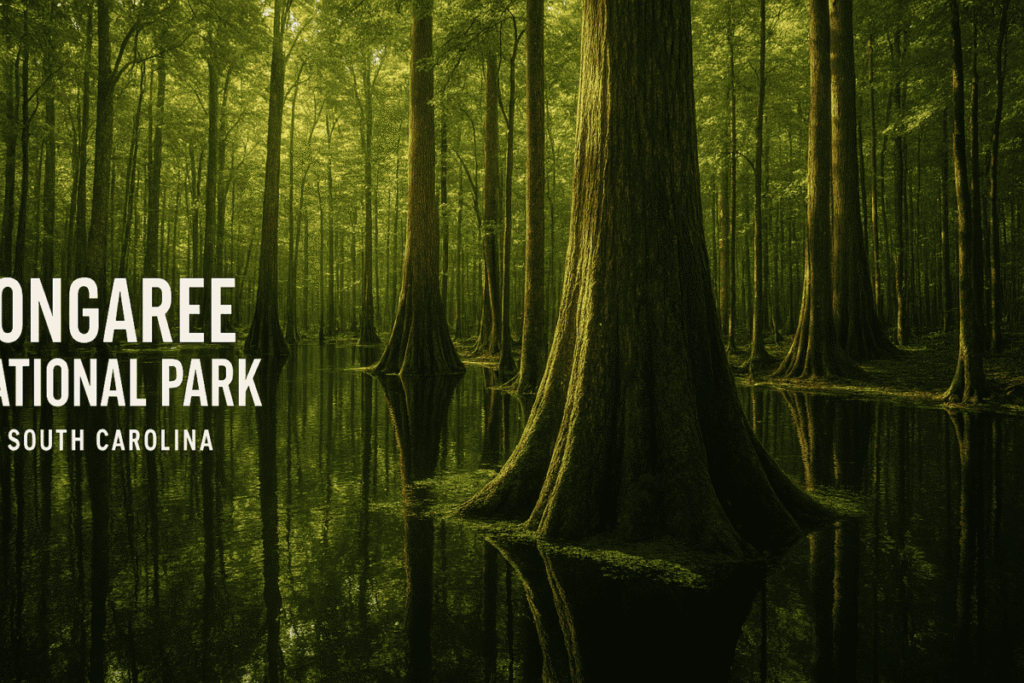
It protects the largest intact expanse of old-growth bottomland hardwood forest remaining in the southeastern United States, a landscape that once covered millions of acres across the region before logging cleared almost all of it.
The trees here grow to heights that rival the tallest in the eastern United States, the forest floods more than ten times a year and is better for it, and twice a year people enter a lottery just for the chance to watch fireflies synchronize their flashing in the dark.
Congaree does not look like any national park most visitors have been to, which is exactly why it is worth the detour.
The park is small by national park standards just over 26,000 acres and a single full day covers the highlights comfortably.
It is free, close to a city with good accommodation options, and requires no advance reservation except for the firefly events in late spring.
For American and Canadian road trippers moving through the Southeast, and for German visitors building a broader US itinerary that goes beyond the obvious western parks, Congaree is the kind of stop that reshapes how you think about what a national park can be.
The Forest
The park sits in the floodplain of the Congaree and Wateree Rivers. Water sweeps through the floodplain more than ten times per year on average, depositing nutrients into the soil that drive the extraordinary tree growth.
The result is one of the highest temperate deciduous forest canopies left in the world, with bald cypress, water tupelo, loblolly pine, and cherrybark oak competing for height in a way that produces trees that hold national and state records.
Visitors who assume floodplain means swamp tend to arrive expecting something flat and stagnant.
The reality is a cathedral forest where the understory stays open, light filters through a canopy that starts well above your head, and the dark water sitting around the base of cypress knees reflects the trees back at you.
The flooding is also what makes the park challenging to visit in summer.
July and August in the South Carolina midlands bring high humidity, temperatures that push into the upper 90s Fahrenheit, and a mosquito population that the park’s own visitor center tracks on a posted meter.
The best months are October through early December for fall color and lower insect pressure, and mid-March through May for comfortable temperatures before the heat sets in.
The Boardwalk Loop Trail
The Boardwalk Loop Trail is the park’s most accessible route and the one that most visitors walk first.
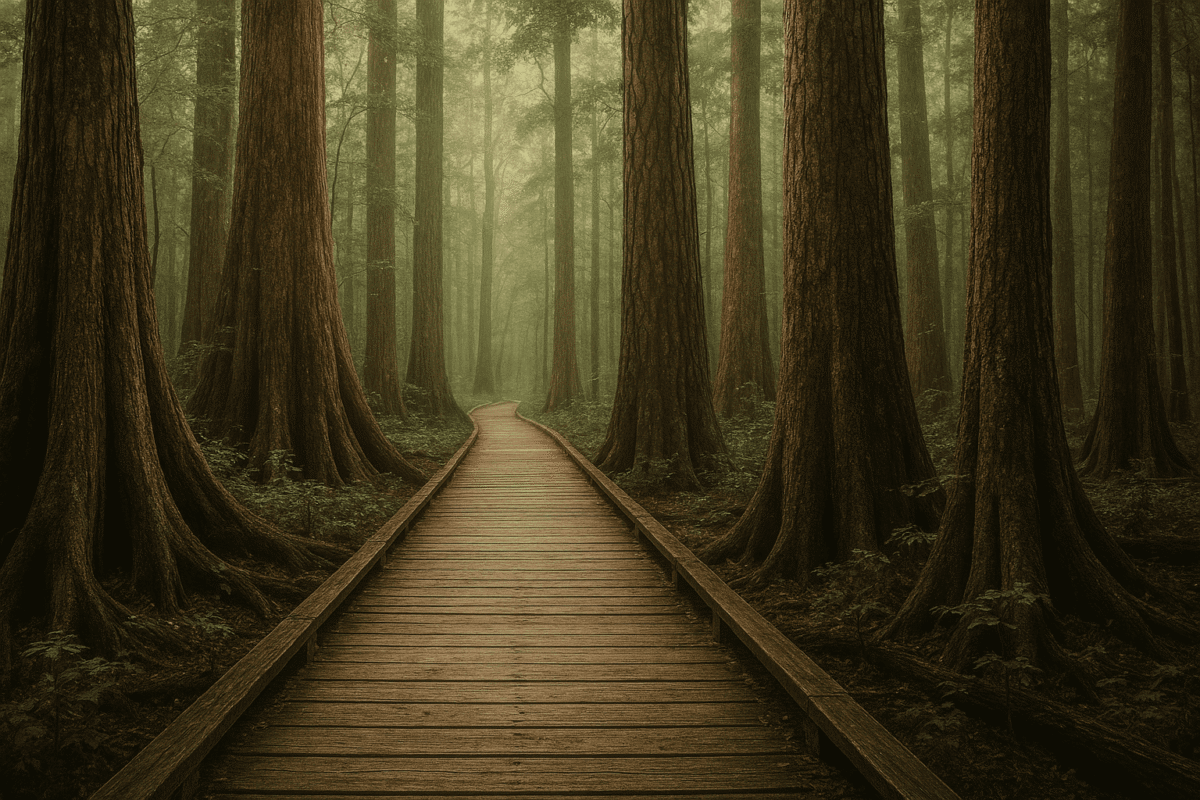
It runs 2.4 miles through the forest on an elevated wooden boardwalk, keeping hikers above the floodwater when the forest is wet and providing sight lines into the forest canopy and down to the ground level that are difficult to get on a flat dirt trail.
The loop passes Weston Lake, an oxbow formed from an old bend of the Congaree River, where turtles and occasionally alligators can be spotted from the boardwalk edge.
The trail is ADA-accessible and suitable for all ages, but requires at least an hour to walk with any attention to what is around you.
Beyond the boardwalk, the park’s trail system extends deeper into the wilderness through routes like the Weston Lake Loop, the Oakridge Trail at 7.1 miles, and the River Trail leading out to the Congaree River itself.
These trails are dirt and subject to flooding, which means checking conditions at the official Congaree National Park conditions page before hiking them is worth the 60 seconds it takes.
Rangers at the Harry Hampton Visitor Center are also a reliable source of current trail status and wildlife activity.
Paddling Cedar Creek
The Cedar Creek Canoe Trail is the other essential Congaree experience, and it reads differently from the hiking.
The creek winds slowly through the forest for roughly 15 miles from Bannister’s Bridge to the Congaree River, with shorter section options available.
The water is slow-moving and dark with tannins from the surrounding vegetation, the color of strong tea and the effect of paddling through a forest of old-growth cypress and tupelo at water level, with the canopy closing overhead, is one that photographs poorly and lands hard in person.
The park does not rent canoes or kayaks. Visitors need to bring their own or rent from an outfitter in Columbia, roughly 30 minutes away.
Several outfitters authorized to operate in the park offer guided trips, which is a good option for first-timers who want to avoid the navigation challenges of the longer routes.
A South Carolina fishing license is required to fish in the park, and the creek holds largemouth bass, catfish, and bowfin for those who want to combine paddling with angling.
The Firefly Light Show
For two weeks each year, roughly mid-May to mid-June, a species of synchronous firefly in the park coordinates its flashing into simultaneous pulses that move through the forest in waves.
The effect at peak display, between 9 and 10 p.m., is one of the stranger and more genuinely moving things available in the American national park system.
The park shares this event with Great Smoky Mountains, one of the few other places in North America where synchronous fireflies can be seen in numbers large enough to create the wave effect.
Demand has made the event a ticketed lottery since 2021. Applications open in late March or early April through recreation.gov, and only around 15 percent of applicants receive passes.
The park closes to general visitors at 4:30 p.m. during the event period. Bug spray cannot be applied inside the park during the firefly event, apply it before you arrive and phone lights are prohibited.
A red-filtered flashlight is the recommended tool for navigating to viewing areas without disrupting the insects.
How to Get There
Columbia, South Carolina is the nearest city and a 30-minute drive from the park. Flights into Columbia Metropolitan Airport connect through Charlotte, Atlanta, and other Southeast hubs.
For road trippers moving along the I-95 corridor between the Northeast and Florida, or driving the Southeast circuit that includes the Smoky Mountains, Congaree sits close enough to the highway to justify a full day’s detour without significantly extending the drive.
Our post on Great Smoky Mountains National Park covers the other Southeast anchor park in full, and the two make a natural pairing for anyone spending a week in the region.
Camping is available at two front-country campgrounds, Longleaf and Bluff, both requiring only a short walk from the parking area.
Dogs are allowed on all trails on a leash, which is genuinely unusual for a national park and matters to a meaningful portion of visitors planning longer road trips with pets.
Most national parks in the American South get overlooked in favor of the western parks, where the scenery photographs well and the reputation arrives before the visit.
Congaree is the counter-argument: small, free, genuinely weird in the best sense, and best understood by walking into it and letting the forest make its own case.