Is Death Valley national park dangerous to visit? What is the best time to go to Death Valley National Park? How far is Death Valley from Las Vegas? Can you camp in Death Valley for free?
These are the questions that flood search engines every month from travelers in the United States, Canada, and Germany, and the answers are not as straightforward as the park’s official pages (NPS.gov) make them sound.
This post breaks it all down so you can actually plan a trip that does not end in a heat evacuation.
Death Valley sits on the border of California and Nevada, covering more than 3.4 million acres, making it the largest national park in the contiguous United States.
It holds the record for the highest reliably recorded air temperature on Earth, a scorching 134 degrees Fahrenheit measured at Furnace Creek in 1913. It sits 282 feet below sea level at Badwater Basin, the lowest point in North America.
And yet, despite these extremes, roughly a million visitors show up every year. Many of them are not prepared. Some of them need rescuing. This guide is for the ones who want to do it right.
When to Visit Death Valley National Park
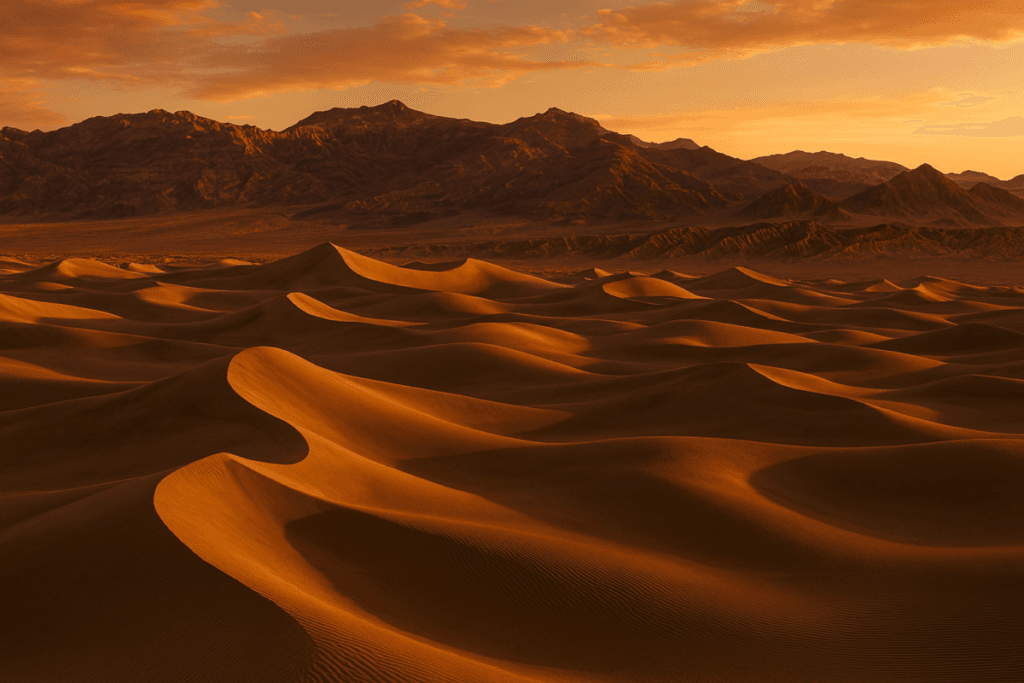
The window that most experienced desert travelers will tell you about runs from mid-October through April. During these months, daytime temperatures in the valley floor hover between 65 and 90 degrees Fahrenheit, which is entirely manageable.
Nights can dip surprisingly cold, especially at higher elevations like Dante’s View or Mahogany Flat, where snow is possible between November and March.
If you are traveling from Canada or Germany, where summer is the default travel season, Death Valley in July or August is a genuinely dangerous proposition. Temperatures regularly exceed 120 degrees Fahrenheit.
Car tires blowout on the asphalt. Radiators fail. People underestimate how fast they dehydrate when the air itself is pulling moisture out of them faster than they can drink.
The National Park Service recommends avoiding strenuous outdoor activity between 10 a.m. and 4 p.m. during summer months. If you are locked into a summer itinerary, go for the stargazing and the photography at dawn, then retreat indoors by midmorning.
Spring wildflower season, typically February through April depending on winter rainfall, is one of the park’s most spectacular draws. After a wet winter, the valley floor erupts in gold and purple.
The National Park Service maintains a wildflower update page at nps.gov/deva that is worth bookmarking if you are trying to time your trip for bloom season.
How to Get to Death Valley
From Las Vegas, Death Valley is roughly two hours by car. Take US-95 north to State Route 373, then connect through Amargosa Valley. From Los Angeles, the drive takes about four hours via Highway 395 or through Baker on I-15.
There is no commercial airport inside the park. The nearest one is in Las Vegas or Palmdale. Most international visitors flying from Germany tend to land in Los Angeles and rent a car for a broader Southwest road trip that might combine Death Valley with Joshua Tree National Park, the Grand Canyon, and Zion.
If that kind of multi-park itinerary sounds like what you are planning, you might find my post on road tripping the American Southwest from Tadexprof.com useful before you finalize your route.
What to See Inside the Park
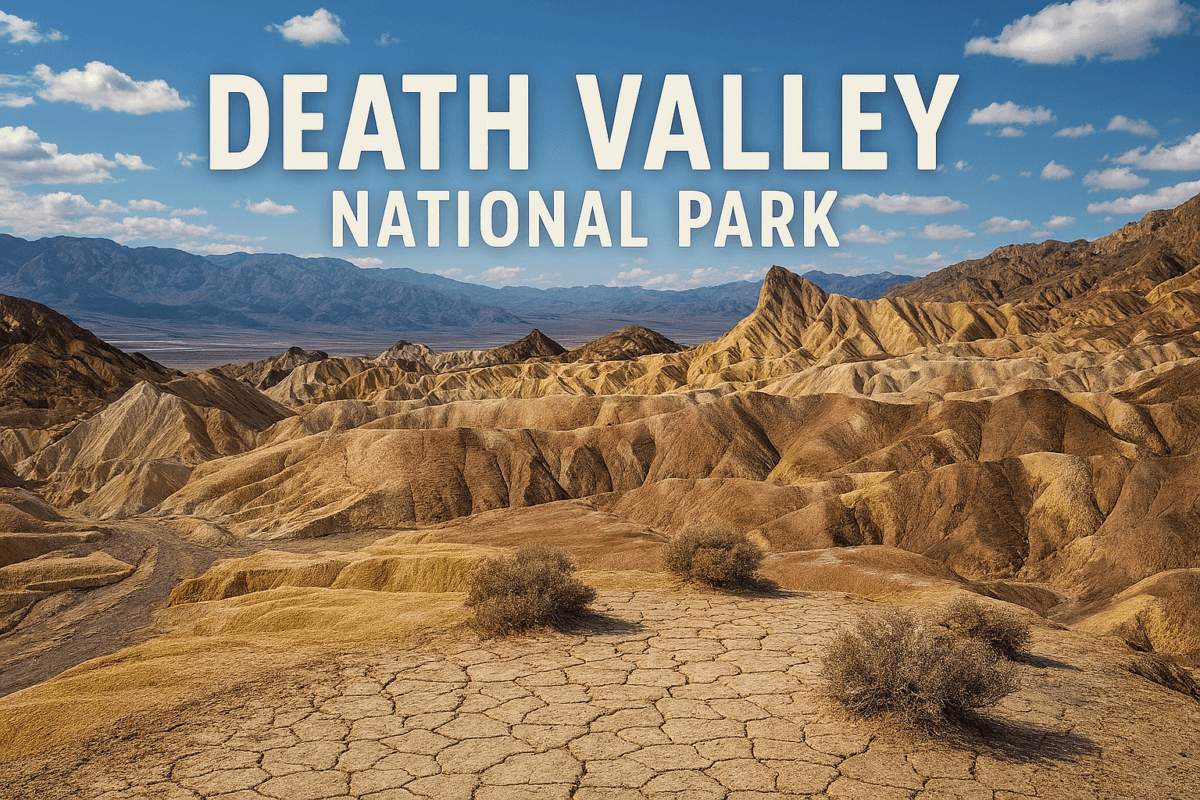
Badwater Basin is the obvious starting point. You walk out onto a salt flat that stretches to the horizon, with mountains rising on all sides, and the feeling is genuinely otherworldly. The road sign above the parking area marks sea level on the cliff face, 282 feet above where you are standing.
Zabriskie Point is where photographers plant themselves at sunrise. The eroded badlands, layered in gold and ochre and rust, catch the early light in a way that makes even an average camera produce something worth framing.
Antonioni made it the subject of an entire film in 1970, which tells you something about the effect the landscape has on people.
Mesquite Flat Sand Dunes, near Stovepipe Wells, give you the classic Sahara-style dune experience. They rise up to about 100 feet and are easiest to navigate in the early morning before the sand heats up. Avoid midday here in any season.
Artist’s Drive and the Artist’s Palette area show off the volcanic and mineral deposits that paint the hillsides in green, pink, red, and yellow. The one-way nine-mile loop road is accessible to standard vehicles and is one of the most concentrated visual payoffs you can get without getting out of your car.
For the elevation contrast, drive up to Dante’s View at 5,475 feet. From there you can see Badwater Basin below you and Mount Whitney, the highest point in the contiguous United States, on the horizon. The cognitive vertigo of standing between the lowest and highest points in the same field of view is one of those rare travel experiences that photographs cannot fully communicate.
Camping and Accommodation
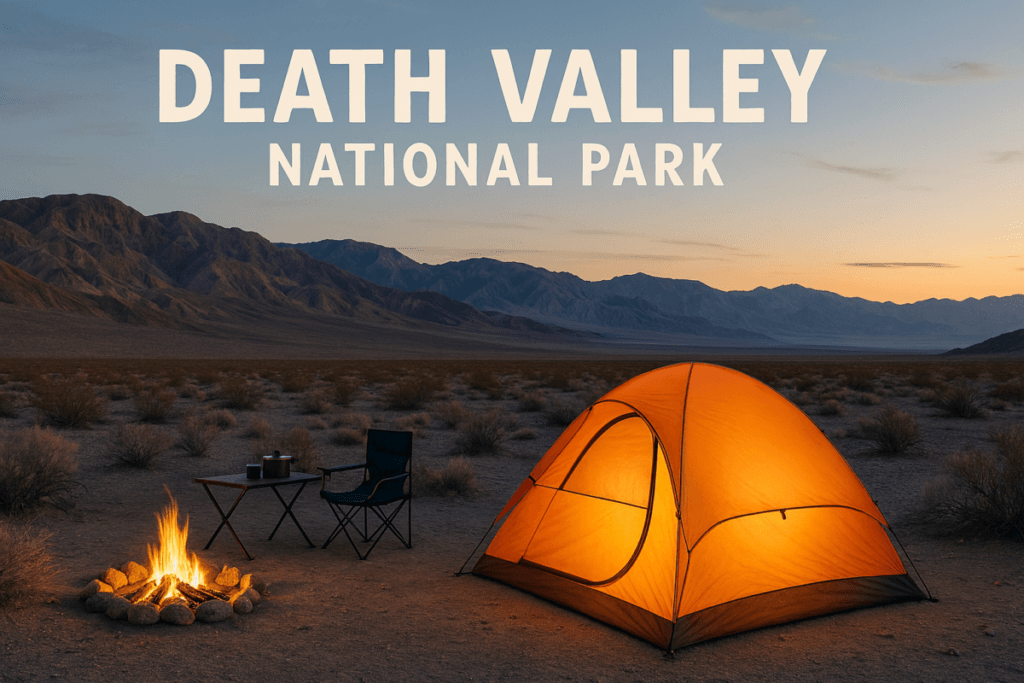
Furnace Creek is the main hub, home to The Inn at Death Valley, a historic resort built in the 1920s that now operates as a luxury property under the Oasis at Death Valley brand.
It is not cheap, but if you are coming from Europe and this is a once-in-a-decade trip, the pool fed by a natural spring at the lowest-elevation pool in the Western Hemisphere is something specific. A more accessible option is The Ranch at Death Valley, which operates more like a standard hotel and costs considerably less.
Camping is where the park’s value proposition gets interesting for budget-conscious travelers. Furnace Creek Campground accepts reservations through Recreation.gov, and during peak season it books out weeks in advance.
Texas Spring Campground, just south of the visitor center, is typically first-come, first-served. There are also backcountry camping options throughout the park that are free, though they come with specific rules about setback distance from roads and water sources.
The NPS backcountry camping guidelines are worth reading in full before you go dispersed camping, since some areas are off-limits to protect sensitive desert ecosystems. You can find more about planning budget national park trips on Tadexprof.com.
The Entrance Fee
Death Valley charges $30 per vehicle for a seven-day pass as of early 2026. If you are planning to visit more than two or three national parks in a calendar year, the America the Beautiful Annual Pass at $80 covers entrance to all federal lands including national parks, national forests, and Bureau of Land Management sites.
For international visitors who have built a multi-park itinerary, this pass almost always pays for itself. The National Park Service provides full details and purchase options at store.usgs.gov/recreational-use.
Safety Basics
The park averages about 300 search and rescue operations per year. Most of them involve people who ran out of water, got stuck on an unmaintained road, or attempted a hike during the hottest part of the day without adequate preparation.
The standard advice is to carry at least a gallon of water per person per day during cooler months and significantly more in summer. Let someone know your route and expected return time before going into the backcountry.
Do not rely on your phone for navigation on remote roads, since cell coverage is almost nonexistent outside the main corridor.
If you are renting a vehicle, check that it is in good mechanical condition and that your spare tire is properly inflated. The remoteness of the park means that a breakdown can turn into a genuine emergency if you are not prepared.
Death Valley for International Visitors
German travelers specifically represent one of the largest international visitor segments to the American Southwest.
The cultural draw of the wide-open frontier landscape, partly romanticized through the Western novels of Karl May that shaped generations of German readers, makes Death Valley a near-obligatory stop on any serious American road trip itinerary.
If you are planning a longer American trip from Germany, it is worth cross-referencing your route with Tadexprof.com for broader American travel strategy and destination guidance.
One practical note for European visitors: American national parks do not have the density of services you might find in European nature reserves. Fuel up every time you see a station.
There are only a handful of fuel stops within the park and surrounding area, and prices run significantly higher than average.
The Death Valley Natural History Association at dvnha.org operates a bookstore at the visitor center and offers a range of field guides that are worth picking up before you head off-road.
Death Valley rewards the people who respect it. The extremes that make its name sound ominous are exactly what make the experience irreplaceable.
There is nothing else on the continent quite like standing on the floor of a below-sea-level basin at sunset, watching the light move across 200 miles of mountain and salt and sky, in a silence that feels absolute.