Where is Glacier National Park?
It sits in northwestern Montana, right on the border with Canada, sharing a boundary with Waterton Lakes National Park in Alberta to form the Waterton-Glacier International Peace Park, the first international peace park in the world.
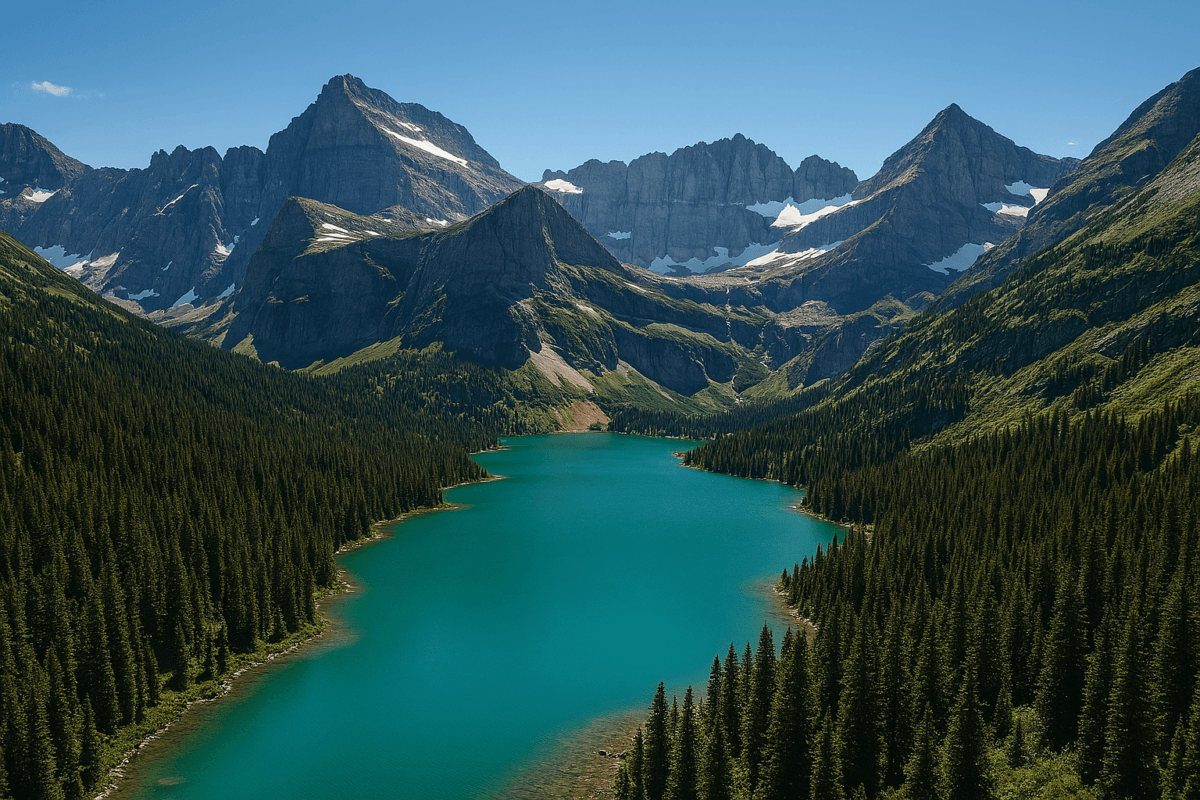
Together they protect over one million acres of alpine meadows, glacial lakes, carved valleys, and some of the most dramatic mountain scenery anywhere on the North American continent.
Is Glacier National Park worth visiting?
Among people who have been there, the answer is almost universally yes.
The park holds over 700 miles of trails, 130 named lakes, and a landscape shaped by glaciers that carved the terrain over tens of thousands of years. The glaciers that gave the park its name are retreating due to climate change, which adds a layer of urgency to any visit.
What exists today will not exist in the same form indefinitely.
How crowded is Glacier National Park? Peak season from July through Labor Day is extremely busy, with parking lots filling before 8 a.m. and vehicle reservation systems in place for the main entry routes.
The good news is that Glacier rewards visitors who plan around the crowds, and the shoulder seasons offer experiences that summer cannot match.
Going-to-the-Sun Road
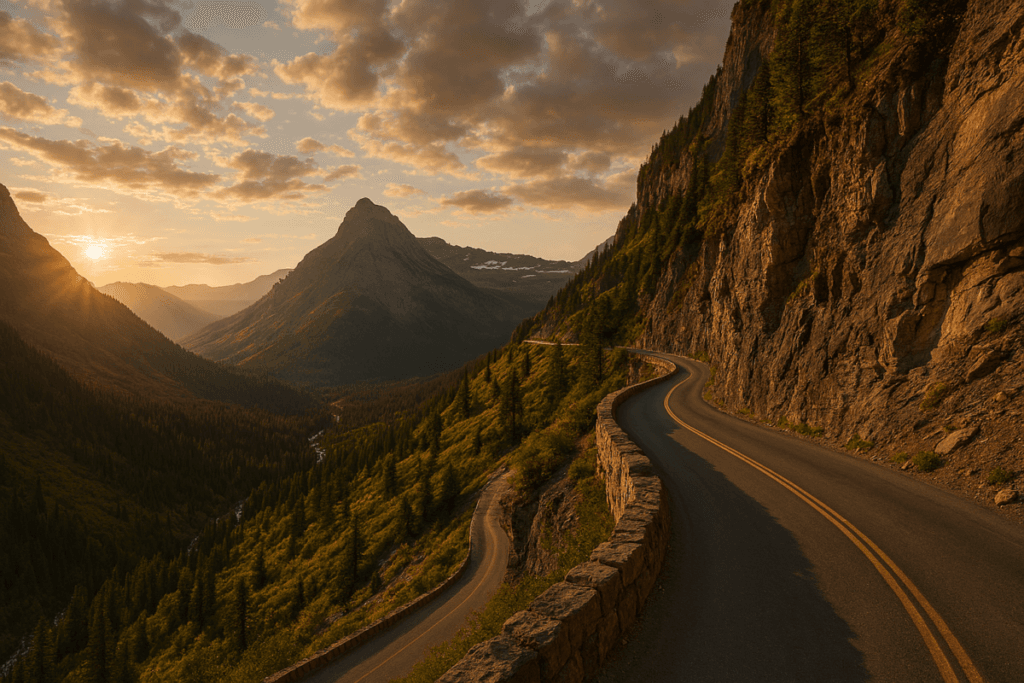
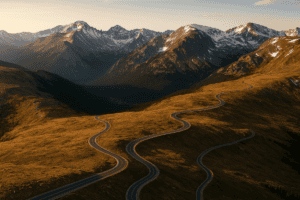
No single road in the American national park system is more talked about than the Going-to-the-Sun Road, and very few live up to their reputation as consistently as this one does.
The 50-mile route crosses the Continental Divide at Logan Pass, climbing through cedar forests, past waterfalls, along ledge roads cut into sheer cliff faces, and finally into the open alpine tundra of the pass itself at 6,646 feet elevation. The views shift continuously for the entire length of the drive.
The road typically opens fully by late June or early July depending on snowpack and closes again in mid-October.
During peak season from mid-June through late September, vehicles entering from the west through the West Glacier entrance between 7 a.m. and 3 p.m. require a timed entry reservation.
That reservation is separate from the park entrance pass, which means having an America the Beautiful pass does not exempt a visitor from needing to book entry in advance. Reservations open online months before the season and sell out quickly for July and August dates.
For travelers who cannot get a reservation or prefer to avoid the vehicle system entirely, the park runs a free shuttle service along the Going-to-the-Sun Road corridor during summer.
Boarding at the Apgar Visitor Center near West Glacier and riding to Logan Pass is a legitimate and often more relaxed alternative to driving, with the added advantage of being able to look at the scenery rather than the road.
The Trails
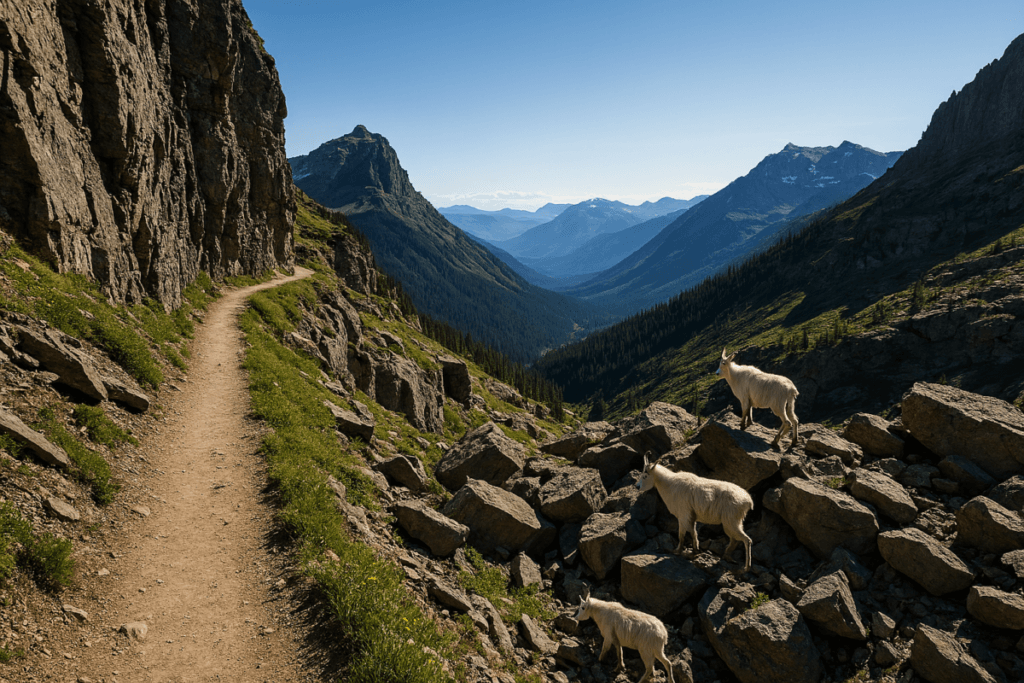
Highline Trail Glacier National Park Montana narrow alpine trail along rocky cliff edge with sweeping mountain valley views, mountain goats visible on rocky terrain, clear sky, photorealistic landscape photography/ Egde dev created for Tadexprof
Glacier has over 700 miles of maintained trails covering terrain from easy lakeside walks to serious alpine routes that demand fitness, navigation skills, and bear spray.
The trail to Avalanche Lake from the Trail of the Cedars is one of the most accessible and rewarding in the park, passing through old-growth cedar and hemlock forest before opening onto a lake fed by waterfalls pouring directly off the cliffs above.
The round trip is just over four miles and gains less than 500 feet of elevation, making it suitable for most visitors.
Highline Trail along the Garden Wall north of Logan Pass is the park’s signature alpine hike. Starting from the Logan Pass visitor center and running north along a narrow ledge cut into the cliff face, it offers sustained views down into the McDonald Valley on one side and across to the peaks of the Lewis Range on the other.
Mountain goats are frequently spotted on and near the trail. The full route to Granite Park Chalet and back covers roughly 15 miles, but even hiking a few miles out and turning around gives a strong sense of what makes this landscape exceptional.
Grinnell Glacier Trail in the Many Glacier area on the east side of the park leads to one of the last remaining accessible glaciers in the park.
The hike is roughly 11 miles round trip with significant elevation gain and rewards visitors with views of Grinnell Lake, Upper Grinnell Lake, and the glacier itself, which has retreated dramatically over the past century.
Rangers and researchers have documented this retreat through repeat photography spanning more than 100 years, and the comparison images are striking.
Travelers combining Glacier with other major US national parks should read the guide to the most visited US national parks on Tadexprof, which covers the seven top parks with planning advice tailored to visitors from the US, Canada, and Germany.
Wildlife in Glacier National Park
Glacier is one of the few places in the lower 48 states where the full suite of large North American mammals still exists in a functioning ecosystem. Grizzly bears, black bears, gray wolves, mountain lions, wolverines, lynx, moose, elk, deer, bighorn sheep, and mountain goats all live within park boundaries.
That combination is genuinely rare and draws wildlife watchers who have spent years looking for these animals in more fragmented landscapes.
Grizzly bears are seen throughout the park but are most commonly encountered in the Many Glacier valley and along the highline trails above Logan Pass. Bear spray is required on all backcountry trips and strongly recommended on any trail in the park.
The protocol for hiking in bear country applies here more seriously than almost anywhere else in the lower 48, and following it is not optional.
Mountain goats are among the easiest large mammals to spot in Glacier because they favor the same exposed ridgelines and cliff faces that the best trails traverse. Logan Pass is one of the most reliable spots in North America to see them at close range.
They are accustomed to human presence but are wild animals, and the park asks visitors to maintain distance and never approach or feed them.
Fall is considered the best season for wildlife viewing overall. Bears enter hyperphagia in late summer and autumn, feeding intensively before hibernation, which makes them more visible and more active. Elk bugling peaks around mid-October.
The crowds thin after Labor Day, making the animals easier to observe without the pressure of summer foot traffic.
When to Visit
Late June through mid-September is when the Going-to-the-Sun Road is fully open, all visitor centers and lodges operate, ranger programs run on full schedules, and every trail in the park is accessible.
This is peak season and the experience is exceptional if visitors plan around the crowds by arriving early, using the shuttle, and booking everything months in advance. July and August are the warmest and busiest months.
Late September offers noticeably thinner crowds, golden larch trees turning the mountainsides yellow, and full trail access before the high country closes for winter.
Spring before mid-June is quiet and raw. The Going-to-the-Sun Road is still closed to vehicles but open to cyclists and hikers as far as snowplows have cleared it, which creates a rare opportunity to experience the road without a single car in sight. Waterfalls run at full power from snowmelt. Services are limited and conditions require self-sufficiency, but for travelers who value solitude over convenience, spring in Glacier is genuinely special.
For Canadian visitors, Glacier sits within reasonable driving distance from Calgary and Lethbridge, and the shared border history with Waterton Lakes makes a combined visit to both parks a natural itinerary.
German visitors flying into Calgary or Great Falls will find the park a manageable drive from either airport.
The park entrance fee is 35 dollars per vehicle, and the America the Beautiful annual pass covers the entrance fee for a full year across all federal lands, making it worthwhile for anyone visiting multiple parks.
For travelers who want to plan a broader national parks itinerary, the complete US national parks list on Tadexprof covers all 63 parks and helps narrow down which ones fit a particular travel style and schedule.
Where to Stay
Lodging inside the park is limited and books up extraordinarily fast. Lodges like Lake McDonald Lodge and Many Glacier Hotel are among the most sought-after accommodations in the entire national park system and typically sell out within minutes of reservations opening in the spring.
Anyone planning a summer visit should set calendar reminders for the reservation opening dates on the park’s official website and be ready to book the moment they become available.
The town of Whitefish, about 25 miles from the West Glacier entrance, is the most practical gateway for most visitors.
It has a full range of hotels, restaurants, and services, an Amtrak station on the Empire Builder route that runs between Chicago and Seattle, and a small regional airport with connecting flights to major hubs.
West Glacier itself has a handful of lodges and cabin rentals directly outside the park entrance for visitors who want to minimize the commute.
Current conditions, trail closures, permit requirements, and reservation information for Glacier National Park are updated regularly on the official NPS Glacier page, which is the most reliable source for planning details that change from season to season.
A Landscape That Exists on Its Own Terms
The Crown of the Continent, as the Glacier region is known among ecologists, sits at the convergence of three major North American ecosystems. Pacific weather systems come in from the west. Prairie weather rolls in from the east.
Arctic systems push down from the north. The result is a climate and ecology unlike anywhere else on the continent, expressed in a landscape that shifts from dense rainforest on the western slopes to dry grassland on the eastern front within the space of a single mountain crossing.
The glaciers that carved this landscape are retreating faster than at any point in recorded history. Scientists estimate that the park had around 150 glaciers when it was established in 1910. Fewer than 30 remain today by the definition used to classify an active glacier.
What remains is still extraordinary, still wild, and still worth the journey from wherever in the world the journey begins.
But visiting sooner rather than later is not a cliche here. It is honest advice.