Where is Olympic national park located?
Olympic National Park occupies the heart of the Olympic Peninsula in northwestern Washington State, about 90 miles west of Seattle across the Puget Sound.
The nearest major airport is Seattle-Tacoma International, from which you can reach Port Angeles, the main gateway town on the north side of the park, in about two and a half hours by car and ferry, or just over three hours by road. A rental car is essential.
What makes Olympic national park different from other us national parks?
Most national parks are built around a single dominant landscape. Olympic is three entirely different worlds inside one park boundary.
You have glacier-capped mountains rising above 7,000 feet, one of the last remaining old-growth temperate rainforests in the United States receiving up to 14 feet of rainfall per year, and over 70 miles of wild Pacific coastline with sea stacks, tide pools, and driftwood-strewn beaches that feel genuinely remote.
The drive between the two most popular sections of the park, Hurricane Ridge in the mountains and the Hoh Rain Forest on the western side, takes about two and a half hours one way.
That is not a short transfer. It means Olympic rewards visitors who plan around specific regions rather than trying to rush the whole park in a single pass.
How much does it cost to enter Olympic national park?
The standard vehicle entrance fee is $35, valid for seven consecutive days. Individual entry on foot or bicycle is $20 per person.
The America the Beautiful annual interagency pass at $80 covers entry at all US federal lands and is worth purchasing for any multi-park trip.
Passes can be purchased at park entrance stations or in advance at recreation.gov. Campsite reservations must be made online in advance during peak season.
Check current road conditions and any closures before your trip on the official Olympic National Park conditions page, as weather and flooding can affect access roads significantly in this part of Washington.
Best Things to Do in Olympic national park
Hurricane ridge
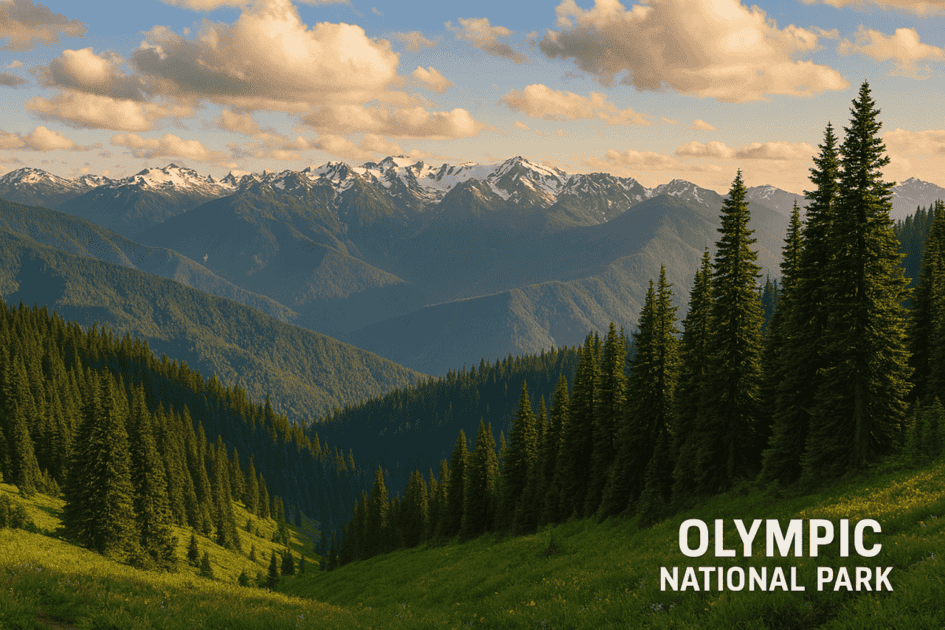
Hurricane Ridge sits 17 miles south of Port Angeles at 5,242 feet and is the most accessible mountain experience in the park.
The drive up Hurricane Ridge Road takes about 45 minutes from Port Angeles and delivers panoramic views of the Olympic Mountains and, on clear days, the Strait of Juan de Fuca and Vancouver Island across the water.
Short paved trails including the Big Meadow Loop and Cirque Rim trail are accessible for most visitors.
The Hurricane Hill trail covers 3.5 miles round trip and climbs to summit views that justify the effort. Olympic marmots, large ground-dwelling rodents unique to this park, are regularly spotted along the alpine meadows here.
In winter, the Hurricane Ridge Winter Sports Club operates rope tows and a Poma lift for skiing and snowshoeing when the road is open, typically Friday through Sunday from late November depending on snow conditions.
The hoh rain forest
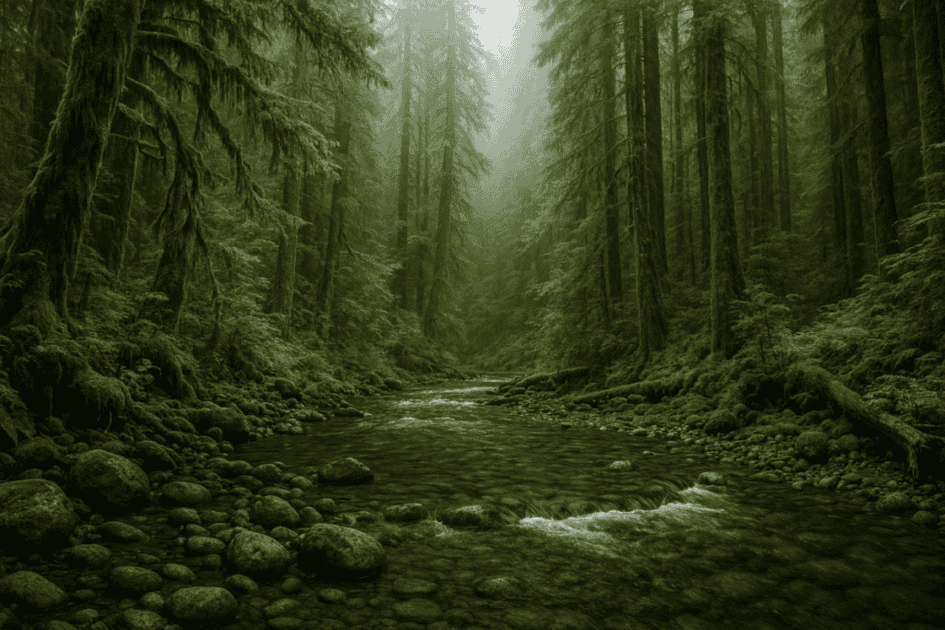
The Hoh Rain Forest on the park’s western side is one of the finest remaining examples of temperate rainforest in the United States and the experience of walking through it is genuinely unlike anything else on the continent.
Annual rainfall here runs between 140 and 170 inches, and the result is a forest where every surface, every fallen log, every branch is layered in thick green moss and ferns.
Trees here are over 500 years old. The two main trails from the Hoh Visitor Center are the Hall of Mosses at 0.8 miles and the Spruce Nature Trail at 1.2 miles.
Both are short, flat, and manageable for all fitness levels. They form a rough figure eight and are easy to combine in a single morning outing.
For stronger hikers, the Hoh River Trail continues 17 miles to Glacier Meadows on the shoulder of Mount Olympus and requires a wilderness permit for overnight travel.
The pacific coastline
Olympic’s 70-plus miles of coastline are the longest stretch of wild, undeveloped Pacific coast in the contiguous United States.
Rialto Beach near the town of La Push is one of the most dramatic entry points, a wide grey pebble beach flanked by sea stacks and backed by dense rainforest.
Ruby Beach, further south near Kalaloch, offers a softer sand beach with offshore rock formations and is one of the best sunset locations in the entire park.
Tide pools along the Kalaloch coast hold sea stars, anemones, crabs, and sea urchins at low tide. Gray whales migrate past the coast in spring and fall.
Bald eagles are a common sighting year-round. The coastal section of the park is accessible year-round even when mountain roads are closed, making it one of the strongest reasons to visit Olympic in winter.
Lake crescent and sol duc
Lake Crescent is a deep glacially-carved lake on the northern edge of the park, surrounded by forest and fed by streams that keep the water a striking shade of blue-green.
The Marymere Falls trail, just over two miles round trip, leads through old-growth forest to a 90-foot waterfall above the lake.
Lake Crescent Lodge, open from late April through early January, sits directly on the waterfront and is one of the most atmospheric accommodations in any national park in the country.
About 12 miles west of Lake Crescent, the Sol Duc Valley offers hot springs mineral pools managed by a resort concessioner, old-growth forest hiking, and the Sol Duc Falls, a wide curtain waterfall that is among the most photographed in Washington State.
Best Time to Visit
Summer from late June through August is when all sections of the park are fully accessible, weather is most reliable, and wildlife viewing is at its most active.
It is also the most competitive season for campsite reservations and accommodation. The Hoh Rain Forest in particular draws heavy weekend crowds from Seattle in summer, with occasional metered entry at the parking lot when capacity fills.
Fall from September through October brings fewer crowds, dramatic coastal storms that make Rialto Beach and Ruby Beach extraordinary to walk, and the best elk viewing of the year around the Hoh Valley and Elwha River areas.
Winter keeps the coastline and rainforest fully accessible while the mountain roads reduce to weekend-only service.
Spring from April through June balances accessibility and solitude better than any other season, with wildflowers covering the Hurricane Ridge meadows by late May and the rainforest at its most intensely green.
The pacific northwest itinerary
Olympic sits in the Pacific Northwest and pairs naturally with other major parks and destinations in the region.
For visitors building a broader American national parks itinerary that moves from the northwest toward the northern Rockies, our guide to Glacier National Park in Montana gives you the full picture of what that drive delivers.
If the wider western United States circuit is your plan and you are moving south toward Utah after Washington, our articles on Zion National Park and Bryce Canyon National Park cover both destinations in full detail so you can plan the transitions without gaps.
Olympic National Park does not compete for attention the way Yellowstone or the Grand Canyon do.
It earns it slowly, through the specific feeling of standing in a rainforest that has not changed in centuries, or watching the Pacific push against a coastline that has no road behind it for miles.
Give the park three days if you can. Split your base between the north and the west. And bring rain gear regardless of the forecast. This is Washington. The weather is part of the experience.