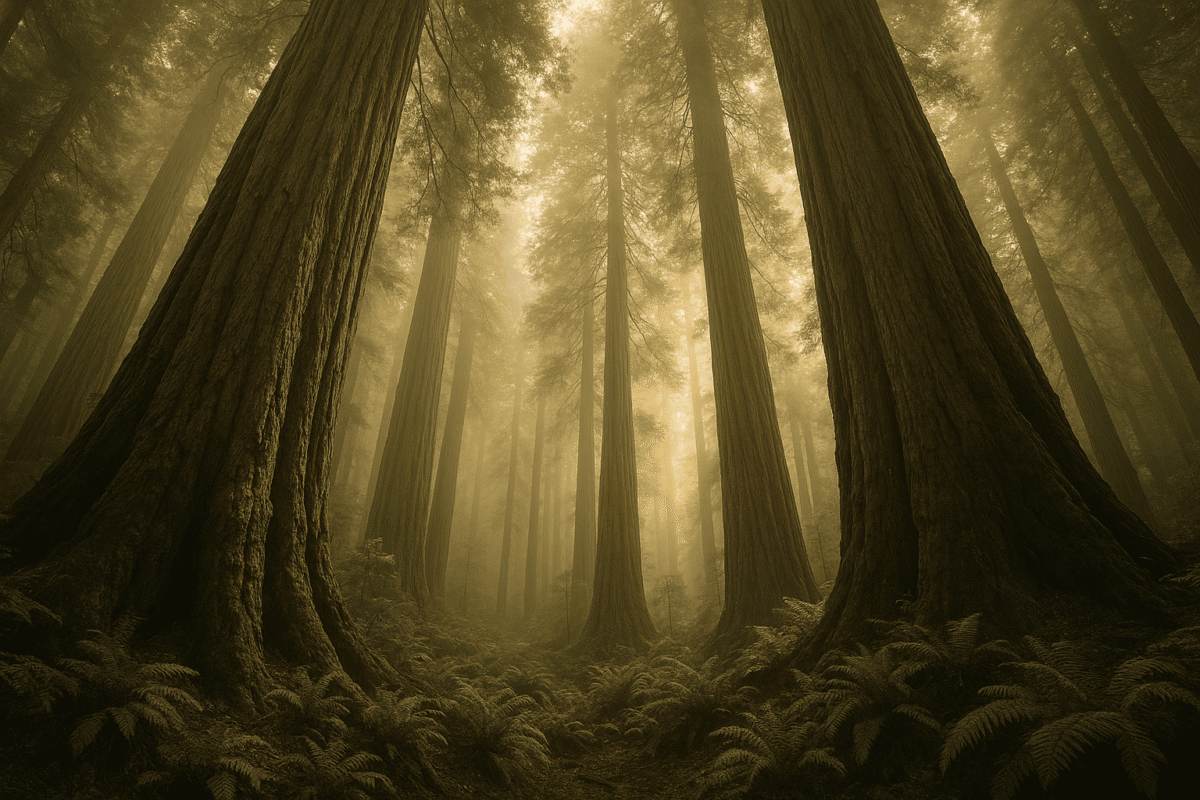
Redwood National Park and State Parks occupy the far northwestern corner of California, running along a 50-mile stretch of Pacific Coast between the towns of Orick in the south and Crescent City in the north.
The park is about 330 miles north of San Francisco, six hours by car, and sits roughly 80 miles below the Oregon border.
Most people arrive via Highway 101, which threads directly through the redwood corridor and is one of the better road trips in the country on its own terms.
There is no single entrance gate and no admission fee to enter the national park itself, though the state park sections charge day-use fees at certain sites.
A rental car is the only practical way to navigate the park. There is no shuttle system connecting the main zones, and the distances between the key destinations are real enough to matter when you are planning your days.
Overview
The name is slightly misleading. Redwood National and State Parks is four parks managed jointly, one federal and three state, covering 131,983 acres total.
The three California state parks are Jedediah Smith Redwoods in the north, Del Norte Coast Redwoods in the middle, and Prairie Creek Redwoods in the south near Orick.
Together they protect the largest remaining stands of old-growth coast redwoods left on the planet. Before logging stripped most of coastal northern California in the 19th and 20th centuries, coast redwoods covered roughly two million acres.
Less than five percent of those original forests survived. What remains is here, and it is the only place on earth where you can walk among trees of this age and height in this concentration.
Coast redwoods, Sequoia sempervirens, are the tallest living species on earth. The tallest measured individual, a tree called Hyperion, stands just over 380 feet.
Its exact location inside the park is not disclosed because previous attempts to find it caused significant damage to the surrounding soil and root systems.
You are better off accepting that the tallest tree in the world is somewhere above you and paying attention to the ones you can actually see without trampling the habitat.
What it Costs to Visit
Driving through the park on Highway 101 or the Newton B. Drury Scenic Parkway costs nothing. The state park day-use areas charge fees when you exit the main road to park and explore.
The Gold Bluffs Beach area, which is the access point for Fern Canyon, costs $12 per vehicle. Between May 1 and September 30, a separate permit is required to enter that area, which must be booked in advance through the California State Parks reservation system.
The America the Beautiful annual federal pass and the California State Parks pass both cover the day-use fees. Camping within the park complex requires advance reservations and nightly fees that vary by site.
The Tall Trees Grove trail requires a free permit regardless of season, which must also be reserved in advance.
The permit system catches visitors off guard more than anything else about this park. If Fern Canyon is on your list and you are visiting in summer, sort the permit before you book the flights.
For current trail conditions and recent visitor reports across all sections of the park, AllTrails is the most reliable crowdsourced source available.
Best Spots in the Park
Fern Canyon
A slot canyon in Prairie Creek Redwoods State Park where the walls rise 50 feet and every surface is covered in ferns. Five distinct fern species coat the rock face, some belonging to genera that have existed for over 300 million years.
A creek runs through the canyon floor, which means getting your feet wet is part of the deal in spring and early summer. The short one-mile loop from the Davison Road trailhead takes under an hour.
The road to reach it is seven miles of unpaved dirt suitable for standard cars but not trailers or RVs over 24 feet.
This canyon was used as a filming location in The Lost World: Jurassic Park, which was a reasonable creative choice given that it looks genuinely prehistoric from ground level.
Tall Trees Grove
The permit-required trail that goes down into an old-growth grove containing some of the tallest trees ever measured.
The hike is 3.6 miles round trip with about 800 feet of elevation loss on the descent, which means the climb out earns its reputation. The grove is quiet because the permit system limits daily access.
That quiet is the point. You are in a forest where individual trees were already centuries old when the Roman Empire fell.
The trailhead access involves a combination of dirt roads with specific instructions sent with the permit confirmation, so downloading those details before you leave cell range is not optional.
The Newton B. Drury Scenic Parkway
A ten-mile paved road through Prairie Creek Redwoods State Park that runs entirely through old-growth forest. No hiking required. You drive slowly and stop when the trees demand it.
Adjacent to the southern end is Elk Meadow, a grassy clearing where Roosevelt elk graze at dawn and dusk with the regularity of a scheduled event.
These are the largest elk subspecies in North America and encounters are common enough that most visitors see them without any particular effort.
The Coast
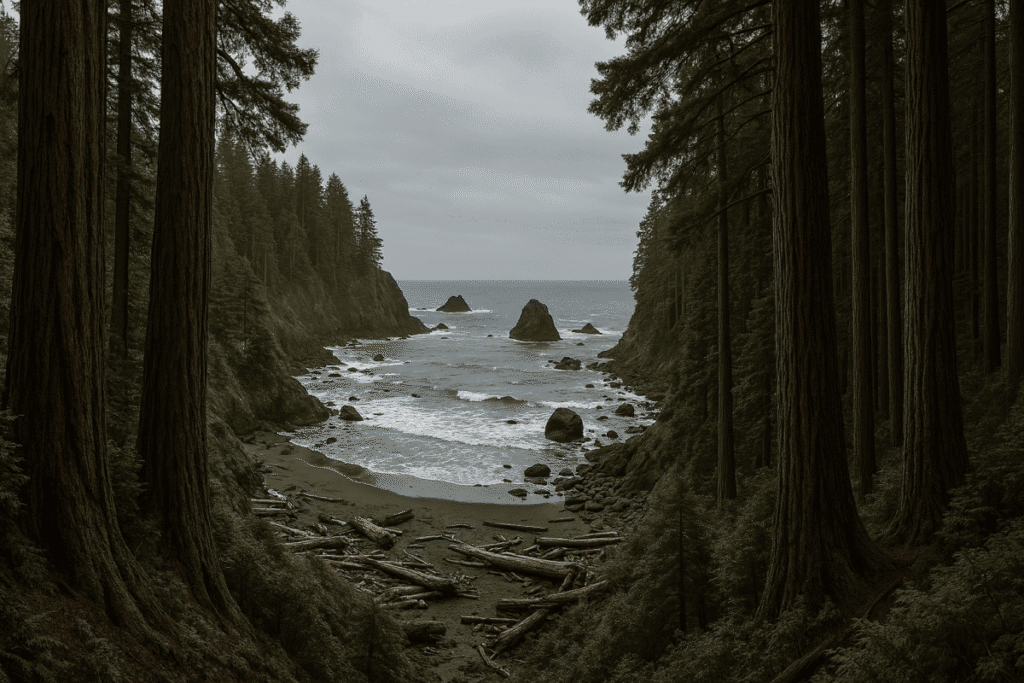
The park sits on the California coast and a stretch of that coastline is as wild and undeveloped as you will find anywhere on the Pacific.
Gold Bluffs Beach, accessible via the same Davison Road that leads to Fern Canyon, is a black sand beach backed by coastal bluffs where elk occasionally wander the shoreline.
There are no food vendors, no facilities beyond parking, and the whole place has a quality that is rare in California.
If the weather cooperates, spending an hour there after hiking the canyon is one of the better combinations the park offers.
When To Visit
The park is open year-round. The permit requirement for Fern Canyon and the Gold Bluffs Beach area runs May 1 through September 30, so visiting outside that window removes the main logistical headache and waives the day-use fee.
Fall is the driest season and the forest is deeply atmospheric in autumn light. Winter brings heavy rainfall, which keeps the ferns at their most vivid green but also makes some unpaved access roads unreliable.
Summer crowds here are modest compared to parks like Yosemite, which makes it a reasonable peak-season choice for visitors who want the California national park experience without the infrastructure strain.
How to Plan your Trip
Redwood sits far enough north to pair naturally with Oregon coast driving rather than with the main California park circuit. Visitors coming from the south on a longer California trip often combine it with Lassen Volcanic National Park or with a northern California coast drive.
If your national parks planning is still at the broad itinerary stage, the national park map by state on Tadexprof is a useful reference for working out which parks cluster logically by geography before you start booking anything.
And if you are already tracking NPS conditions before trips, the post on how to use the NPS alerts page is worth reading before you head to any park where road access depends on seasonal conditions, which describes Redwood closely.
The trees were here before the Roman roads were built and they will be here after most things we consider permanent have stopped mattering.
That is not a pitch. It is just the feeling that stays with you after you spend a morning in the grove and realize that every other problem you walked in with has gone quiet.