The best hikes in Yosemite National Park are not the same trail for everyone, and the answer changes considerably depending on fitness level, how much time is available, and what the trip is actually about.
For a family with young children spending one morning in the valley, the Lower Yosemite Fall Trail covers a mile of mostly flat ground and ends at the base of the tallest waterfall in North America.
For a serious hiker with a full day and strong legs, the Half Dome Trail covers up to 16 miles round trip and gains nearly a vertical mile of elevation. Both are legitimate Yosemite experiences.
They just ask completely different things of the person doing them.What follows is not a ranking.
It is an honest account of what the valley’s main trails actually deliver, what they demand in return, and which ones suit which kinds of visitors, so that the time spent in the park matches why the trip was made.
The Trails
There is a tendency among experienced hikers to dismiss short, flat trails as lesser versions of the real thing. In Yosemite Valley that attitude misses something important.
The landscape at trail level, close to the meadows and the river and the base of the falls, is different from the view you get from a distance or from a car.
These trails put you inside the valley rather than looking at it.The Bridalveil Fall Trail is half a mile round trip with 80 feet of elevation gain.
That description makes it sound like a warm-up, and in hiking terms it is. But Bridalveil Fall in spring, running hard from snowmelt with the mist reaching the trail well before the base comes into view, is genuinely affecting.
The trail is paved and accessible, which matters for visitors with mobility limitations or parents pushing strollers, and it is usually the first stop along the main valley road since it sits at the western entrance to the valley floor.
Cook’s Meadow Loop is a flat one-mile circuit through the heart of the valley with unobstructed views of Half Dome, Yosemite Falls, and Sentinel Rock from a single walk.
It is the trail for anyone who wants to understand the geography of the valley quickly, standing in the meadow with the granite walls rising on both sides and the scale of everything becoming clear in a way that no photograph quite prepares you for.
Most Visitors Fit
Mirror Lake sits at the end of a two-mile out-and-back trail, with an optional five-mile loop that adds distance without adding significant difficulty.
The lake itself is seasonal, shrinking through summer and becoming more of a meadow by late season, but the walk along Tenaya Creek in the shadow of Half Dome’s north face is worth the distance regardless of water levels.
The full loop takes most visitors two to three hours and is a genuinely satisfying half-day on foot.
The Valley Loop Trail is one of Yosemite’s most underused options for visitors who want more than a short walk but are not ready for serious elevation gain.
The full loop covers 13 miles along the valley floor, mostly flat, with shifting perspectives on the walls and formations throughout.
The half loop at 6.5 miles is the practical choice for most people.
Neither version gets as much attention as it deserves, largely because the trail does not end at a dramatic destination in the same way the waterfall trails do, but the sustained valley immersion it provides is its own kind of reward.
Strenuous Trails
The Mist Trail to Vernal Fall is the point where Yosemite hiking shifts from pleasant to demanding, and it is one of the most concentrated stretches of trail scenery in the American West.
The trail climbs from the valley floor along the Merced River to Vernal Fall at 317 feet, and continuing on to Nevada Fall adds another 594 feet of waterfall above that.
The round trip to the top of Nevada Fall covers eight miles and gains 2,000 feet of elevation.
In spring, when both falls are running at full volume, the Mist Trail section below Vernal Fall is exactly what its name suggests, with spray from the falls reaching the trail and soaking anyone who did not bring a rain layer.
The NPS Yosemite Valley hikes page lists the complete trail data for every route, including distances in both miles and kilometers, which matters for Canadian and German visitors accustomed to metric measurement and doing their own pace calculations.
The Yosemite Falls Trail is a different kind of strenuous. The lower section to the base of the lower falls is two miles round trip and manageable for most visitors.
The full trail to the top of the upper falls covers 7.2 miles and gains 2,700 feet.
From the top, the valley spread out 2,400 feet below is the kind of perspective that resets how large everything felt from the meadows below.
The trail is exposed and rocky above the lower falls section, and afternoon heat in summer makes an early start not just preferable but genuinely important for safety.
Half Dome
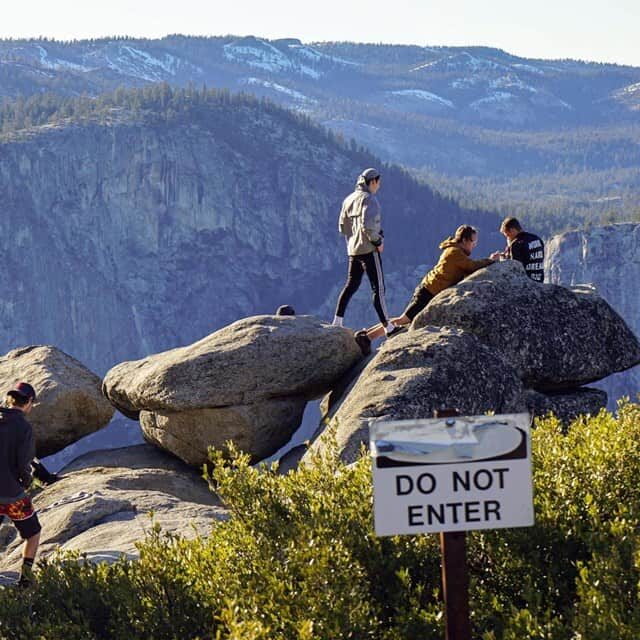
Half Dome is the hike that defines Yosemite in the popular imagination, and it earns that status.
The round trip covers 14 to 16 miles depending on the approach, gains 4,800 feet of elevation, and ends on a summit cable system that is the only way up the final 400-foot granite face.
The cables go up the Friday before Memorial Day and come down in early October. A permit lottery governs access because the trail cannot safely or sustainably handle unrestricted use.
Getting the permit requires entering the lottery months in advance. Day-of permits exist in limited numbers but are not a reliable fallback strategy.
Treating the Half Dome permit the way any serious traveler treats accommodation booking, as a fixed planning variable that needs to be resolved early, is the right approach.
For visitors whose Yosemite planning is still in early stages, reading through how timing affects both permit availability and trail conditions is worth doing alongside the best time to visit Yosemite guide before committing to dates.
How to Choose the Right Trail
The practical question most visitors face is not which trail is best in the abstract but which trail fits the day they actually have.
A morning of valley hiking that ends at noon for a family with a long drive home looks different from a full solo day with no other agenda.
The valley’s trail network is organized well enough that a visitor can mix a short easy walk in the morning and a moderate trail in the afternoon and feel like they have genuinely engaged with the park without overextending.
For anyone making the logistical side of the trip work, the best hotels near Yosemite guide covers where to stay across different budgets and distances, which affects what time you can realistically start on trail each morning, and that window matters more than most people account for when planning a Yosemite day.
The valley gives back in proportion to the thought put into the visit. The trails are the primary language it speaks in. Learning a few of them well is how the park makes its full argument.