Most people pick their Yosemite dates around work schedules, school holidays, or because someone told them summer is the time to go. Some of them have a wonderful trip.
Others arrive to bumper-to-bumper traffic on a two-lane road, a valley that smells faintly of sunscreen and exhaust, and waterfall viewpoints that are essentially dry by August. The park itself is never the problem. The timing often is.
Yosemite is a mountain park with an enormous elevation range, and that single fact controls more about what the park looks and feels like than any guidebook will tell you up front.
The valley floor sits at 4,000 feet. The high country at Tuolumne Meadows sits at 8,600 feet.
The Sierra Nevada peaks within park boundaries reach beyond 13,000 feet.
At any given moment in spring, those three zones can be experiencing entirely different seasons.
Understanding the best time to visit yosemite national park is the starting point for planning a trip that actually matches what you came for.
Spring Peak Season
There is a version of Yosemite that most summer visitors never see.
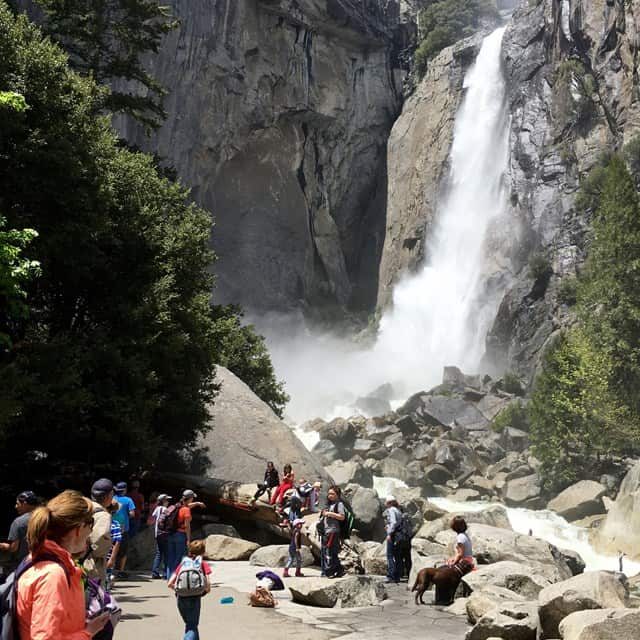
In May, when the winter snowpack has been sitting on the high Sierra for months and temperatures finally start climbing consistently, that snow begins releasing into the Merced River and into every creek and falls in the park. The results are staggering.
Yosemite Falls, the tallest waterfall in North America at 2,425 feet, runs with a force in May that makes the same falls in August look like a different feature entirely.
By late summer, in dry years, it stops flowing altogether. Bridalveil Fall, which many visitors photograph from the valley floor, is similar.
The difference between seeing these waterfalls in May and seeing them in August is not subtle.
It is the difference between something that takes your breath away and something that makes you wonder what the fuss was about.
The tradeoff is weather that refuses to stay predictable. March and April in the valley can deliver a warm sunny morning and a snowstorm by afternoon.
Trails at mid-elevation carry ice and flooded creek crossings well into April, and the higher roads, including Tioga Road into the high country, remain closed under snow.
But the crowds are nowhere near summer levels, the air is clean, and the light on El Capitan in early spring has a quality that serious landscape photographers plan trips specifically around.
May is the sweet spot for a first visit. Most valley trails are clear, the waterfalls are at or near peak, Glacier Point Road typically reopens, and the summer crowds have not yet arrived in full force.
For Canadian visitors building a California road trip around the Memorial Day long weekend, May lines up logistically and experientially better than most other windows.
Summer Full Access
July is when Yosemite becomes the version of itself that everyone has seen in photographs.
The skies are blue, the granite glows, Tioga Road is open and Tuolumne Meadows is accessible, and the park is running at full capacity in every sense of that phrase.
Trailhead parking fills before 8 in the morning on busy weekends. The valley shuttle lines stretch long.
The reservation system for driving into the valley adds a planning layer that first-time visitors regularly underestimate.
None of that is a reason to avoid summer. It is a reason to understand what you are walking into and prepare accordingly.
The high country above 8,000 feet is a genuine escape from the valley crowds even in peak season.
Tuolumne Meadows runs 20 to 30 degrees cooler than the valley on a hot day and draws a different kind of visitor, one who has specifically sought out the quieter, wilder version of the park.
For German travelers visiting California in summer, who often come with more experience in mountain and wilderness environments than the average American day visitor, Tuolumne tends to feel like the real discovery.
Fire smoke is not a small caveat. The NPS notes that one to three weeks of unhealthy air quality is typical between August and September, and it can arrive earlier.
On a smoky week in late August the valley can feel more like a city with dramatic scenery in the background than a wilderness experience.
Checking current conditions before and during any summer trip is not optional extra caution. It is basic trip management.
September
After Labor Day something shifts in Yosemite. The families with school-age children largely disappear.
The summer visitors from Europe, including the substantial German and Swiss contingent that tends to concentrate in July and August, have mostly gone home.
The valley is still warm and accessible. Tioga Road is still open. The meadows around Tuolumne start turning gold at the edges. And the whole park breathes out.
Accommodation rates in gateway towns like Mariposa drop noticeably after Labor Day. The same hotel room that cost $280 in mid-July might run $180 in mid-September.
The hiking is better because the temperatures are better. The air is typically clearer than August.
And the quality of light in early fall, lower in the sky and warmer in tone, does something to granite that summer light does not.
For American visitors with any schedule flexibility, and for Canadian travelers planning fall road trips through the Sierra Nevada, September deserves more serious consideration than it usually gets.
It consistently delivers a version of Yosemite that feels generous rather than crowded, and that distinction matters more than most people realize until they experience both versions.
Winter
Winter in Yosemite Valley does not get the attention it deserves partly because the high country closes entirely.
Tioga Road shuts down for the season around November and rarely reopens before late May, and the ski world tends to point people toward Tahoe rather than Badger Pass.
But the valley in a fresh snowfall is one of the quieter natural experiences available anywhere in California.
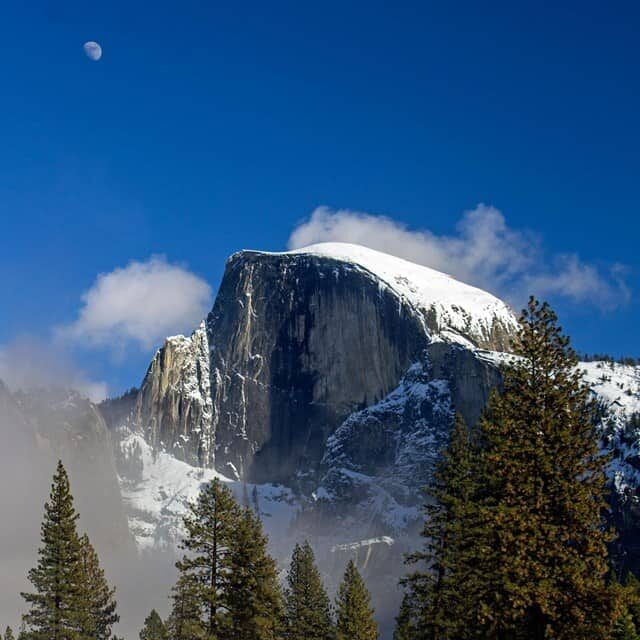
When snow lies on the valley floor, the usual visual noise disappears. Half Dome reflected in a snow-covered meadow, El Capitan with a white base and the granite darkened by moisture above it, the falls partially frozen and running slower, the paths nearly empty.
Over 70 percent of Yosemite’s annual precipitation falls between November and March, mostly as snow at elevation, and that snowpack is what feeds the spring waterfalls months later. The winter experience and the spring experience are directly connected.
Anyone driving in during winter needs tire chains in the car. Chain controls on park roads can be enforced with no advance warning, and being unprepared means being turned back at the gate.
That practical detail aside, winter visits reward patience and a genuine interest in what national parks feel like without the infrastructure of peak season running around them.
A broader California parks itinerary that includes Yosemite often benefits from pairing it with Kings Canyon National Park, which runs on an almost identical seasonal calendar two hours to the southeast and offers a valley landscape of comparable drama with a fraction of the name recognition and the crowds.
Season Shapes Experience
Yosemite does not have a bad season. It has seasons that suit different people and different kinds of trips. The waterfall chaser belongs in May. The high-country backpacker belongs in July.
The person who wants the park without the performance of peak season belongs in September. The traveler who wants solitude and does not need trail access belongs in January.
What none of those people need is to arrive without checking current road conditions, trail status, and weather forecasts in the days before departure.
At a park where the weather can change within hours and the elevation range means conditions vary dramatically across short distances, the most important planning tool is not a guidebook.
It is the NPS Yosemite conditions page, updated regularly and specific to what is actually happening in the park right now.
The rest is personal. Choose the season that matches your trip, not the one that matches everyone else’s.