Camping at Grand Canyon National Park is possible year-round on the South Rim and seasonally on the North Rim, but availability is the central problem.
All campgrounds within the park book well in advance, and reservations can be made up to six months ahead through recreation.gov. That six-month window is not a buffer.
It is the competitive edge that separates visitors who get a site from those who spend a week refreshing a sold-out calendar.
For summer and fall dates, the booking window opens and closes within days. Planning this part of a Grand Canyon trip the same way you plan a last-minute weekend campsite will not work here.
There are four developed campground options across both rims, plus one RV-specific facility, and each one points toward a different kind of trip. Understanding the differences before you search recreation.gov saves real time.
Mather Campground
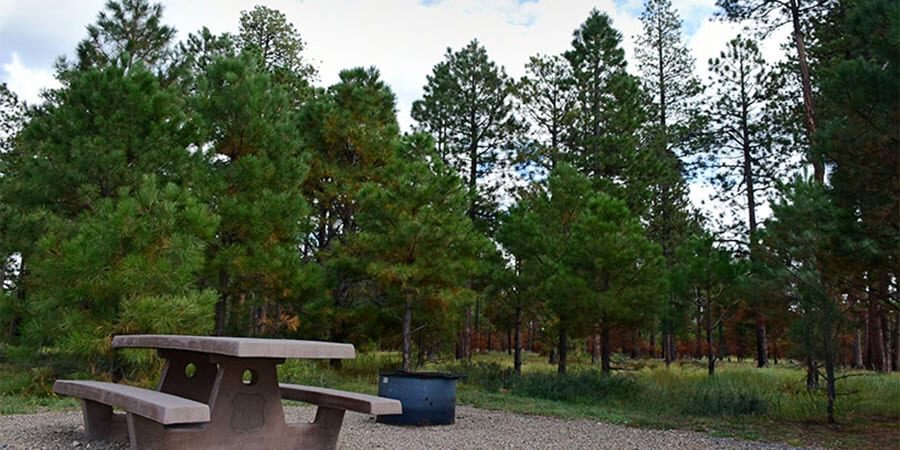
Mather Campground is the South Rim’s primary facility, open all year, centrally located in Grand Canyon Village, and served by the free shuttle bus system.
It has laundry and shower facilities but no RV hookups. This is where the majority of campers end up, and its central location is its strongest feature.
From Mather, you can walk to the rim, catch any shuttle route, access the visitor center, and reach every South Rim trailhead without moving your vehicle.
For families and international visitors arriving by rental car, parking once and operating entirely on foot and shuttle for the duration of a stay is both practical and genuinely more enjoyable than driving loops in a crowded park.
Mather’s lack of hookups is worth noting for RV travelers. The campground accommodates RVs but provides no electrical or water connections at the site level.
If full hookup infrastructure is essential for your setup, Trailer Village is the only in-park option that provides it.
Trailer Village
Trailer Village RV Park sits adjacent to Mather Campground in the South Rim Village, is open all year, has full hookups, and is served by the free shuttle system.
It is managed by the park’s concessionaire rather than the NPS directly, which means the booking process runs separately from recreation.gov.
For North American visitors traveling the Southwest in a motorhome or fifth wheel, finding a full-hookup site inside a major national park is genuinely rare.
Most parks of this scale have hookup facilities only outside the boundary.
The convenience of staying in the village with full services while being on the shuttle network is a meaningful combination that Trailer Village delivers consistently.
Desert View Campground
Desert View Campground on the South Rim is a seasonal facility, open April 11 through October 18 in 2026, with no hookups, located 23 miles east of Grand Canyon Village. Reservations are required.
The distance from the main village is what most visitors weigh against it, but that framing misses what Desert View actually offers.
The eastern end of the South Rim is quieter, less trafficked, and home to the Desert View Watchtower, one of the most architecturally significant structures in any national park.
Sunrises from this section of the rim are exceptional and achieved without competing for a viewpoint with a hundred other people.
The tradeoff is that you are 23 miles from the corridor trailheads, which matters if Bright Angel or South Kaibab are central to the plan.
Tusayan Montane Campground
Tusayan Montane Campground is a National Forest facility open May 15 through September 30, 2026, located 9 miles south of Grand Canyon Village with no hookups. Reservations are recommended.
This is the closest campground outside the park boundary on the South Rim approach road, which gives it a practical advantage for visitors who cannot secure an in-park site.
Being on the Tusayan shuttle route matters here: the seasonal Purple Route shuttle connects Tusayan directly to the South Rim visitor center, removing the parking and driving problem that would otherwise come with staying outside the gates.
For budget-conscious travelers, combining a Tusayan campsite with an America the Beautiful pass, which covers the $35 vehicle entrance fee for a full year across all federal lands, meaningfully shifts the cost equation of a multi-park Southwest road trip.
North Rim Camping
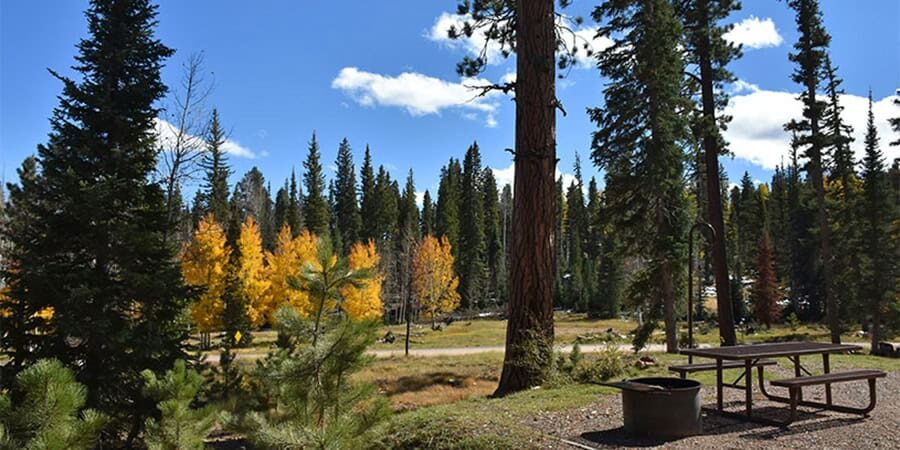
The North Rim Campground is a seasonal facility that was closed for winter and is targeting a potential reopening in May 2026, pending evaluation of impacts from the Dragon Bravo Fire on park infrastructure.
The North Rim operates differently from the South in almost every respect. At 8,000 feet of elevation, the season is shorter, the crowds are a fraction of what the South Rim handles, and the character of the landscape is fundamentally different.
Only 10 percent of Grand Canyon visitors ever experience the North Rim.
For visitors from Germany or other parts of Europe who are accustomed to wilderness experiences with genuine solitude, or for Canadians and Americans who have already done the South Rim and want to understand why people return, the North Rim is the answer.
DeMotte Campground, a National Forest facility 7 miles north of the park boundary, is open May 15 through September 17 and carries no hookups.
It serves as the practical overflow and alternative base for North Rim visitors, particularly useful when the North Rim Campground itself is at capacity during the compressed peak season of July and August.
South Rim versus North Rim
The Colorado River creates a mile-deep barrier that splits the park into two separate rims, and what looks like a short distance across the canyon is actually a five-hour, 215-mile drive between the South Rim Village and the North Rim Village.
This is the fact that most first-time visitors underestimate. Deciding to visit both rims in a single trip requires genuine planning around the drive, not an assumption that proximity on a map translates to ease of access on the ground.
For visitors building a broader Utah and Arizona itinerary that places the Grand Canyon alongside Zion, Bryce Canyon, or the national parks of southern Utah, the campsite booking strategy applies with equal urgency at each stop.
Our Zion National Park guide covers Watchman Campground’s six-month booking window and the permit logistics that need to be secured in the same planning session.
And if the full Southwest loop is still in early stages, the Grand Canyon National Park guide covers entrance fees, the America the Beautiful pass, and how to sequence the parks for minimum driving and maximum time on the ground.
Current campground status, fire-related closures, and updated opening dates for 2026 are maintained on the NPS Grand Canyon camping page, which is worth checking in the weeks before departure regardless of how far in advance you booked.
The campground is not the most glamorous part of a Grand Canyon trip, but it is the part that determines everything else. Get it right early and the rest of the planning falls into place around it.