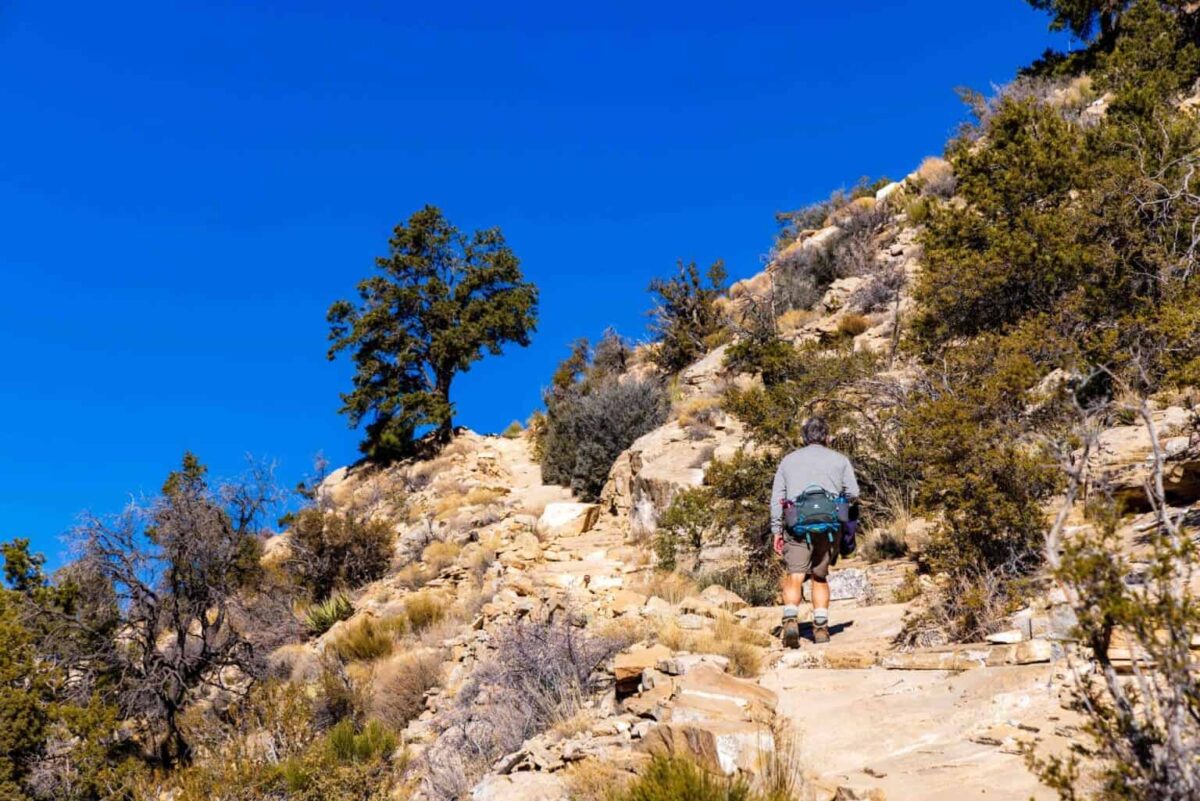
Best hikes in Grand Canyon National Park depend almost entirely on two things: which rim you are standing on and how far below it you are willing to go.
The South Rim has the corridor trails that most visitors use, a handful of unmaintained routes that see far fewer people, and a rim walk that requires no inner-canyon exposure at all.
The North Rim is quieter, higher in elevation, and closes every year on October 15. Neither rim has an easy trail into the canyon. That is not a warning buried in fine print.
The NPS states it plainly, there are no easy trails into or out of the Grand Canyon, and over 250 people are rescued from the canyon each year. The difference between a good trip and a rescue operation is preparation, and it starts before you leave the trailhead.
The Rim Trail
The Rim Trail extends from the village area to Hermits Rest, offering excellent walking with quiet canyon views and sections of paved, accessible path.
Using the free shuttle buses, hikers can start and stop at any viewpoint along the route, making the experience as short or as long as the day allows.
This is the trail that rewards people who arrive without firm expectations.
You can walk two miles of it before breakfast and feel like you have seen something genuinely extraordinary.
The inner canyon views from the western sections near Mohave and Pima Points, accessible by the Hermit Road shuttle, are among the widest and least crowded on the South Rim.
Bright Angel Trail
The Bright Angel Trail begins just west of Bright Angel Lodge and offers day hikes ranging up to 12 miles round trip.
It is steep, has some shade, and seasonal water that is subject to pipeline breaks, so hikers should check current water status at the visitor center before descending.
This is the most popular inner-canyon trail in the park, and its popularity is deserved. The first tunnel at 1.5 miles round trip is achievable for most visitors.
The descent to Havasupai Gardens at 4.6 miles round trip is a serious commitment, and the return climb in afternoon heat is what separates confident planning from wishful thinking.
Start early, turn around earlier than feels necessary, and carry more water than seems reasonable.
South Kaibab Trail
The South Kaibab Trail begins south of Yaki Point, is accessible only by shuttle, and offers day hikes up to 6 miles round trip.
It has no water and very little shade but provides the best views of any relatively short hike in the park.
The ridgeline exposure on South Kaibab is total in a way that Bright Angel never is.
The views are panoramic from almost every step of the descent, and the Ooh Aah Point at 1.8 miles round trip and Cedar Ridge at 3 miles round trip are the two most sensible turnaround points for day hikers who want the canyon experience without the full corridor commitment.
Attempting South Kaibab to the river and back in a single day is the kind of decision the NPS has years of rescue data to argue against.
Hermit and Grandview Trails
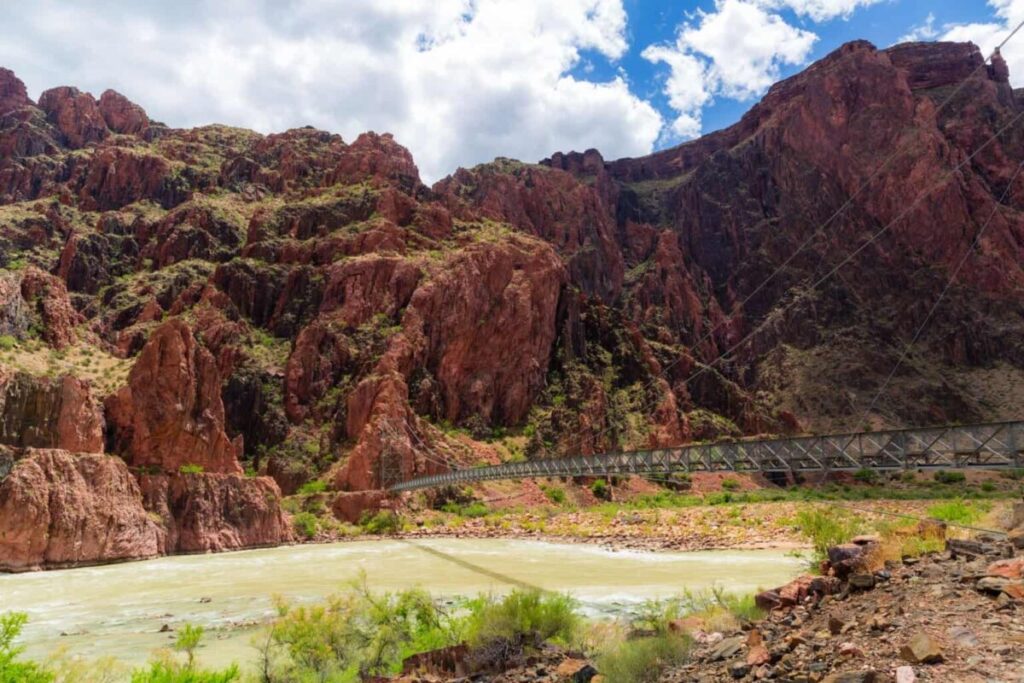
The Hermit Trail leads to Santa Maria Spring at 5 miles round trip and Dripping Springs at 7 miles round trip, with trail conditions described as tougher than both Bright Angel and South Kaibab.
The Grandview Trail reaches Horseshoe Mesa at 6.4 miles round trip and is listed as very steep and unmaintained, recommended for experienced desert hikers only.
These are the trails that reward visitors who have done the corridor routes before and want something rawer.
Grandview in particular, which begins 12 miles east of the village at Grandview Point on Desert View Drive, sees a fraction of the foot traffic that Bright Angel handles on any given morning.
The trail itself is a former mining route and descends with a directness that makes Bright Angel feel gently graded by comparison.
North Rim Hiking
The North Rim’s primary maintained trail into the canyon is the North Kaibab, and even a short hike to Coconino Overlook at 1.5 miles round trip or Supai Tunnel at 4 miles round trip gives a genuine sense of the canyon’s scale from this side.
The North Rim sits roughly 1,000 feet higher than the South Rim, which keeps temperatures more manageable in summer and makes the surrounding forest of aspen and ponderosa pine feel like a different park entirely.
A hike to Roaring Springs and back is described as extremely strenuous at 9.4 miles round trip with 3,050 feet of descent, and the NPS advises beginning before 7 a.m.
Hiking beyond Roaring Springs is explicitly not recommended for day hikers, and years of experience have shown that continuing past this point during the hottest parts of the day significantly increases the risk of heat illness.
The North Rim’s other trails, including the Widforss Trail at 10 miles round trip and the Uncle Jim Trail at 5 miles round trip, stay above the canyon rim and move through forest scenery that offers a slower, quieter kind of Grand Canyon day than the corridor trails below.
Preparation Matters
The NPS is unequivocal that hiking from the rim to the river and back in a single day should not be attempted, especially between May and September.
The canyon’s inverted geography punishes the mistake that most hikers make in every other mountain environment, which is treating the descent as the hard part. Here, the descent is easy and deceptively enjoyable.
The climb back up happens after hours of exertion, in rising heat, on terrain that offers no shade and no shortcuts.
Water is the variable everything else depends on. Half a liter per hour is the floor in summer heat, not a conservative estimate.
Electrolytes matter alongside volume because sweating through a full inner-canyon day depletes sodium faster than plain water can replace.
Salty snacks earn their place in any pack here.
For visitors pairing the Grand Canyon with Zion or Bryce Canyon on a broader Southwest itinerary, the physical and gear preparation overlaps significantly.
Our Zion National Park guide covers the trail-specific demands of Angels Landing and the Narrows, which share the same desert-heat logic as the canyon corridor.
If you are still deciding when to visit, the full Grand Canyon National Park guide covers how each season changes the hiking picture across both rims.
Current trail conditions, water availability, and closures are updated regularly on the NPS day hiking page and are worth checking in the days before any visit.
The Grand Canyon has no shortage of trails. What it has a shortage of is hikers who took the preparation seriously enough. The ones who do tend to come back.