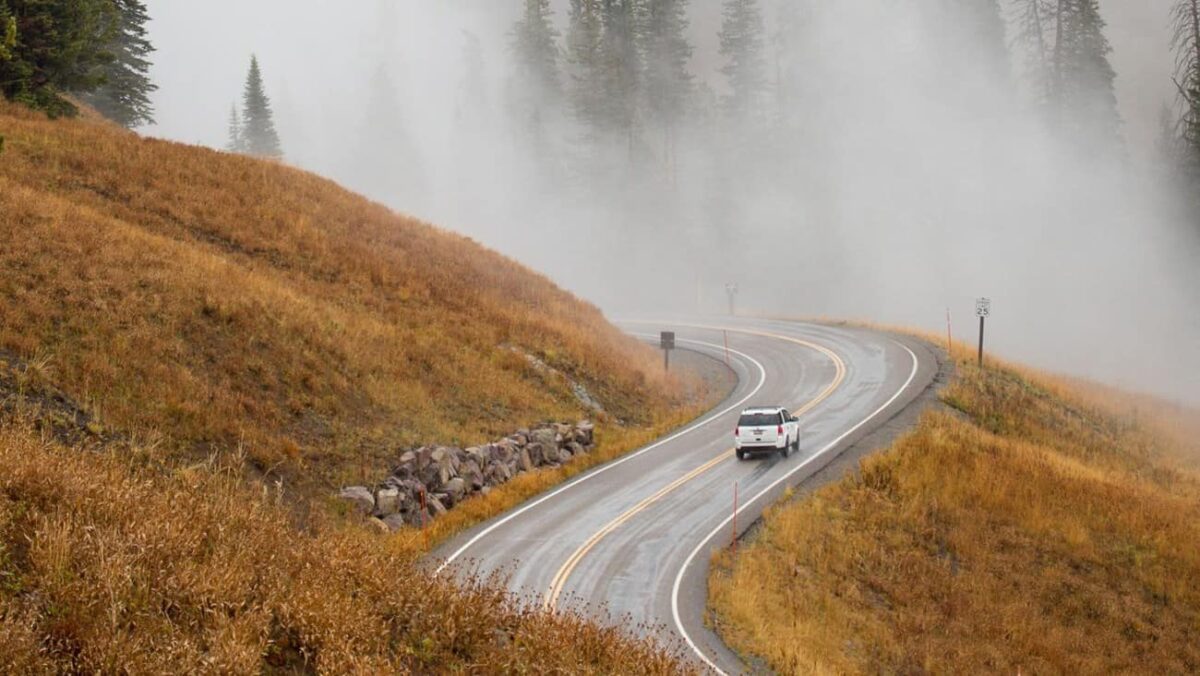
Getting to Yellowstone National Park requires a rental car, and that is the most important logistical fact about the entire trip. Rideshare services such as Uber and Lyft are extremely rare within park boundaries, and there is no on-demand service available once you are inside.
While you can technically request a rideshare from nearby airports to the park, booking a return trip is nearly impossible. This is not a minor inconvenience to plan around.
It is a fundamental constraint that shapes every other decision you make about how to arrive. The park covers 3,500 square miles across northwestern Wyoming and extends into Montana and Idaho. Without a car, you are dependent on scheduled tours for any movement outside your immediate lodge area, which limits the trip considerably.
There are five entrances to the park. Which one you use depends on which airport you fly into, and that choice has more downstream consequences for the kind of trip you will have than most visitors realize when they start searching for flights.
Flying into Bozeman
The nearest major airport to the North and West Entrances is Bozeman Yellowstone International Airport in Montana, approximately 85 miles from the North Entrance at Gardiner and the starting point for shuttle service to the West Entrance at West Yellowstone.
Bozeman has grown significantly as a destination in its own right over the past decade, and the airport now handles direct flights from major hubs including Denver, Dallas, Seattle, Chicago, and several international connections through partner carriers.
For visitors flying from Germany, a connection through a major American hub into Bozeman is the most commonly used routing, and the city itself is worth a buffer night given its outdoor recreation culture, strong restaurant scene, and proximity to the Gallatin Canyon.
In winter, a daily shuttle bus operates from Bozeman International Airport to the park.
This service is not available in summer, when a rental car is the only practical option. For summer visitors, rental cars at Bozeman are in high demand throughout June, July, and August, and prices reflect that demand.
Booking well in advance is not optional if cost is a consideration.
Flying into Jackson Hole
The Jackson Hole Airport in Wyoming is the only commercial airport located inside a national park boundary in the United States, sitting within Grand Teton National Park approximately 56 miles south of Yellowstone’s South Entrance.
For visitors who plan to combine Yellowstone with Grand Teton on the same itinerary, which is by far the most common pairing for both American and international visitors, flying into Jackson and out of Bozeman, or the reverse, allows a linear drive through both parks without backtracking.
The Jackson airport sits 7 miles north of Jackson on a spur road off the main highway, approximately 50 miles from the South Entrance to Yellowstone.
Direct flights into Jackson operate seasonally from several major hubs, and fares tend to run higher than Bozeman given the airport’s limited competition and premium leisure travel demand.
For Canadian travelers or those from the American midwest combining a Grand Teton and Yellowstone loop, Jackson is the more scenic and more efficient entry point if the southern end of Yellowstone is the first priority.
Flying into Cody
Yellowstone Regional Airport in Cody, Wyoming serves the East Entrance and is serviced by commercial carriers, with rental cars and taxi service available on site.
The East Entrance is located 50 miles west of Cody via the scenic Wapiti Valley.
Cody is the least commonly used entry airport among first-time visitors but has genuine advantages for travelers who want to approach the park from the east and spend time in the Wapiti Valley before entering.
The valley itself is one of the better wildlife corridors in the greater Yellowstone ecosystem, and arriving via Cody means passing through it rather than driving past a series of gas stations.
The town of Cody also has legitimate historical and cultural depth, anchored by the Buffalo Bill Center of the West, which is one of the more substantive museum complexes in the Rocky Mountain region.
A half-day stop here at the beginning or end of a Yellowstone trip adds context rather than padding.
Driving to Yellowstone
For visitors already on a western road trip from the United States or Canada, driving to Yellowstone is often the default approach and usually the best one.
The park’s position in the northern Rockies makes it a natural anchor point on a longer route that might include Salt Lake City, the Tetons, Glacier National Park in Montana, or the Black Hills of South Dakota.
The drive north from Salt Lake City takes approximately four and a half hours via I-15 and US-20.
From Denver, the route north through Wyoming takes roughly seven hours and passes through some of the most underappreciated high desert landscape in the American West.
For those driving from Canada, Yellowstone sits about ten hours south of Calgary via I-15, making it a logical destination on a multi-week summer road trip through the northern Rockies.
The budget case for driving becomes particularly strong when factoring in the cost of rental cars at Bozeman or Jackson during peak season, where weekly rates in July can exceed $700 to $900 for a standard SUV, a figure that changes the financial calculation of flying versus driving considerably.
Within the Park
Once inside Yellowstone, the Grand Loop Road connects all major attractions and visitor areas in a figure-eight pattern covering roughly 140 miles of paved road.
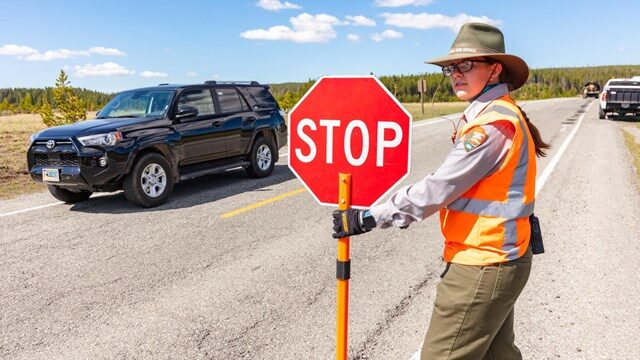
There is no public transit system within the park during summer. For road condition updates, the NPS recommends calling 307-344-2117 for recorded updates or signing up for SMS alerts by texting 82190 to 888-777.
Road construction on sections of the Grand Loop is ongoing in 2026, particularly between Madison and Norris, and checking conditions before heading out each morning is worth building into the daily routine.
For anyone still deciding when to make this trip and how the season affects both access and experience, our guide on the best time to visit Yellowstone covers the seasonal road opening schedule and how weather shapes transportation decisions across the park.
And for visitors combining this with other major western parks, the full trip planning detail in our Grand Canyon National Park guide applies the same airport and access logic to a park at the opposite end of the Rocky Mountain corridor.
Current road conditions and seasonal entrance information are updated continuously on the NPS Yellowstone road conditions page, which is worth bookmarking before any leg of the drive.
Yellowstone is not a park you visit on impulse. The transportation planning is part of the experience, and the visitors who enjoy it most are the ones who treated the approach as seriously as the destination.