Great Basin National Park is in eastern Nevada, five miles west of Baker near the Nevada-Utah border. There is no entrance fee to drive through the park or hike its trails. This guide is part of our full US National Parks Guide, covering every park worth visiting across the country.
Cave tours of Lehman Caves have separate fees ranging from a few dollars for a short visit to around $10 for the full 90-minute tour.
The park covers 77,180 acres and tops out at Wheeler Peak, which stands at 13,063 feet and holds the only permanent glacier in Nevada. Las Vegas is 286 miles to the south.
Salt Lake City is 234 miles to the northeast. It is one of the least visited national parks in the continental United States, and that fact is the most important thing to know before deciding whether to go.
Great Basin is not on the way to anywhere. That is not a complaint about the park. It is a description of what makes it worth the detour.
Park Description
The name Great Basin refers to a hydrological phenomenon rather than a single landscape.
This is a region where no water drains to the ocean. Rain that falls here, snowmelt that runs off the ranges, all of it stays within the basin, evaporating into the desert air or filtering into underground aquifers.
The region covers more than 200,000 square miles, stretching from the Sierra Nevada in the west to the Wasatch Range in the east, from southern Idaho down through Nevada and into Utah.
Great Basin National Park preserves a concentrated example of that region at its most dramatic: a mountain rising nearly 8,000 feet above the surrounding desert floor, ancient trees growing in groves near the summit, a cave system beneath the limestone, and a silence that visitors consistently describe as the most complete they have encountered in any park.
The park was established in 1986, making it one of the newer entries in the national park system.
Before that it existed as Lehman Caves National Monument, designated in 1922, and as a Forest Service scenic area surrounding Wheeler Peak.
The cave was the original draw and it remains the most structured experience the park offers.
Lehman Caves
Lehman Caves is a limestone cave system decorated with an extraordinary concentration of formations across its entire length.
What makes it scientifically notable is its shields, a formation type in which two roughly circular plates of calcite grow outward from a central crack, often with stalactites and other formations hanging from the edges.
Lehman Caves contains more than 300 shields, more than any other known cave in the world.
The formations cover nearly every surface of the cave walls and ceilings, which gives the interior a density and visual complexity that larger, more famous caves often lack.
Tours run year-round and depart from the visitor center. The 60-minute tour covers 0.46 miles through several decorated rooms and is the standard choice for most visitors.
The 90-minute tour extends further into the cave and reaches the Grand Palace, where the Parachute Shield, one of the more dramatic individual formations, hangs from the ceiling. Both tours are guided and limited to 25 people.
They sell out regularly during summer, particularly on weekends, and buying tickets early in the day or calling ahead is not optional advice for anyone with a fixed schedule.
The cave holds at a constant 50 degrees Fahrenheit year-round, so a light jacket is necessary regardless of the season or the temperature outside.
Wheeler Peak Highlands
The Wheeler Peak Scenic Drive climbs from the valley floor to a trailhead at just over 10,000 feet, a 12-mile road that passes through multiple vegetation zones and opens up views across the basin that extend well into Utah on a clear day.
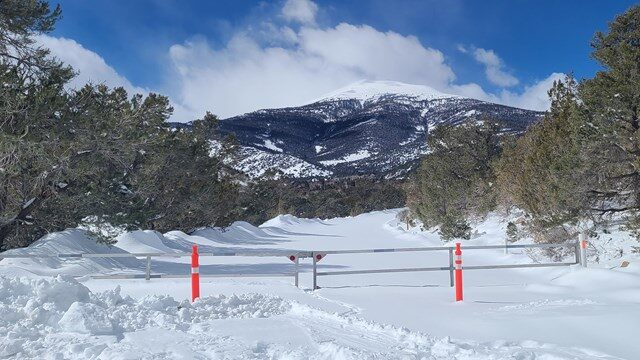
The road is not recommended for large RVs or buses, but handles standard passenger vehicles without difficulty through summer. Snow closes the upper section in winter.
From the trailhead at the road’s end, several trails push into the high country.
The Alpine Lakes Loop visits Stella Lake and Teresa Lake, two small glacial lakes sitting in rocky cirques below the summit ridge, and runs about three miles round trip with modest elevation gain.
It is the most accessible high-elevation hike in the park and well within reach for visitors without mountaineering experience.
The bristlecone pine grove above the lakes is the other reason to make this climb.
Bristlecone pines are among the oldest living organisms on earth. The oldest documented specimen, found in the White Mountains of California, exceeded 5,000 years in age before it was cut down in 1964 by a researcher who did not realize what he had.
The trees in Great Basin are younger but still measure their lifespans in thousands of years, and their appearance reflects that.
They grow slowly, twisted by wind and cold, with wood so dense and resinous that fallen trees resist decay for centuries after death.
Standing in a bristlecone grove is one of the stranger temporal experiences available in any national park.
The Wheeler Peak summit trail adds another two miles and roughly 3,000 feet of gain from the bristlecone grove and reaches the top of Nevada at 13,063 feet.
It is a full-day effort that requires an early start and attention to afternoon thunderstorm patterns that build reliably over the summit during summer.
Travel Costs
Driving is the only realistic way to reach Great Basin. From Las Vegas, the route runs north on US 93 to Ely, then east on US 6 and 50 to Baker and the park entrance.
From Salt Lake City, I-15 south connects to US 50 west through Delta, Utah, crossing into Nevada and continuing to Baker.
Both routes pass through long stretches of open desert with limited services, and filling the fuel tank before leaving any major town is standard practice in this part of the West.
There are four developed campgrounds inside the park. Lower Lehman Creek Campground is the only one open year-round. The others open seasonally as snow permits.
Camping is first-come, first-served, which works well outside of summer holiday weekends but requires arriving early during peak periods. Sites include fire rings, picnic tables, and water in season.
The nearest towns with motel accommodation are Baker, which is small, and Ely, 70 miles to the west, which has a more complete range of services.
The America the Beautiful annual pass at $80 covers entrance fees at all federal recreation lands, though Great Basin charges no entrance fee to begin with.
The pass value here comes from cave tour discounts for Senior and Access passholders and campground fee reductions.
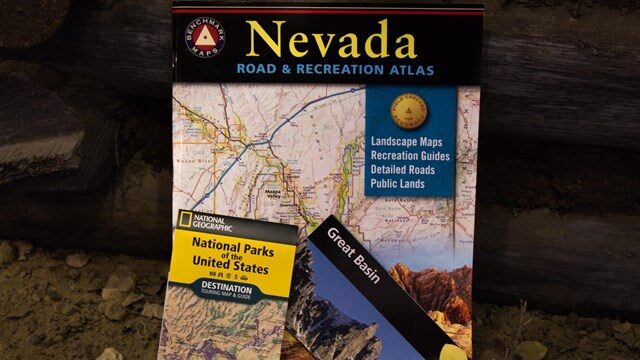
For anyone visiting multiple parks on a road trip through Nevada and Utah, the national park map by state on Tadexprof is useful for visualizing how Great Basin sits relative to the Utah parks and planning a logical sequence before committing to dates.
Best Time to Visit
Summer from June through September is when the high country is fully accessible, cave tours run at maximum frequency, and the trails to Wheeler Peak are clear of snow.
June and September offer the most comfortable temperatures. July and August bring afternoon thunderstorms that require early starts on any summit attempt.
Spring and fall open the lower park but often close the scenic drive and high-elevation trails to snow.
Winter reduces services sharply but keeps the visitor center and cave tours running on a limited schedule.
The night sky is the factor that brings visitors here who might not otherwise make the drive.
Great Basin holds one of the lowest light pollution readings of any national park in the continental United States, which makes it a destination for serious amateur astronomers and for anyone who has never seen the Milky Way clearly.
The NPS Great Basin stargazing page lists ranger-led astronomy programs that run through summer and fall, and the park hosts an annual astronomy festival that draws visitors from across the country and from Europe.
Great Basin rewards the detour in a way that is difficult to explain to people who have not made it. The cave is unlike any other cave system in the park network.
The bristlecone pines measure time in a way that makes a human lifetime feel approximate.
The night sky is a reminder of what most of the country has given up to electricity. None of it is on the way to anything. That is the whole point.