The closest major airport to the Grand Canyon South Rim is Las Vegas, roughly four hours by car.
Phoenix is about the same distance and often cheaper to fly into from the eastern United States, Canada, and Europe.
Flagstaff is the closest airport at 90 minutes from the South Rim but comes with connecting flights and limited availability.
If you are driving, the canyon sits in the northwest corner of Arizona with no quick route from any direction, which is part of the reason planning the approach matters as much as planning what to do once you arrive.
Those answers cover the search. The rest of this is about making the actual decision well.
By Plane
Arriving via Vegas
For most international visitors, including those flying from Frankfurt, Toronto, or Montreal, Las Vegas is the most practical entry point into a Grand Canyon trip.
Harry Reid International Airport is a hub for multiple budget carriers, direct routes from Europe are available through partner airlines, and the strip of activities and accommodation in Las Vegas adds a natural buffer day on either side of the canyon without feeling like a detour.
From Las Vegas it is about a four-hour drive to the South Rim, five hours to the North Rim, and only two hours to Grand Canyon West.
That last figure matters if the Skywalk or Hualapai Nation experience is part of the plan, because flying into Vegas for a West Rim visit is the most efficient combination available.
The drive south and east through the Mojave and into northwestern Arizona is also one of the more dramatic airport-to-park drives in the American West, with the landscape shifting progressively from desert scrub to red plateau before the canyon itself appears.
One thing to factor into a Las Vegas departure on the way home is timing.
The drive back from the South Rim to Las Vegas takes the better part of an afternoon, and anyone with an early morning flight should build in a buffer night in the city rather than attempting a same-day arrival and departure.
Phoenix Sky Harbor Airport
Phoenix Sky Harbor is Arizona’s largest airport and offers more direct flight options, more affordable fares, and the full infrastructure of a major international hub.
The tradeoff is a four-hour drive to the South Rim, which is not dramatically longer than Vegas but routes through different scenery.
The drive north on I-17 passes through the Sonoran Desert before climbing through the Verde River Valley and ponderosa pine forests into Flagstaff, then onward to the canyon. It is an excellent drive if you have the time.
Phoenix is also the more sensible choice for visitors planning a loop through central Arizona that includes Sedona, Jerome, or the red rock country around the Verde Valley.
Those destinations sit directly on the route between Phoenix and the Grand Canyon and are worth a full stop rather than a drive-by.
If your trip is already budgeted with mid-range accommodation and a rental car, the additional day in Sedona adds relatively modest cost against a significantly richer itinerary.
Flagstaff Pulliam Airport
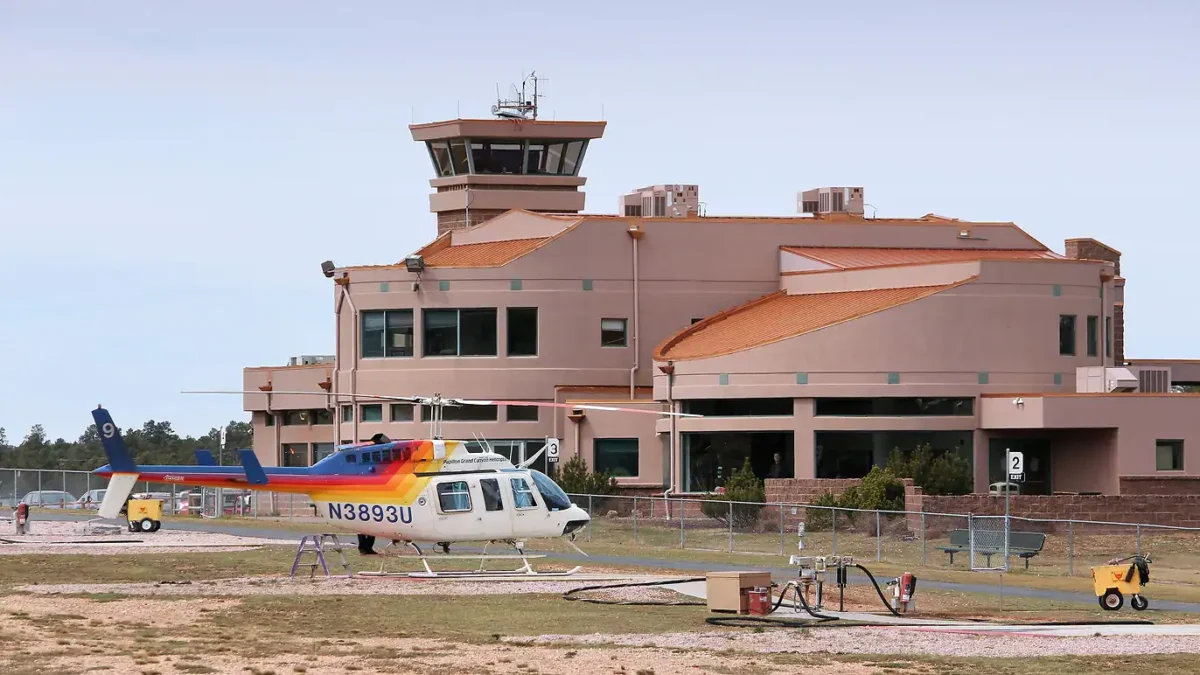
The closest airport to the South Rim at 90 minutes by car is Flagstaff Pulliam Airport, but all flights route through Phoenix, Dallas/Fort Worth, or Denver, which tends to mean higher fares and layovers.
The case for Flagstaff is not really about cost. It is about what Flagstaff itself offers as a base.
The city sits at 7,000 feet in the ponderosa pine forest, has a genuine historic downtown, excellent food relative to its size, and operates at a pace that makes it a useful decompression point before or after the canyon.
For families with children who want a predictable, easy-access hub without a long drive at the start of the trip, Flagstaff works well.
The rental car situation at Flagstaff is more limited than at Phoenix or Las Vegas, so booking in advance is essential rather than optional. Waiting until arrival and expecting walk-up availability is a mistake that costs real time.
By Train
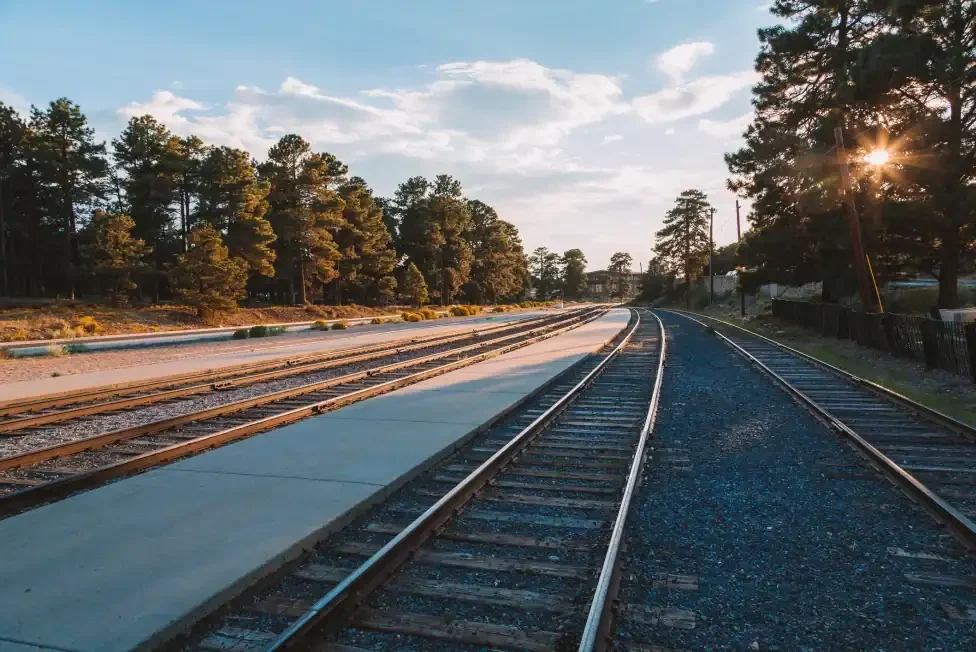
Most visitors never consider the train, which is a shame because the Grand Canyon Railway between Williams, Arizona, and the South Rim is one of the genuinely distinctive travel experiences in the American Southwest.
The journey includes a Wild West show before departure, cowboy entertainment and a staged train robbery along the route, and staff who help passengers plan their canyon experience in advance.
It is not the fastest or cheapest option, but it is the most memorable arrival by a significant margin, and it removes the parking and shuttle logistics inside the park entirely because the railway station deposits passengers directly in the Grand Canyon Village.
Amtrak connects to the Grand Canyon Railway through several package options, including a four-day Grand Canyon Getaway from Williams, a five-day Rails to the Grand Canyon trip departing from Los Angeles, and a ten-day Grand Canyon Discovery trip leaving from Chicago.
For visitors on the west coast, the Los Angeles departure turns the Grand Canyon trip into a longer rail journey with genuine character rather than a point-to-point flight.
Germans and other European visitors who come from a strong rail culture tend to respond particularly well to this option when they discover it.
By Road
The road trip approach remains the most flexible and often the most rewarding way to experience the Grand Canyon, particularly for visitors combining it with other southern Utah parks.
The rim-to-rim drive from the South Rim to the North Rim takes about five hours and routes through the Painted Desert and the Navajo Nation, with stops at the Cameron Trading Post and the East Rim’s Desert View Watchtower along the way.
This is not filler driving. The landscape between the two rims is as dramatic as anything inside the park, and the Navajo Nation section of the route offers a cultural context for the canyon that no visitor center program can fully replicate.
For a Utah loop that includes Zion and Bryce Canyon before or after the Grand Canyon, the sequencing of airports becomes even more relevant.
Flying into Las Vegas and out of Salt Lake City, or vice versa, allows a one-directional drive through all the major parks without backtracking.
Our guide to Zion National Park covers the logistics of that park’s shuttle system, which affects how you time the drive between parks.
And if Bryce Canyon is in the itinerary, the Bryce Canyon guide covers the best base towns and driving distances from both Zion and the Grand Canyon.
The official Grand Canyon National Park transportation page covers shuttle routes, parking, and accessibility options inside the park once you have arrived, which is the next logistics layer worth understanding before any approach route is finalized.
Getting to the Grand Canyon takes real planning because there is no version of this trip where the logistics handle themselves. The visitors who enjoy it most are not the ones who happened to get lucky.
They are the ones who made a decision about the approach and built the rest of the trip around it.