There are three campgrounds inside Zion National Park. One is closed indefinitely. One requires reservations up to six months out and fills within hours of availability opening.
The third sits nearly 8,000 feet above the canyon floor, has six sites, no running water, and almost nobody knows it exists.
That is the full picture of camping in Zion right now, and understanding it before you start planning will save you real time and money.
Watchman Campground
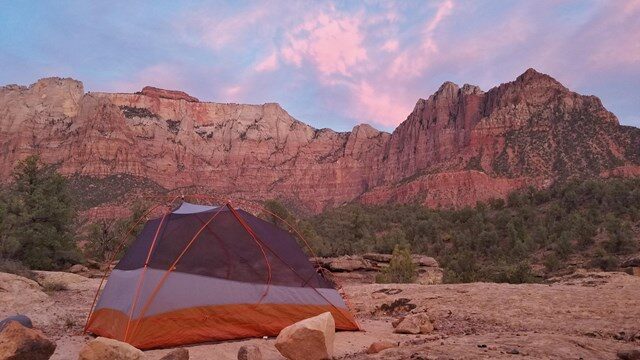
Watchman is the primary campground in Zion Canyon and the only one that operates year-round.
It sits a quarter mile from the South Entrance, directly adjacent to the visitor center and the shuttle stop, which means once you park your car you can reach every major trail in the canyon without moving your vehicle again.
For anyone arriving from Las Vegas, Salt Lake City, or flying in internationally, this proximity is the thing that makes the campground worth fighting for.
The site count is 176, a mix of tent-only spots, standard non-hookup sites, and electric hookups in loops A and B that accommodate RVs up to 40 feet.
Non-electric sites run $35 per night in 2026, electric sites $45. Group sites range from $50 to $130 depending on size.
Those numbers represent a significant jump from the $20 rate that held for years before a fee increase took effect in mid-2024, and they matter when you are budgeting a western road trip.
A family of four camping five nights at Watchman, buying a $35 vehicle entrance pass, renting Narrows gear, and eating a couple of dinners in Springdale can easily spend $600 to $800 before they leave the state.
German visitors and other international travelers face an additional $100 per-person nonresident surcharge introduced in 2026, which changes the math considerably on a group trip.
Reservations open six months in advance through recreation.gov and popular spring and fall dates vanish within hours of going live.
If Angels Landing and the Narrows are on your itinerary, those permits and your campsite reservation need to be secured at the same planning session.
Treating them separately almost always results in one falling through. Our full guide to Zion National Park covers the permit lottery windows and seasonal timing in detail if you are still in the early stages of planning.
There are no showers at Watchman. The closest option is Zion Outfitters, a short walk across the pedestrian entrance just outside the park boundary.
Flush toilets and drinking water are available at comfort stations throughout the campground. Loops D, E, and F typically close in December through February, reducing available inventory in winter, though the campground itself never shuts down entirely.
One thing worth factoring in: the canyon sits at roughly 3,900 feet elevation and daytime temperatures routinely exceed 95 degrees Fahrenheit from June through August.
The campground has limited tree cover. Shade is a genuine scarcity in summer, and the heat stored in the canyon walls and gravel sites does not dissipate quickly after sunset.
People who camp here in July and experience that for the first time often describe it as harder than expected.
South Campground
South Campground, which sat just north of the visitor center along the Virgin River, is closed for a full rehabilitation project with no confirmed reopening date for 2026.
Remove it from your planning entirely. It does not exist as a booking option right now, and spending time looking for its availability on recreation.gov will only cost you time you could spend securing Watchman.
Lava Point
About an hour’s drive from Zion Canyon via Kolob Terrace Road sits Lava Point Campground, and it is genuinely one of the most underused camping spots in the entire national park system.
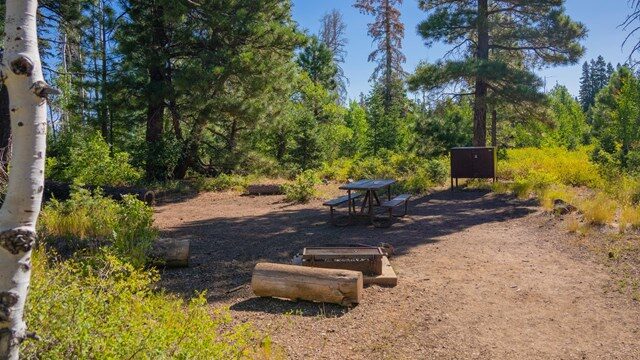
Six primitive sites at 7,890 feet elevation, surrounded by ponderosa pine and aspen, with panoramic views southward over the canyon below.
The temperature difference between Lava Point and the canyon floor on a July afternoon can exceed 20 degrees Fahrenheit.
If you have spent a miserable, sleepless night baking in a tent at a lower desert campground, you understand immediately why that gap matters.
The sites cost $25 per night and reservations are made through recreation.gov up to 14 days in advance. There is no running water on site, so everything you need to drink and cook with has to come with you.
Pit toilets are available. Vehicles longer than 19 feet are prohibited on the winding road up Kolob Terrace, which rules out larger RVs and some fifth-wheel setups. Cell service is essentially nonexistent.
The campground is seasonal, typically open from May through September or October depending on snow, and the road itself can close abruptly during spring and fall weather events.
What Lava Point gives you, beyond the temperature relief, is quiet. The West Rim Trail begins nearby, offering a strenuous 14-mile one-way route down to the Grotto in the main canyon.
The Subway, one of Zion’s most sought-after technical hikes, is accessible from this section of the park.
If the permit-and-crowd dynamic of peak Zion Canyon feels like too much, this part of the park is where the version of Zion that most visitors never see actually lives.
Camping Outside the Park
Private campgrounds in and around Springdale run $45 to $110 per night and offer services that Watchman does not, including showers and some full hookup options.
They also sit on the Springdale shuttle route, which connects to the park system and gets you inside the canyon without driving.
BLM land in the surrounding area offers dispersed camping for those willing to plan around it, with a corresponding drop in cost that matters on longer itineraries.
If you are combining Zion with Bryce Canyon as part of a broader Utah loop, which most visitors from the US, Canada, and Germany tend to do given the parks sit roughly 85 miles apart, the campground and accommodation picture shifts significantly once you gain elevation.
Our Bryce Canyon guide covers what to expect there in terms of seasons, facilities, and how the two parks connect logistically.
The official NPS campground page is the right place to verify current conditions and any updates to the South Campground rehabilitation timeline before you commit to a reservation.
Camping in Zion takes more planning than most parks its size because the supply of sites is genuinely limited for the number of people who want them.
Getting the campsite right determines the rest of the trip. Almost everything else you can work out once you are there.