Lake Clark National Park and Preserve is in southwestern Alaska, about 100 miles southwest of Anchorage, and there is no road that gets you there. That single fact explains everything about what it is and who goes.
The park covers four million acres of active volcanoes, glaciated mountain ranges, wild salmon rivers, turquoise lakes, and one of the most productive bear habitats on the continent.
There is no entrance fee. There are no paved trails.
Most people have never heard of it, and the ones who have tend to describe it as the Alaska trip that changed how they think about wilderness.
Getting there requires a floatplane or small aircraft, typically a one to two-hour flight from Anchorage, Kenai, or Homer.
Air taxi services operate out of all three cities and can drop visitors at specific locations within the park depending on their plans.
When weather and tides allow, the Cook Inlet coastline on the park’s eastern edge can also be reached by boat from Anchor Point near Homer, though the sea conditions on Cook Inlet are frequently rough enough to make that option unreliable.
The visitor center, located in Port Alsworth, a small community on the shores of Lake Clark itself, is open only in summer and is the closest thing the park has to a hub.
The park is open year-round, but lodges, guides, and air services operate from June through September, and outside those months the park is effectively empty.
Details
Lake Clark is three ecosystems in one, and they do not resemble each other.
The eastern edge along Cook Inlet is coastal: salt marshes, tidal flats, sedge grass meadows, and brown bears congregating wherever salmon are running.
Moving inland, the Chigmit Mountains rise where the Alaska and Aleutian Ranges converge, including two active volcanoes, Mount Redoubt and Mount Iliamna, which have both erupted in recent decades.
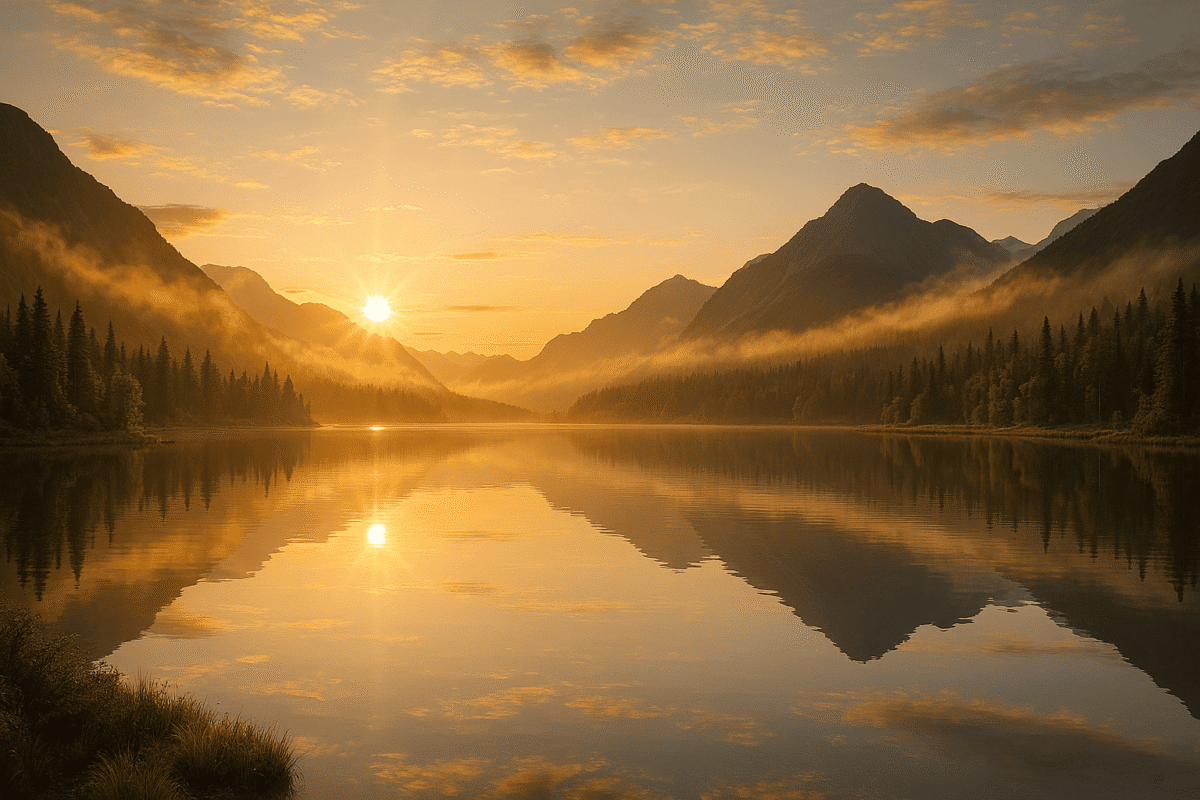
Further into the interior, the terrain shifts again to boreal forest, tundra, and the lake systems that give the park its name, all feeding into the Bristol Bay watershed, which produces the largest sockeye salmon run in the world.
The park was established in 1980 specifically to protect that salmon habitat and the ecosystem built around it.
Brown bears, black bears, moose, caribou, wolves, Dall sheep, and bald eagles all move through its boundaries.
Because there are no roads and no developed trail system, wildlife encounters happen on the wildlife’s terms, not yours.
Bear Viewing in the Park
The Cook Inlet coast is where most day visitors go, and the reason is the bears.
Silver Salmon Creek and Chinitna Bay are the two primary bear viewing areas on the eastern edge of the park.
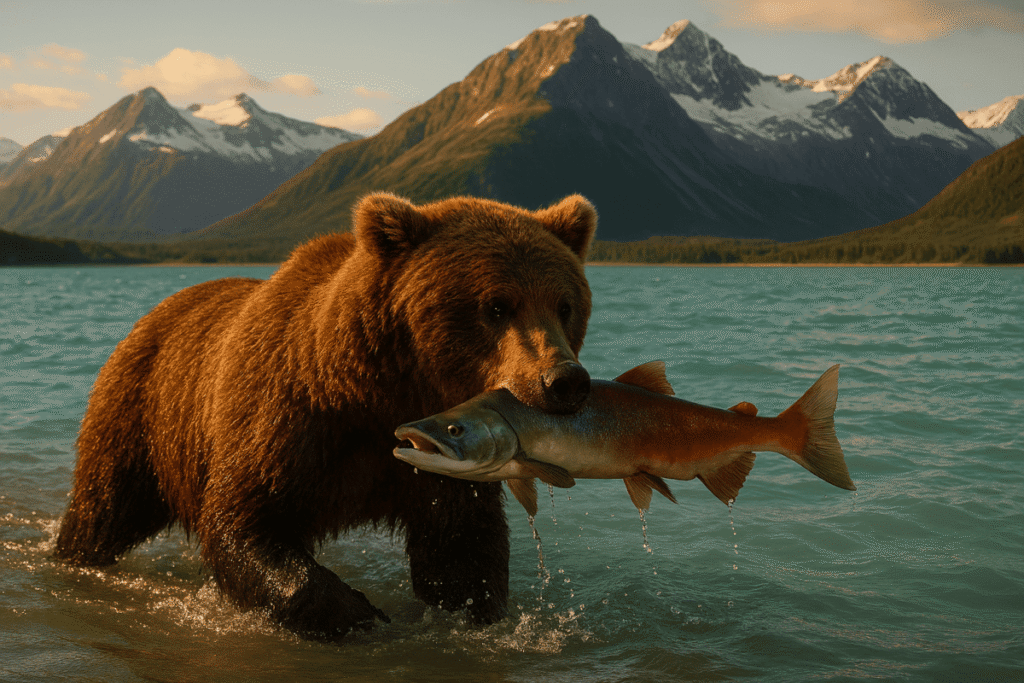
In late summer, when sockeye and silver salmon push up the creeks, brown bears gather in numbers that are difficult to describe without sounding like overstatement.
Guides keep groups at a respectful distance, but the distances are still close enough that individual bears become recognizable within an hour.
Crescent Lake, deeper in the park’s interior and accessible by floatplane from Anchorage, is the most visited destination within the park itself.
The Redoubt Mountain Lodge sits on its shores and runs bear viewing from a covered pontoon boat, bringing guests within viewing range of bears fishing along the shoreline without disrupting their behavior.
The lake itself is a color that reads as artificial in photographs, a deep glacial turquoise that holds its tone in all light conditions.
Day tours from Anchorage to either area run roughly $600 to $900 per person depending on the operator and the duration.
Multi-day lodge stays cost considerably more, with most packages running several thousand dollars per person for three to five nights including flights, accommodation, meals, and guided activities. This is not a budget destination.
For visitors from the US, Canada, and Germany planning a serious Alaska trip, it belongs in the same planning conversation as a fly-fishing lodge in British Columbia or a safari in East Africa, an experience built around access to a specific wild thing, priced accordingly.
Fishing and the Rivers
Three rivers in Lake Clark have been designated Wild and Scenic: the Mulchatna, the Tlikakila, and the Chilikadrotna.
All three offer fishing for salmon, Dolby trout, rainbow trout, and arctic grayling in stretches of water that see very little pressure compared to more accessible Alaska rivers.
An Alaska state fishing license is required, available online before departure.
Most fishing lodges in the park arrange fly-out trips to specific rivers from their base location, so visitors staying near Silver Salmon Creek can reach entirely different water by small plane in under 20 minutes.
Kayaking is available from most lodge locations. The park’s lakes and river corridors are navigable for experienced paddlers, and some operators rent equipment to guests who want to explore independently near their lodge.
Unguided backcountry travel is possible throughout the preserve, but the terrain is roadless and trailless, and the bear density in most parts of the park means food storage protocols and situational awareness are non-negotiable.
Proenneke Cabin and Twin Lakes
One of the lesser-visited parts of Lake Clark, and one of the more unusual things in the national park system, is the hand-built log cabin at Upper Twin Lake, where Dick Proenneke lived alone for 30 years starting in 1968.
Proenneke retired at 51, flew into the Alaskan wilderness, and built the cabin himself using hand tools and timber cut from the surrounding forest.
He documented the construction and his daily life in journals that became the book “One Man’s Wilderness” and a 2004 PBS documentary called “Alone in the Wilderness.”
The cabin, listed on the National Register of Historic Places in 2007, is managed by the NPS as an open exhibit staffed by volunteers in summer.
It receives around 1,000 visitors a year, most arriving by floatplane. There is no easier way to reach it.
What to Know
The official Lake Clark National Park website maintains a current list of permitted air carriers and licensed commercial operators, which is the most reliable starting point for building a visit.
Because the park has no infrastructure outside of Port Alsworth, almost everything accommodation, guiding, transportation within the park runs through private operators, and quality varies.
Booking through established lodges rather than individual air taxis tends to produce a more coherent experience, particularly for first-time visitors.
June through September is the operating window, with July and August being peak bear viewing season as salmon runs reach their height.
For visitors building a broader Alaska itinerary and wanting to understand how the national parks in the state relate to each other geographically, the national park map by state on Tadexprof gives a useful overview before committing to specific routing decisions.
Glacier National Park in Montana is a frequent comparison point for Canadian visitors considering their first serious wilderness trip, and our guide to Glacier National Park covers that park in full if you are weighing the options.
Lake Clark does not compete for popularity and shows no interest in doing so.
The floatplane requirement filters out most casual visitors before the question of whether to go even arises.
What remains is a park that operates entirely on its own terms, where the salmon run whether or not anyone is watching, and where four million acres of Alaska go about their business with very little human interference.
For the people who do make it in, that tends to be the point.