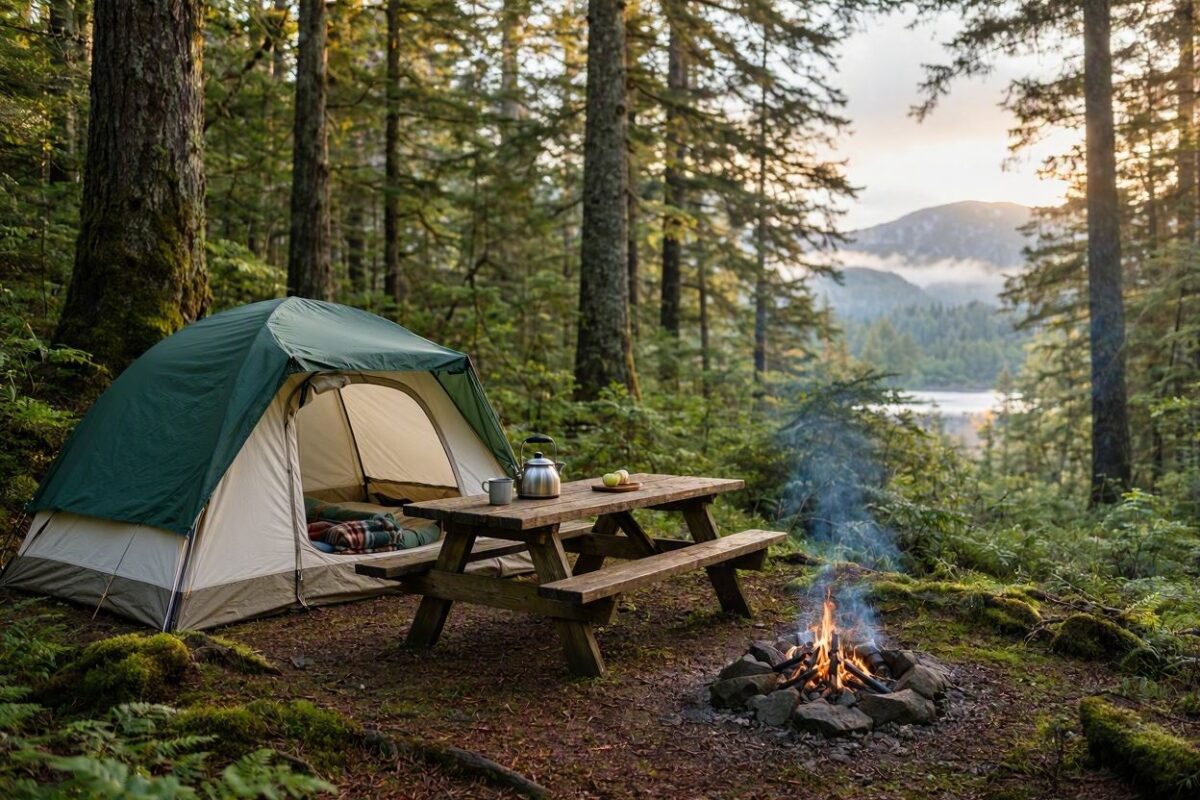
Camping at Olympic National Park spans fourteen developed campgrounds spread across three completely different landscapes, and the honest answer to where you should stay depends entirely on which version of the park you came for.
A handful of these campgrounds require reservations during peak season, several run year-round on a first-come, first-served basis, and a few sit remote enough that a breakdown or a late arrival can turn into a real problem.
Sorting through all fourteen before a trip saves a lot of frustration once you’re actually standing at a full campground with nowhere to go.
The Fourteen Campgrounds
- Kalaloch — 170 sites, oceanside bluffs, reservations required mid-May through late September, $24 per night
- Mora — 94 sites, coastal forest near Rialto Beach, reservations required mid-May through late September, $24 per night
- Hoh Rain Forest — 78 sites, old-growth interior, reservations required June through early September, $24 per night
- Fairholme — 88 sites, on Lake Crescent, reservations required mid-May through late September, $24 per night
- Sol Duc — 82 campground sites plus a 17-site RV park with full hookups, reservations required late March through early November, $33 per night for the campground, $58 for the RV park
- Heart O’ the Hills — 97 sites, old-growth forest near Port Angeles, year-round, first-come first-served, $24 per night
- Graves Creek — 30 sites, Quinault Rain Forest, year-round, first-come first-served, $20 per night
- Staircase — 49 sites, near the Skokomish River, seasonal with reservations required July through late September, $24 per night
- South Beach — 55 sites, oceanfront bluff, open May through October, first-come first-served, $20 per night
- Ozette — 15 sites, lakeside, year-round, first-come first-served, $20 per night
- Queets — 20 sites, secluded river access, year-round, first-come first-served, $15 per night
- North Fork — 9 sites, small and remote, year-round, first-come first-served, $20 per night
- Deer Park — 14 sites, mountain views at 5,400 feet, open June through mid-October, no RV access, $15 per night
- Log Cabin Resort — 38 sites on Lake Crescent, full hookups available, open May through October, $25 to $44 per night depending on site
The Reservation Campgrounds
Six of these, Kalaloch, Mora, Hoh Rain Forest, Fairholme, Sol Duc, and Staircase, require reservations during their busy season windows, and missing that window is the single most common camping mistake here.
All six run through Recreation.gov, with sites bookable up to six months out, and outside those reservation windows they revert to first-come, first-served, self-registered on-site.
Year-Round Options
Several campgrounds stay open all year without any reservation system at all, which makes them the practical fallback when the reservation sites are full.
Heart O’ the Hills, surrounded by old-growth forest near Port Angeles, and Graves Creek, tucked into the Quinault Rain Forest, both run year-round on a self-register basis.
Ozette, beside its namesake lake, and Queets and North Fork, both genuinely remote and better suited to travelers who want distance from crowds than convenience, round out this group.
None of these guarantee a spot on a busy weekend, but arriving by early afternoon typically works, since most fill from the front rather than all at once.
Site Costs & Options
Sol Duc splits into a standard campground and a separate RV park with full hookups, the only site in the park offering true electric and water connections rather than a dump station alone.
RV length matters more here than at a lot of parks and varies significantly by campground.
Fairholme caps around 35 feet, Hoh Rain Forest can accommodate up to 55 feet (with one site fitting 60), and several of the smaller, more remote campgrounds have much tighter limits or no RV access at all.
Deer Park’s steep gravel access road rules out RVs entirely, and it’s worth checking each campground’s specific limit on Recreation.gov before booking.
Anyone budgeting a longer Pacific Northwest trip should treat these fees the same way they’d treat any other line item on a travel budget, since a two-week loop through multiple campgrounds adds up faster than a single night suggests.
Rules Guarding the Camp
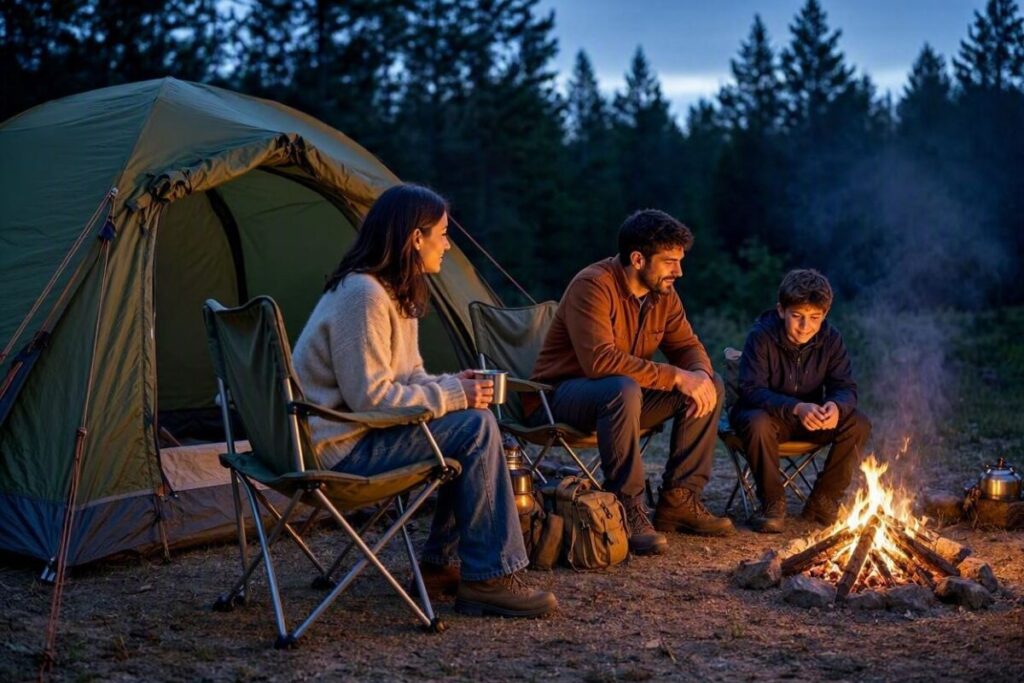
A handful of park-wide rules matter more than they might seem to at first.
The general camping limit is fourteen consecutive days a year, but Kalaloch, Mora, and Hoh drop that to seven days during their reservation windows.
Checkout is eleven in the morning, quiet hours run from ten at night to six, and every site caps at eight people.
Pets are allowed on a six-foot leash in campgrounds and on a short list of specific trails and beaches, but they’re barred from the wilderness and most other trails entirely, a detail worth knowing well before arrival for anyone road-tripping with a dog.
Food storage rules apply everywhere, since raccoons, ravens, and other wildlife have learned exactly what a loosely secured cooler looks like, and leaving scented items out overnight is both against the rules and a fast way to have a rough second night.
Backcountry Camping
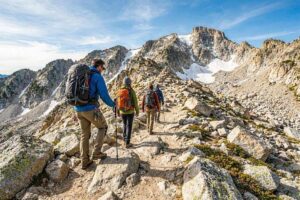
Travelers wanting real distance from developed campgrounds can apply for wilderness permits and camp off the grid entirely, though that route demands genuine preparation given how remote and wet the terrain gets, particularly on the western side of the park.
Group sites exist at Kalaloch and Sol Duc for parties too large for a standard site, both requiring phone reservations rather than the standard online system, with per-night group rates that scale by headcount rather than by site.
Planning the Trip
Camping here works best as part of a broader plan rather than a single booking, since Olympic’s regions sit hours apart even within the same park boundary.
The Olympic National Park guide on Tadexprof covers the park’s regions, seasons, and entry logistics in more depth, useful for deciding which campgrounds actually fit a realistic itinerary rather than an overly ambitious one.
For the complete, current list of campgrounds, fees, and reservation windows straight from the source, the National Park Service camping page is worth checking again close to departure, since reservation dates and site availability shift from one season to the next.
Fourteen campgrounds sounds like a lot of choice until you’re standing at a full one with the light fading.
Pick a reservation site if the trip has fixed dates, lean on the year-round options if it doesn’t, and build the route around the landscape that pulled you to Olympic in the first place rather than around whichever campground happened to have room.
Frequently Asked Questions
Which Olympic National Park campgrounds require reservations?
Kalaloch, Mora, Hoh Rain Forest, and Fairholme, all during their busy season windows.
They run through Recreation.gov, bookable up to six months out, and outside those windows they revert to first-come, first-served, self-registered on-site.
What happens if the reservation campgrounds are full?
Fall back on the year-round, first-come, first-served options: Heart O’ the Hills, Graves Creek, Ozette, Queets, and North Fork.
None of these guarantee a spot on a busy weekend, but arriving by early afternoon typically works, since most fill from the front rather than all at once.
Can I bring my dog camping in Olympic National Park?
Yes, on a six-foot leash in campgrounds and on a short list of specific trails and beaches, but pets are barred from the wilderness and most other trails entirely.
Worth knowing before arrival if you’re road-tripping with a dog.