Best hotels near Olympic National Park split into two very different categories, and the split matters more here than in most parks, because Olympic is really three landscapes stitched into one boundary: glacier-capped mountains, ancient rainforest, and 70 miles of wild Pacific coastline.
Stay inside the park at one of four historic lodges, or base yourself in a gateway town on whichever side of the peninsula matches your itinerary.
Rooms book up fast, especially in July and August, and waiting until the last minute here tends to backfire in a way it doesn’t at more conventional parks.
Kalaloch Lodge
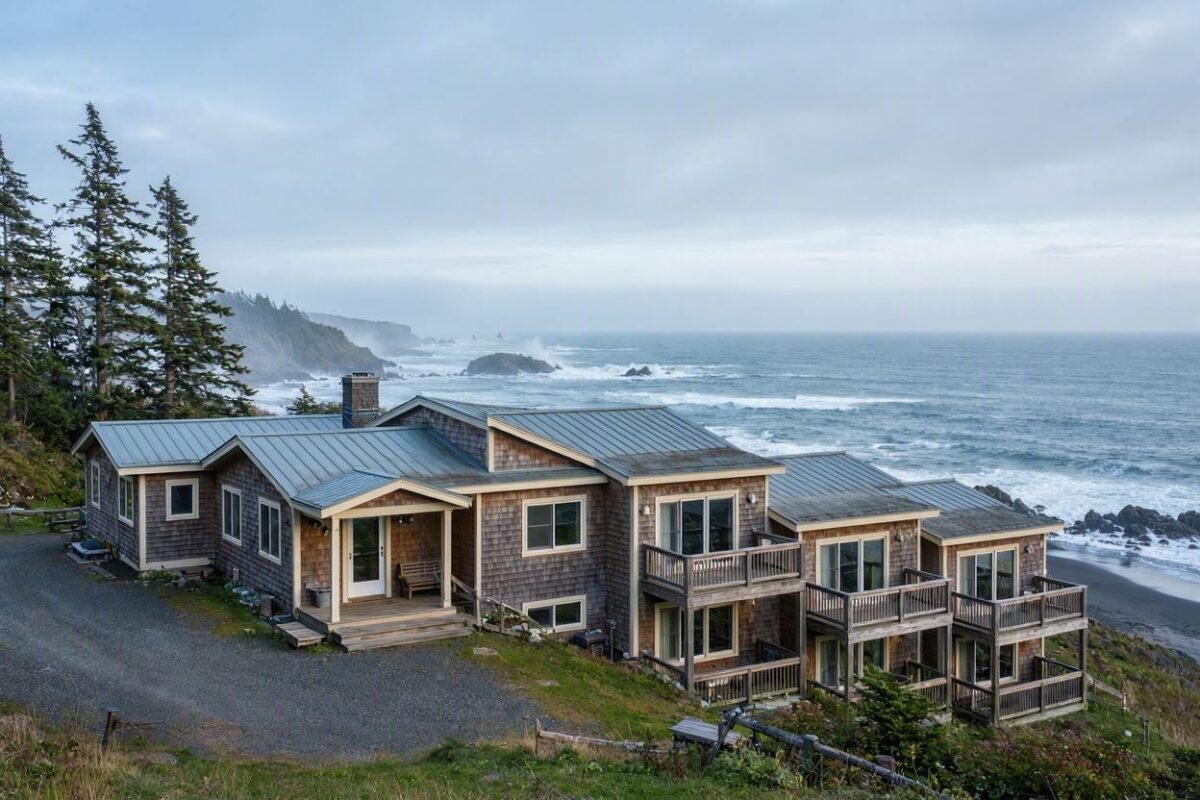
Kalaloch sits right on the coast and stays open year-round, which sets it apart from the rest of the park’s in-park lodging.
It offers campsites, cabins, and standard lodge rooms, along with a restaurant and a small mercantile, and its position directly on the beach makes it the obvious pick for travelers whose Olympic trip centers on the coastal strip rather than the mountains or rainforest.
Being open every month also makes it a rare option for anyone visiting in the off-season, when most of the park’s other lodges have already closed for the year.
Lake Crescent Lodge and Log Cabin Resort
Lake Crescent itself supports two separate properties.
Lake Crescent Lodge runs from mid-April through the start of January, offering cottages, cabins, and lodge rooms with a restaurant, gift store, and kayak rentals right on the water, a strong fit for travelers who want a quieter, more classic lodge experience.
Log Cabin Resort, on the same lake, runs a shorter season from mid-May through late September, with camping, chalets, cabins, and lodge rooms alongside a cafe, convenience store, laundry, and boat rentals, a slightly more casual and family-friendly setup than its neighbor across the water.
Sol Duc Hot Springs Resort
Sol Duc operates from late March through early November and is built entirely around its hot spring pools, alongside cabins and suites, a restaurant, a deli, and a small store.
For international travelers, particularly those used to geothermal hot spring destinations elsewhere in the world, this is one of the more unexpected finds in an American national park, a genuine soak after a day of rainforest hiking rather than a gimmick tacked onto a hotel.
It tends to fill early for weekend stays throughout the season, so a Sol Duc trip works best when it’s locked in well ahead of arrival.
Staying Outside the Park
Because Olympic’s regions are spread so far apart, from Port Angeles at the north end to Forks and Lake Quinault along the west side and Hoodsport down toward the east, staying in a gateway town often makes more practical sense than committing to one in-park lodge for a whole trip.
Port Angeles and Sequim serve the north peninsula and work well as a base for Hurricane Ridge and the Elwha area, Forks and Lake Quinault anchor the west side near the rainforest and coastal beaches, and Hoodsport and the towns along Hood Canal serve visitors approaching from the south.
This kind of split-stay itinerary, a night or two per region rather than one hotel for the whole trip, tends to suit the park better than most, since driving times between regions can run several hours even though everything technically sits inside the same park boundary.
Booking
Summer remains the tightest booking window across every property in the park, both because it’s peak travel season and because several lodges, including Log Cabin Resort and Sol Duc, operate on limited calendars that don’t stretch into winter at all.
Travelers with flexible dates might find spring or early fall a smarter play, both for availability and for the kind of quieter, moodier weather that suits Olympic’s rainforest and coastline better than a crowded July afternoon.
Anyone budgeting for this trip should also factor in that lodging inside the park generally costs more than the gateway-town alternative, a trade worth weighing the same way you’d weigh any other travel expense against a fixed vacation budget.
Planning Your Stay
Choosing where to stay here is really a proxy for choosing which version of Olympic a trip is built around.
The Olympic National Park guide on Tadexprof covers the park’s regions, seasons, and entry logistics in more depth, and it’s worth reading before locking in a lodge or a gateway town, since the right home base changes completely depending on whether the trip centers on Hurricane Ridge, the Hoh Rain Forest, or the coastal beaches.
For the complete, current list of in-park lodges and their booking links straight from the source, the National Park Service lodging page is worth a final check before reserving, since seasonal dates and availability can shift from one year to the next.
There’s no single right base for a trip built around three different landscapes at once.
Pick the lodge or the town that matches the region pulling you here in the first place, book earlier than feels necessary, and let the rest of the itinerary build outward from there.
Frequently Asked Questions
Which Olympic National Park Lodge stays open year-round?
Kalaloch Lodge is the only one, sitting right on the coast with campsites, cabins, and standard lodge rooms plus a restaurant and small mercantile.
That makes it the go-to option for anyone visiting in the off-season, when most of the park’s other lodges have already closed.
Should I stay inside the Park or in a Gateway Town?
It depends on how many regions your trip covers.
Because Olympic’s landscapes, mountains, rainforest, and coastline, are spread so far apart, a split-stay itinerary with a night or two per region often works better than one in-park lodge for the whole trip.
Gateway towns like Port Angeles, Forks, and Hoodsport also tend to cost less than in-park lodging.
What makes Sol Duc Hot Springs Resort different from the other lodges?
It’s built entirely around its hot spring pools, alongside cabins, suites, a restaurant, a deli, and a small store.
It operates late March through early November and fills early for weekend stays, so it’s worth locking in well ahead of arrival.