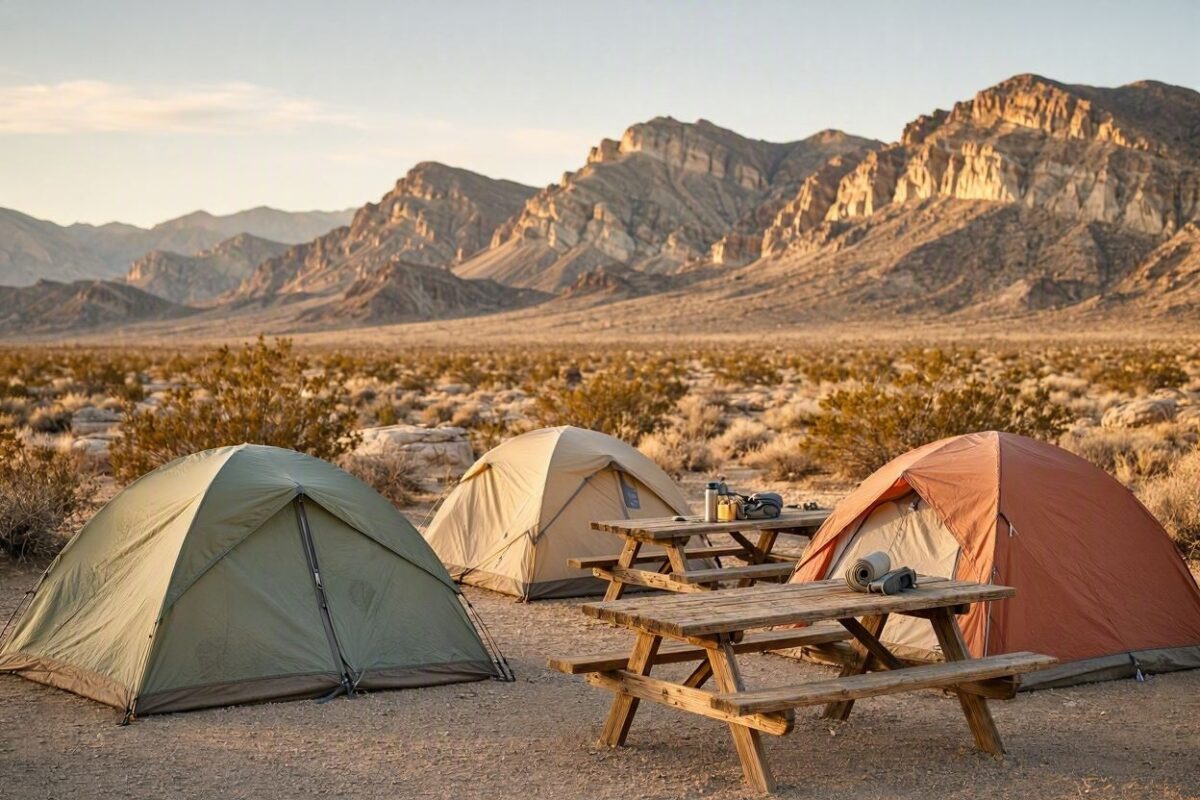
Camping at Death Valley National Park works nothing like camping in a forested park with shade and a lake nearby, and the rules here reflect that.
Furnace Creek Campground is the only site that takes reservations, bookable up to six months ahead for the October 15 through April 15 season, while every other campground in the park runs first-come, first-served, with payment made at an unstaffed, automated kiosk once you’ve found a site.
Which campground makes sense for a given trip depends less on personal preference and more on the season, since several sites simply close once summer heat makes overnight camping unsafe.
Reservations
Furnace Creek Campground stands alone as the only site in the park where a reservation guarantees a spot, and bookings run through Recreation.gov up to six months in advance for the cooler season.
Every other developed campground, including the park’s largest, Sunset, operates purely on a first-come, first-served basis, meaning travelers drive in, find an open site themselves, and pay at a self-help kiosk with a card.
Furnace Creek and Texas Springs tend to fill on weekends and holidays during peak season, but Sunset Campground almost always has room even when the others don’t, which makes it the practical backup for anyone arriving without a plan.
Summer Camping
From mid-April to mid-October, several lower elevation campgrounds, including Sunset, Texas Springs, and Stovepipe Wells, close outright, since overnight temperatures here can stay above 100 degrees even at midnight.
The campgrounds that do stay open through summer are limited to Furnace Creek, Emigrant, and Mesquite Spring, and the park is direct about why, travel on unpaved roads during this season raises the risk of vehicle breakdowns, exposure, poor cell service, and running out of water, a combination that turns a minor mishap into a genuine emergency fast.
Travelers looking for a more bearable summer night are better off at the park’s higher elevation campgrounds, Mesquite Spring, Emigrant, or Wildrose, where the air actually cools once the sun goes down.
Backcountry Camping
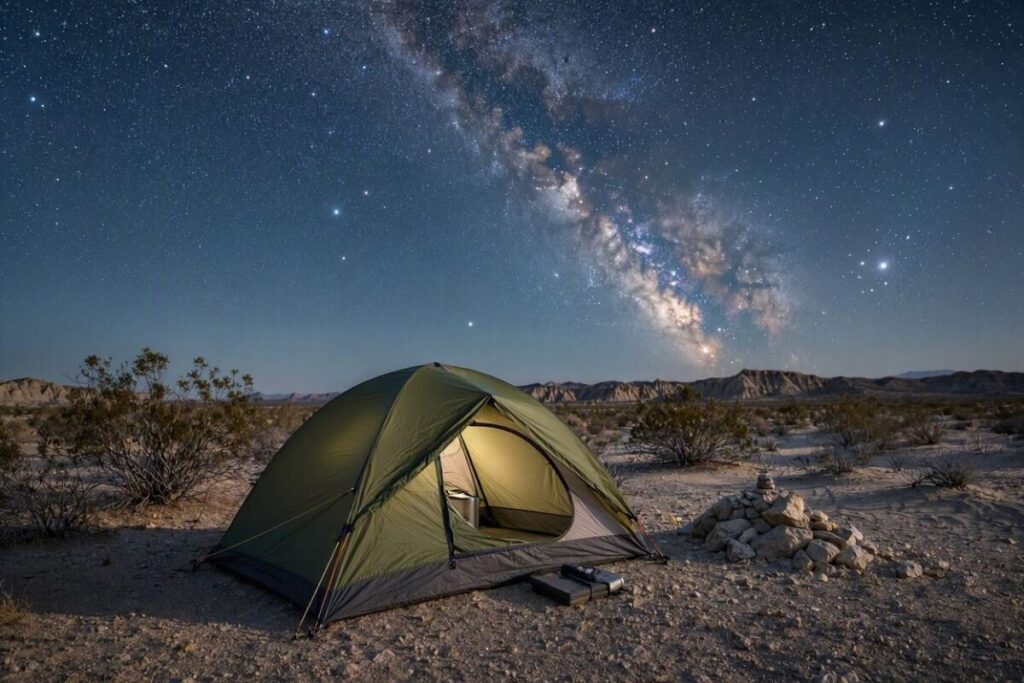
Dispersed and backcountry camping is allowed in designated areas of the park, and it appeals to travelers who want real distance from developed sites, but it comes with a serious caveat.
Most of Death Valley has no cell service, and a breakdown or medical issue far from a paved road can take hours longer to resolve than it would almost anywhere else in the country.
This kind of camping rewards genuine preparation, Leave No Trace practices, a real paper map, and enough extra water and fuel to handle a delay, the same mindset road trippers should bring to travel insurance and emergency planning generally when a trip runs through remote terrain rather than a well-serviced route. Wildlife adds another layer worth planning around too.
Coyotes and ravens are frequent visitors to occupied and unoccupied campsites alike, drawn in by anything left out, so a clean site isn’t just courtesy, it keeps animals from associating campgrounds with an easy meal.
Camp Rules
Campsites are capped at eight people and two vehicles, or one RV plus a second vehicle, with larger groups needing to book a group site at Furnace Creek instead.
Campfires are restricted to metal fire pits provided by the park, firewood is sold at the Furnace Creek and Stovepipe Wells general stores, and fires are banned entirely during summer at the higher elevation Mahogany Flat, Thorndike, and Wildrose campgrounds due to fire risk.
Furnace Creek Campground caps stays at fourteen days a year, while every other campground in the park allows up to thirty.
Generators are permitted only from 7 a.m. to 7 p.m., and checkout across every campground is at noon.
RV travelers should check length limits carefully before finalizing a route, since Mahogany Flat, Thorndike, and Wildrose cap out at 25 feet, while Furnace Creek can handle longer rigs, though individual site limits there vary and are worth checking against Recreation.gov before booking.
Pets are welcome at most campgrounds too, up to four per site, but they need to stay leashed at all times and can never be left unattended, a rule worth remembering for anyone road-tripping with a dog and planning a quick hike away from camp.
Camping on a Longer Trip
Anyone planning to camp here should also think through the drive itself, since several campgrounds sit well off the main paved routes.
The how to get to Death Valley National Park guide on Tadexprof breaks down which entrance roads connect to which parts of the park, useful for deciding whether Furnace Creek, Stovepipe Wells, or one of the higher elevation campgrounds fits the route better.
And for travelers who’d rather skip a tent altogether on at least part of the trip, the best hotels near Death Valley National Park guide on Tadexprof lays out the in-park and gateway-town alternatives worth comparing against a campsite.
For the complete, current rules straight from the source, including campground-specific details and backcountry regulations, the National Park Service camping page is worth checking closer to departure, since seasonal closures and fire restrictions can shift from one year to the next.
Camping here rewards the traveler who plans around the season rather than around convenience.
Pick a campground that matches the month, know the rules before arrival rather than after, and Death Valley’s campsites offer something few developed parks can, genuine isolation, star-filled skies, and a landscape that looks completely different once the crowds have gone back to their hotel rooms.
Frequently Asked Questions
Which Death Valley Campground Takes Reservations?
Furnace Creek Campground is the only one, bookable through Recreation.gov up to six months ahead for the October 15 through April 15 season.
Every other campground runs first-come, first-served, with payment made at an unstaffed, automated kiosk once you’ve found a site.
Which Campgrounds Stay Open in Summer?
Only Furnace Creek, Emigrant, and Mesquite Spring stay open from mid-April to mid-October.
Sunset, Texas Springs, and Stovepipe Wells all close outright, since overnight temperatures can stay above 100 degrees even at midnight.
Are Pets Allowed at Death Valley Campgrounds?
Yes, up to four per site at most campgrounds, but they need to stay leashed at all times and can never be left unattended, worth keeping in mind if you’re planning a quick hike away from camp.