Where is Rocky Mountain National Park? This guide is part of our full US National Parks Guide, covering every park worth visiting across the country.
It sits in northern Colorado, about 70 miles northwest of Denver, straddling the Continental Divide between the towns of Estes Park on the east and Grand Lake on the west.
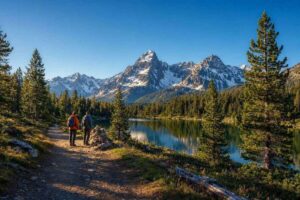
The park covers 415 square miles of alpine tundra, glacier-carved valleys, meadows, and mountain terrain that shifts dramatically in character depending on the elevation you are standing at.
Is Rocky Mountain National Park worth visiting?
The answer from people who have been there is almost always the same: yes, and often more than they expected.
The park holds over 350 miles of hiking trails, more than 150 lakes, and wildlife that includes elk, moose, bighorn sheep, black bears, mountain lions, and marmots.
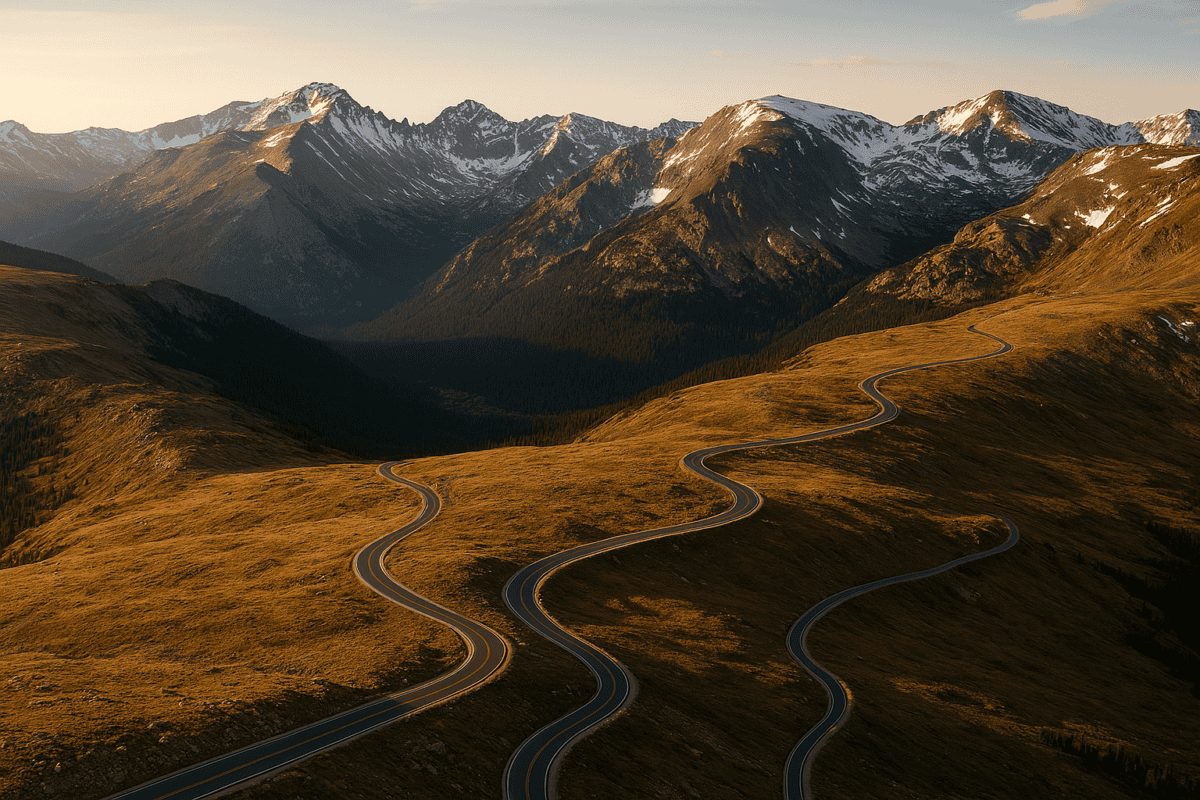
Trail Ridge Road, the highest continuously paved highway in North America, crosses the Continental Divide at over 12,000 feet and delivers views that require no hiking ability whatsoever to reach.
It drew more than four million visitors in 2024, making it one of the five most visited national parks in the United States. That number means planning matters more here than almost anywhere else.
Trail Ridge Road
No drive in the Colorado Rockies is more discussed among first-time visitors, and very few roads anywhere in the country live up to their reputation as consistently as this one does.
The 48-mile route runs from Estes Park on the east side through to Grand Lake on the west, climbing above the treeline into open alpine tundra and crossing the Continental Divide at Milner Pass.
The Alpine Visitor Center sits at 11,796 feet and looks out over roughly 400 square miles of mountain terrain. The road typically opens by late May or early June depending on snowpack and closes in mid-October.
Here is what many visitors miss: a timed entry reservation is required from May 22 through October 12, 2026, during certain hours of the day. That reservation is separate from the park entrance fee and must be booked in advance through recreation.gov.
Reservations for July and August dates sell out quickly. The cost is two dollars per vehicle on top of the standard entrance fee, which is 25 dollars for a single day or 35 dollars for a weekly pass.
The America the Beautiful annual pass covers the entrance fee but not the timed entry reservation.
For visitors who cannot secure a reservation or prefer not to drive, arriving before 5 a.m. at the Bear Lake corridor or before 9 a.m. at other sections of the park allows entry without a reservation.
Afternoons after 3 p.m. also do not require reservations for most of the park, and summer thunderstorms that typically roll through between 1 and 3 p.m. tend to thin the crowds considerably.
Travelers combining Rocky Mountain with other major parks should read the guide to the most visited US national parks on Tadexprof, which covers seven top parks with planning advice for visitors from the US, Canada, and Germany.
The Trails
Rocky Mountain has over 350 miles of maintained trails ranging from flat paved loops at lower elevations to demanding high-altitude routes that cross tundra and demand real preparation for altitude sickness, weather changes, and rapidly shifting conditions.
The trail to Emerald Lake from the Bear Lake trailhead is the park’s most accessible and most rewarding introduction.
The 3.5-mile round trip passes through Nymph Lake and Dream Lake before arriving at Emerald Lake, which sits below the sheer cliffs of Hallett Peak.
The elevation gain is moderate and the scenery justifies every step. Going in the early morning before 8 a.m. makes a significant difference in crowd levels at this particular trail.
Sky Pond is a longer and more demanding alternative from the same trailhead area. The route passes through dense forest, past Alberta Falls, and climbs to a high cirque where a small waterfall pours down a cliff face directly into the lake.
The round trip covers roughly nine miles with significant elevation gain and takes most hikers the better part of a full day.
The Highline-type experience in Rocky Mountain belongs to the tundra walks near Logan Pass on Trail Ridge Road. Even a short walk from the road into the open alpine tundra above treeline gives a sense of how unusual and fragile this landscape is.
The tundra plants here can take decades to grow a single inch. What looks like a resilient landscape is genuinely one of the most sensitive in the entire park.
Wildlife
Rocky Mountain is one of the most reliable places in the continental United States to see large mammals in an accessible setting without extensive backcountry travel.
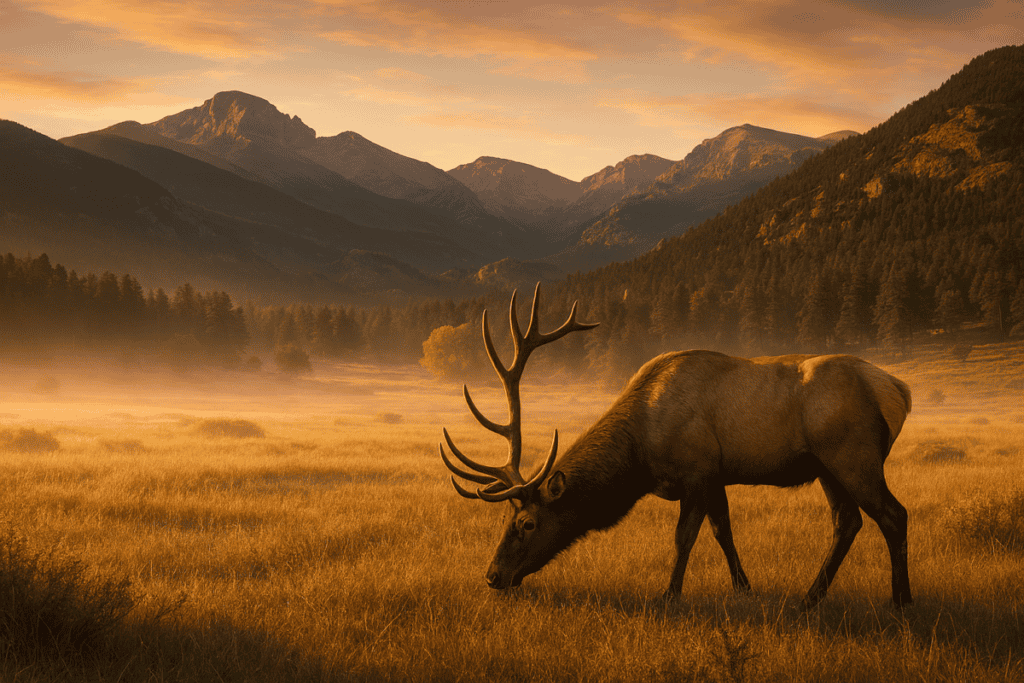
Elk are the signature animal and are visible nearly year-round. Moraine Park and Horseshoe Park, both on the east side of the park, are among the best meadow viewing areas in the country for elk. The herd has numbered in the thousands in recent years.
Dawn and dusk are the most productive times. During the fall rut from mid-September through October, bull elk bugle across the valleys in one of the most dramatic wildlife spectacles in North America.
The sound carries for distances that seem impossible, and Estes Park itself becomes a place where elk frequently wander into town and graze on the streets.
Bighorn sheep are commonly spotted at Sheep Lakes in Horseshoe Park during late spring and summer when they descend from the slopes to lick mineral deposits in the soil.
Mountain goats appear less predictably but are seen in the high terrain above treeline. Moose tend to favor the west side of the park near Grand Lake and the wetter riparian areas around willow thickets. Black bears are present throughout but rarely encountered on the main trails.
The protocol for approaching any of these animals is the same: 75 feet minimum for most species, further for moose, and no feeding under any circumstances.
The park enforces these distances, and the reasons are practical. Animals that become conditioned to human contact lose their caution around people, which creates danger for both.
When to Visit
Late June through mid-September is when Trail Ridge Road is fully open, every visitor center is operating, all trails are accessible, and the full wildlife population is visible across all elevations.
This is peak season and it is genuinely excellent if visitors plan around the crowds. Arriving early, booking timed entry in advance, and spending time on the less-visited west side near Grand Lake and the Kawuneeche Valley makes the experience far more satisfying than arriving mid-morning on a Saturday in July without a plan.
September is the strongest argument for visiting outside the core summer months. The elk rut is at full intensity, the crowds thin noticeably after Labor Day, and the landscape in the lower elevations turns with the seasonal change before the high country closes.
The timed entry reservation system runs through October 12, 2026, so the logistics do not simplify significantly until mid-October.
Spring before late May is quiet in a different way. Trail Ridge Road is still closed to vehicles but open to cyclists and hikers as far as the snowplows have cleared, typically to Rainbow Curve or further.
Waterfalls are running at full force from snowmelt. Services are limited and conditions require self-sufficiency, but for travelers who value quiet over convenience, spring in Rocky Mountain is one of the most underrated experiences in the national park system.
For Canadian visitors flying into Denver or driving south from Calgary, Rocky Mountain sits at a practical distance and pairs naturally with other Colorado parks. German visitors flying into Denver International Airport will find the park a 90-minute drive under normal conditions. The park entrance fee structure and the America the Beautiful pass are relevant for anyone visiting multiple parks in the same season, making the pass worthwhile at the point of a second visit.
For a broader national parks itinerary, the complete US national parks list covers all 63 parks and provides direction for narrowing choices based on travel style and schedule.
Where to Stay
Lodging inside the park is extremely limited. The YMCA of the Rockies and a small number of backcountry campsites represent the main in-park options.
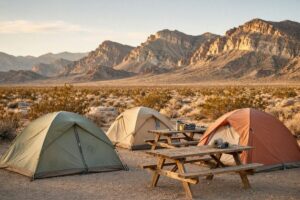
Frontcountry camping is available at several campgrounds including Moraine Park and Glacier Basin, both of which require reservations that open through recreation.gov and sell out fast for summer dates.
The town of Estes Park, located about two miles from the Beaver Meadows entrance on the east side, is the primary gateway for most visitors. It has hotels, cabin rentals, restaurants, and a range of services that make it a practical base for multi-day visits.
Properties along Fall River sit within a few miles of the park entrance and give some guests elk sightings from their own windows before they ever enter the park.
Grand Lake on the west side is smaller and quieter, and visitors who base themselves there tend to have a fundamentally different experience of the park with far less competition for parking and trail access.
The tradeoff is distance from the east side attractions, which requires committing to the drive over Trail Ridge Road or planning itineraries around the western routes.
Current trail conditions, permit details, road closures, and reservation information are updated regularly on the official NPS Rocky Mountain page, which remains the most reliable source for logistics that change seasonally.
A Park That Earns Every Mile of Altitude
The Continental Divide running through Rocky Mountain National Park is a physical shift in climate, ecology, and atmosphere that visitors feel in their lungs and see in the abrupt change of landscape from the dense forest of the lower elevations to the windswept, open tundra above treeline.
The park shares a DNA with other great Rocky Mountain landscapes. Visitors who have read the Glacier National Park guide will recognize similar glacially shaped terrain, a road that defines the visit, and wildlife that makes the landscape feel genuinely alive.
The difference is that Rocky Mountain sits within 90 minutes of a major international airport, which means the access threshold is lower and the crowds reflect that directly.
What remains is a landscape that rewards anyone willing to arrive early, move at altitude with patience, and resist the temptation to race through it.
Four million people a year visit Rocky Mountain National Park. Very few of them leave wishing they had stayed somewhere else.