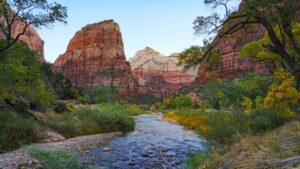
The best time to visit Zion National Park is October, and most people who have been there more than once will tell you the same thing.
The summer crowds have thinned, the temperatures have dropped into a range that actually favors hiking, the canyon cottonwoods turn gold against the red sandstone walls, and the park feels like it belongs to the people walking through it rather than being shared with half a million strangers.
That said, October is not the right answer for every traveler. What you are after from the park, and what constraints shape your trip, will ultimately determine which season earns your visit.
Zion is open year-round and genuinely worth visiting in every season for different reasons.
The challenge is knowing what each season actually delivers and what it asks of you in return, because the gap between Zion in March and Zion in July is large enough that they feel like different parks.
The Spring
March arrives at Zion with a force that catches first-time visitors off guard. Spring break descends on the canyon country and visitation nearly triples compared to February almost overnight.
The park shuttle returns to full-time operation, South Campground reopens, and the earliest wildflowers start appearing on the canyon walls.
Claret cup cactus blooms in mid-April with a color that reads almost violent against the sandstone backdrop.
The complication in spring is the Virgin River. Snowmelt raises the river level significantly, and the Narrows, one of Zion’s most iconic hikes where the trail runs through the river itself between canyon walls only a few feet apart, closes frequently during wet springs for extended periods.
Anyone whose trip centers on hiking the Narrows should check current conditions through the NPS Zion conditions page before finalizing dates. Building a Zion trip around the Narrows and arriving to find it closed is the kind of avoidable disappointment that good planning eliminates.
Temperature swings in March and April run wide, sometimes 32 degrees Fahrenheit or more between morning and afternoon.
A layer system is not optional in spring. It is the basic operating requirement for a comfortable day on the trail.
Summer
Summer at Zion runs hot in a way that commands respect. Temperatures regularly exceed 100 degrees Fahrenheit on the canyon floor from May through September, and the walls that make the canyon beautiful also trap heat.
The NPS is direct about this: heat illness is a real risk, and your safety is your responsibility. Carrying a refillable water bottle and using the filling stations marked on the park map is not optional. It is the minimum standard for hiking in summer conditions.
The crowds compound the heat in ways that affect the practical experience of the park. All available parking fills by 9 a.m. on most summer days, and the park shuttle, which is the only way to access the Zion Canyon Scenic Drive and most major trailheads, runs at full capacity.
Memorial Day, the Fourth of July, and Labor Day are the three most heavily visited weekends of the entire year. Around a half million people visit the park each month during peak summer. That number is not a scare tactic. It is context for managing expectations.
For Canadian travelers planning a summer road trip through Utah, and for German visitors whose vacation window falls squarely in July and August, summer is often the only realistic option.
It is still worth going. The park is magnificent regardless of who else is standing in it. The preparation requirement is simply higher. Starting early, ideally on the trail before 7 a.m., is the single most effective crowd management strategy available.
July and August also bring the monsoon season, when afternoon thunderstorms build rapidly and flash flooding becomes a genuine hazard in slot canyons and along the river.
Anyone hiking in confined terrain during monsoon months should ask rangers about flood risk before setting out. A clear sky at the trailhead means nothing if a storm is building twenty miles upstream.
Fall
October and November deliver Zion in a form that the park’s summer reputation does not prepare most visitors for.
The temperature drops into a hiking-friendly range, typically warm in the afternoon and cool in the morning, with daily swings of around 30 degrees Fahrenheit that make layering practical rather than cumbersome.
Fall color begins at the highest elevations and moves down the canyon through late October and into early November, the cottonwoods turning a gold that photographs dramatically against the red canyon walls.
Visitation drops meaningfully after Labor Day and more dramatically through November. The shuttle still runs but on reduced frequency and hours. The canyon is still full during Columbus Day weekend, but a weekday in mid-October carries a fundamentally different atmosphere from a Saturday in July.
For families whose school schedules allow any flexibility past the traditional summer break, mid-October is the strongest argument the park makes all year.
The Narrows, typically more navigable in fall with lower river levels, becomes a more accessible hike.
Water temperatures are cold and a wetsuit rental from Springdale outfitters is advisable, but the logistical barriers that close it in spring are usually absent.
Winter
Winter at Zion rewards a specific kind of traveler: one who is comfortable with cold, does not need the full park to be operational, and values quiet over convenience.
Temperatures range from daytime highs in the 50s down to well below freezing overnight, and nearly half the park’s annual precipitation falls between December and March.
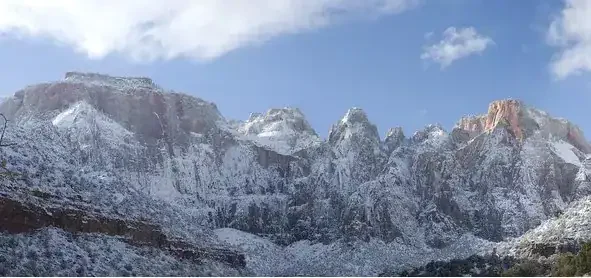
Snow on the canyon walls does something to the landscape that no other season matches.
The red and cream sandstone against fresh white snow, with almost no one else in the canyon, is a version of Zion that most visitors have never seen.
The practical constraints are real. The park shuttle operates only during holiday periods in winter.
Some trails close due to ice hazard. Traction devices on boots are a genuine recommendation from the NPS, not a casual suggestion.
The Narrows in winter requires a drysuit to hike safely. South Campground closes for the season.
For travelers building a Southwest itinerary that includes multiple Utah parks, the where to stay in Zion National Park guide on this site covers accommodation logistics across seasons, which changes meaningfully from summer to winter as lodging competition eases and Springdale quiets considerably.
Best Season to Choose
Zion does not have a bad season. It has seasons that suit different people. Summer suits those who have no other window and are willing to start early and carry enough water.
Spring suits those who want wildflowers and don’t mind variable weather. Fall suits those who want the full park experience with breathing room. Winter suits those who want the canyon almost entirely to themselves.
What every season shares is the canyon itself, the Virgin River, the sandstone walls, and the particular quality of light that has been pulling people to this corner of Utah for over a century. The season is the frame. The park is the painting.