Grand Teton National Park sits in northwestern Wyoming, directly south of Yellowstone National Park, separated by just a few miles of the John D. Rockefeller Jr. Memorial Parkway.
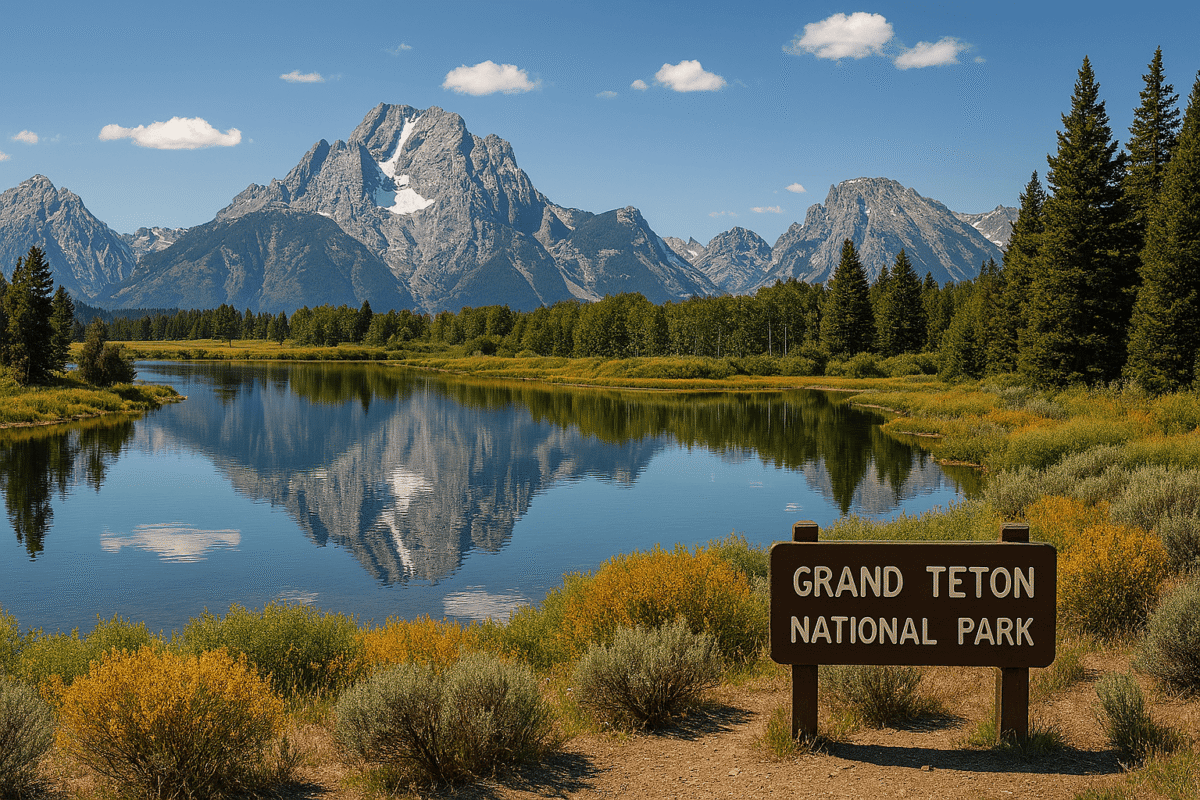
The park occupies the Jackson Hole valley and the dramatic Teton Range that rises abruptly from the valley floor without foothills or transitional terrain.
The nearest airport is Jackson Hole Airport, the only commercial airport located inside a national park in the United States, about a 30-minute drive from the main park visitor area.
What makes Grand Teton different from other national parks?
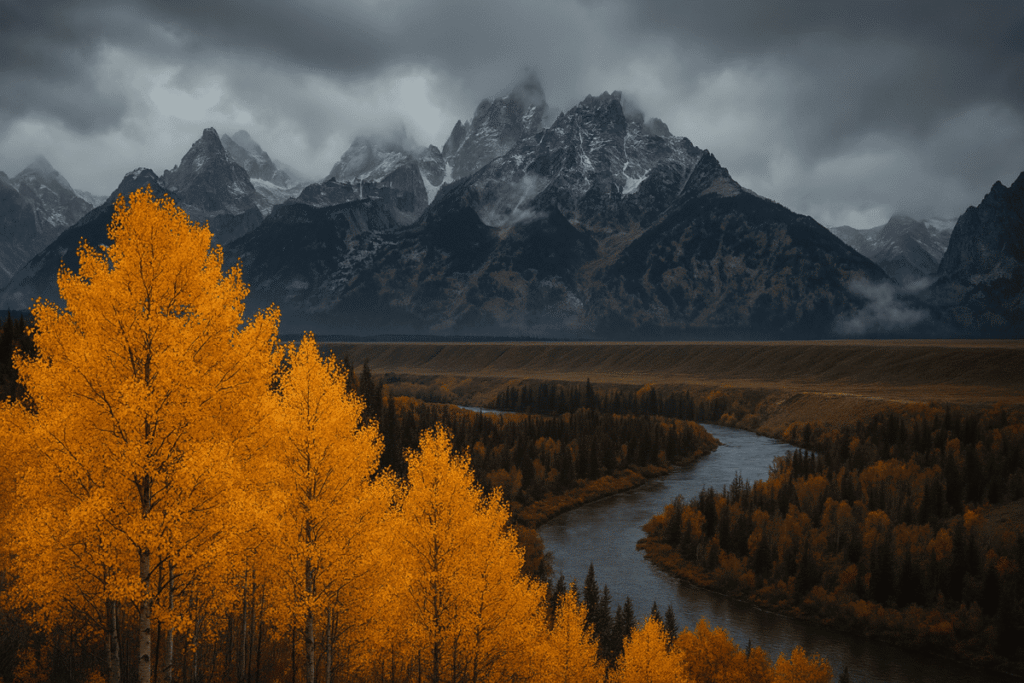
Most mountain parks build their drama gradually. The Teton Range does not. The peaks rise nearly 7,000 feet directly from the flat valley floor of Jackson Hole in one of the most abrupt and striking vertical rises in North America, with no foothills softening the transition.
The Grand Teton peak itself reaches 13,775 feet. The range has been a landmark for indigenous communities, fur trappers, and settlers for over 11,000 years.
What makes the visual impact so immediate is the absence of transition. You drive through sagebrush flats, and the mountains are simply there, filling the entire western horizon.
The park also has one of the highest densities of large wildlife in the American West.
Grizzly bears, black bears, moose, bison, elk, wolves, pronghorn, and bighorn sheep all live within the park boundary, and sightings along the main roads and around the lakes are genuinely common, particularly in early morning and at dusk.
How much does it cost to enter grand teton?
The standard vehicle entrance fee is $35, valid for seven consecutive days and also covering entry to Yellowstone National Park if visited within the same period, since the two parks share a combined fee.
Individual entry on foot or bicycle is $20 per person. The America the Beautiful annual interagency pass at $80 covers both parks and all other federal lands across the United States for twelve months and is worth purchasing for any trip that includes more than two parks.
Passes are available at entrance stations or in advance at recreation.gov. Campsite reservations during peak summer season must be made well in advance.
Check current road conditions and any wildlife closures before your visit on the official Grand Teton conditions page, as the park enforces temporary trail and road closures regularly to protect denning bears and nesting eagles.
Best Things to Do in Grand Teton
Jenny lake and cascade canyon
Jenny Lake is the emotional center of the park and the starting point for the most popular hikes in the Tetons. The lake sits at the base of the main peaks and reflects the Teton Range on calm mornings in a way that stops people mid-step.
A boat shuttle crosses the lake from the east shore to the west shore trailhead, saving two miles of walking and costing around $20 round trip. From the west shore, the trail to Hidden Falls is less than half a mile and leads to a 200-foot cascade tucked into a granite bowl.
Continuing uphill for another quarter mile reaches Inspiration Point, an exposed overlook above the lake with views across Jackson Hole that justify the name.
From Inspiration Point, the trail enters Cascade Canyon, a wide glacially carved valley heading directly toward the high peaks. Hiking a few miles into the canyon and returning is one of the finest half-day outings in any national park in the country.
Mormon row and wildlife viewing
Mormon Row is a historic district on the eastern edge of the park where a row of weathered wooden barns and homesteads from the early 20th century sit against the backdrop of the full Teton Range.
The Moulton Barns, the most photographed barns in the United States, are here. The scene at sunrise, when the peaks catch the first light and the barns glow in the foreground, is one of the defining images of the American West.
Beyond the photography, Mormon Row and the surrounding Antelope Flats road are among the best places in the park for wildlife. Bison herds graze the sagebrush flats regularly, pronghorn are almost always visible from the road, and coyotes work the meadow edges at dawn and dusk.
Jackson lake and oxbow bend
Jackson Lake is the largest lake in the park, covering 15,000 acres and reflecting Mount Moran and the northern Tetons from its eastern shoreline.
The Signal Mountain Summit Road climbs above the lake to a viewpoint that gives the only true bird’s-eye perspective of Jackson Hole available without hiking, and it is worth the short drive even in a full itinerary.
Oxbow Bend, a quiet curve in the Snake River near Jackson Lake Junction, is consistently rated among the best wildlife viewing spots in the park. Moose feed in the shallows at dawn.
Bald eagles and ospreys nest in the cottonwoods overhead. River otters are occasionally spotted in the calm water. Go early and stay quiet.
Hiking for all levels
The park contains over 200 miles of trails ranging from flat lakeshore walks to demanding technical ascents.
The String Lake and Leigh Lake trail is an easy, largely flat loop through forest with continuous mountain views and excellent moose habitat, covering about seven miles with minimal elevation gain.
Taggart and Bradley Lakes is a moderate four-mile loop through burned forest that is recovering into wildflower meadows, with lake reflections of the peaks at both destinations.
For more experienced hikers, the Surprise and Amphitheater Lakes trail climbs nearly 3,000 feet over just over nine miles round trip to two high alpine lakes with full-range Teton views.
Bear spray is strongly recommended on all backcountry trails in Grand Teton and can be rented from outfitters in Jackson.
Best Time to Visit
Summer from late June through August is when the park is fully operational, all roads are open, and the hiking is at its best. Wildlife is active, the lakes are calm and blue, and the long summer days give you time to cover significant ground.
It is also the most competitive season for campsite reservations and accommodation in Jackson. Book both months in advance.
Fall from September through October brings the best wildlife viewing of the year. Elk rut begins in September and the bulls bugling across the valley at dawn is one of the defining Teton experiences.
Aspen groves across the park turn gold in October and the crowds thin significantly after Labor Day. Temperatures drop sharply at elevation and snow can arrive at any point from September onward.
Winter from November through April closes most park roads but opens the area to cross-country skiing, snowshoeing, and snowmobile tours.
The town of Jackson and nearby Jackson Hole Mountain Resort remain fully operational through winter and draw a significant winter sports crowd from across the US, Canada, and Europe.
Grand Teton and Yellowstone
Most visitors combine Grand Teton with Yellowstone National Park on a single trip, and the two parks are designed for exactly this.
The entrance fee covers both, the drive between them takes under an hour, and the experiences are complementary in the most direct way: Grand Teton delivers mountain drama and wildlife viewing, Yellowstone delivers geothermal spectacle and further wildlife.
If you are building a broader western national parks itinerary beyond Wyoming, our guides to Glacier National Park in Montana and Zion National Park in Utah give you the same depth of planning detail for both destinations.
For visitors working through the Utah parks circuit on the same trip, our Grand Canyon National Park guide covers everything you need to plan that leg of the journey.
Grand Teton does not ease you in. The mountains are immediate, the wildlife is present, and the scale of the landscape rewards every hour you give it.
Come with a plan, carry bear spray, and go early every single morning. The park belongs to the people who show up before the rest of the world wakes up.