If you had a trip to Mexico planned, Sunday, February 22, 2026, is a date you will not forget anytime soon. Here is Mexico travel alert to guide your tips and inform you on Mexico travel advisory.
The Chaos
In the early hours of that Sunday morning, the Mexican military carried out one of the most consequential operations in the country’s modern history. Nemesio Rubén Oseguera Cervantes, better known as “El Mencho,” the founder and supreme leader of the Jalisco New Generation Cartel, was fatally wounded during a raid in the town of Tapalpa, deep in the state of Jalisco.
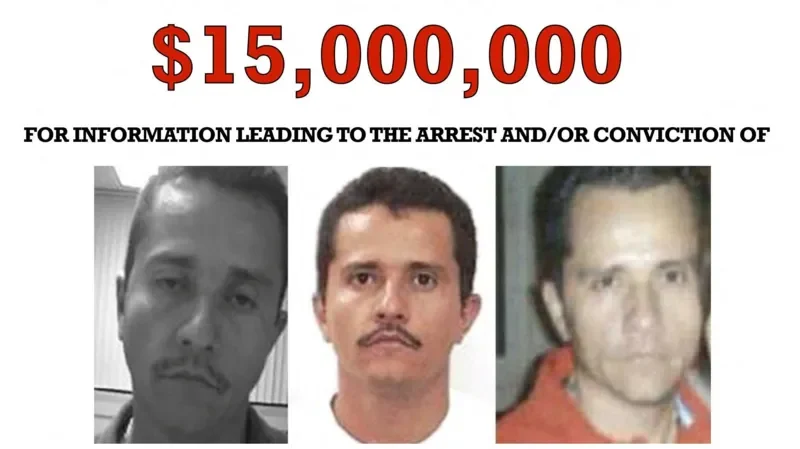
He died from those wounds while being airlifted to Mexico City. Just like that, the most hunted man in Mexico (a man with a $15 million US bounty on his head) was gone.
And within hours, the country was on fire, literally.
Cartel loyalists torched buses and trucks, barricaded highways, and attacked shopping malls, airports, and bus stations across more than 20 Mexican states. Guadalajara, Jalisco’s capital and one of Mexico’s largest cities, became a ghost town by Sunday night.
Tourists in Puerto Vallarta stood on the beach watching smoke rise above the city skyline.
Travelers at Guadalajara’s airport were caught on video sprinting across the terminal, ducking behind chairs in fear. A 64-year-old American woman, alone at the airport after most flights were grounded, told reporters she was terrified of not knowing if a taxi would even come, or if she would make it out at all.
If you have been following Mexico’s drug war for any length of time, you already know how this story goes. Cartels do not go quietly when their leaders fall.
History has shown us this pattern with the Sinaloa Cartel, and now we are watching it play out in real time with CJNG. The question is not whether this creates chaos because it always does.
The question is how long that chaos lasts, how deep it runs, and what it means for every traveler who was planning to visit Mexico in the weeks ahead.
The answer right now is that nobody fully knows. And that uncertainty is exactly what makes this so hard for anyone trying to plan or salvage a trip.
Who Was El Mencho?
Nemesio Oseguera Cervantes was not some mid-level trafficker caught in a sweep. He was, by virtually every metric, the most powerful drug lord in Mexico at the time of his death.
The FBI considered the CJNG the most powerful trafficking organization in the country, more powerful even than the Sinaloa Cartel, which had already been significantly weakened by the arrests of Ismael “El Mayo” Zambada and Joaquín “El Chapo” Guzmán, both now in US custody.
El Mencho was a former police officer and avocado farmer who co-founded CJNG around 2009. Under his leadership, the organization expanded into all 50 US states and had operations across more than 30 countries.
The cartel became the dominant supplier of fentanyl, methamphetamine, cocaine, and heroin into the United States. The US Department of Justice indicted him multiple times, most notably in 2022 for leading the manufacturing and distribution of fentanyl destined for American streets.
Federal cases linked CJNG operatives to cities like Houston and Dallas, and to border crossing points along the entire Texas frontier.
What made El Mencho particularly dangerous was his near-total anonymity. He was so deliberate about staying invisible that all known photographs of him were reportedly decades old.
For years, no one could find him. That changed Sunday morning in a small town called Tapalpa, about a two-hour drive southwest of Guadalajara.
US Deputy Secretary of State Christopher Landau confirmed his death and described him as one of the most ruthless drug kingpins in history, adding that the development was positive for the entire Western Hemisphere.
The White House confirmed that American intelligence supported the operation. The Mexican Defence Secretariat acknowledged the assistance, signaling that this was a joint operation executed at a moment when the Trump administration had been placing enormous pressure on President Claudia Sheinbaum to demonstrate results on cartel crackdowns.
Removing a cartel boss at this scale is the kind of moment that ripples far beyond Mexico’s borders, you already understand that political and security events in one country can upend plans thousands of miles away faster than you can refresh a flight tracker.
We covered a smaller but eerily similar disruption when the El Paso airspace closure rattled travelers across the Texas-Mexico corridor. What happened this weekend in Jalisco is that story, multiplied by a hundred.
What Is Happening?
By Sunday evening, Mexican authorities reported 252 roadblocks across the country. By 8 PM local time, 23 had still not been cleared. Schools were canceled across multiple states.
The Jalisco governor declared a code red, suspending public transportation and urging all residents to remain in their homes.
The states most affected include Jalisco, Colima, Michoacán, Nayarit, Guanajuato, and Tamaulipas, but the unrest spread far beyond CJNG’s traditional strongholds.
Authorities in Jalisco, Michoacán, and Guanajuato confirmed at least 14 additional deaths beyond those from the military operation itself, including seven members of the National Guard.
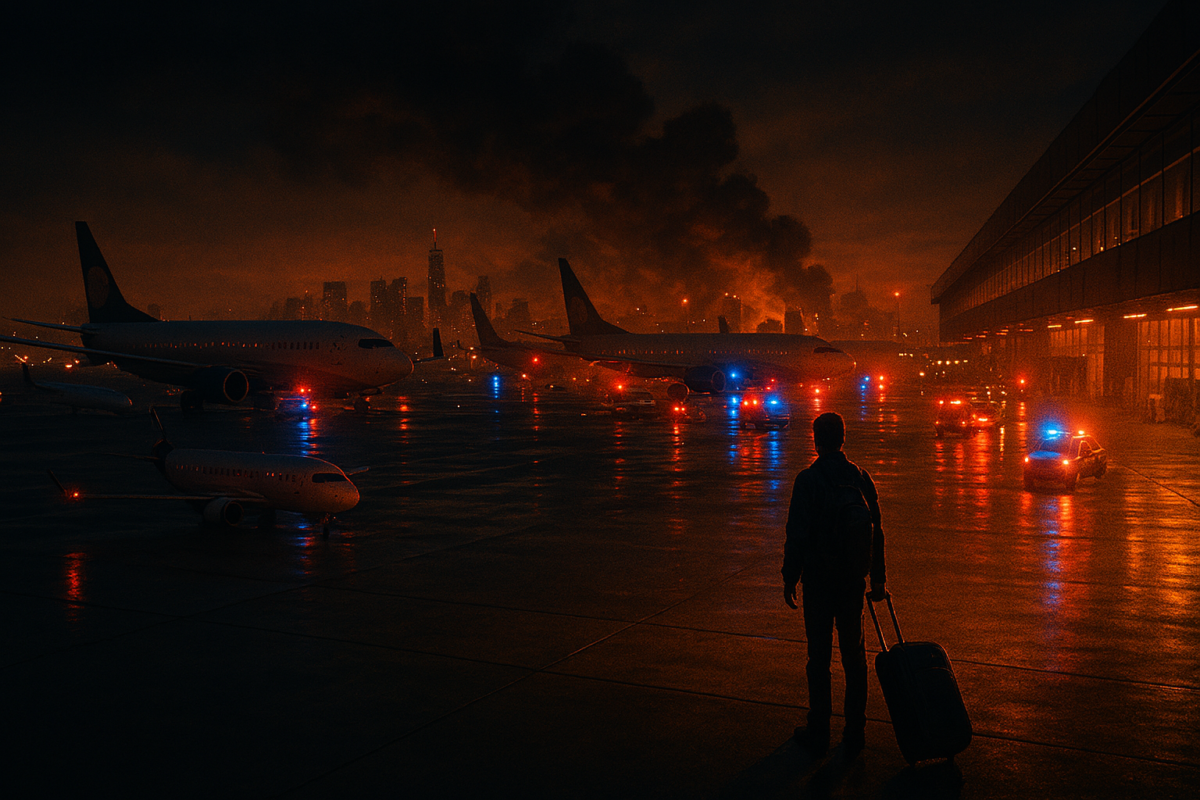
If you are trying to picture what this looked like on the ground: imagine arriving at an airport where flights are being grounded in real time, smoke is visible through the terminal windows, and the taxi queues outside are empty because drivers are too afraid to come near. That was Puerto Vallarta on Sunday evening.
The US State Department issued a travel advisory urging Americans to shelter in place in Jalisco, Tamaulipas, and Michoacán due to ongoing security operations, road blockages, and criminal activity.
Canada’s government issued parallel guidance for Canadians in those same states. If you are in one of those areas right now, the immediate advice is to minimize movement, avoid crowds, and monitor local news closely.
Which Flights Were Cancelled?
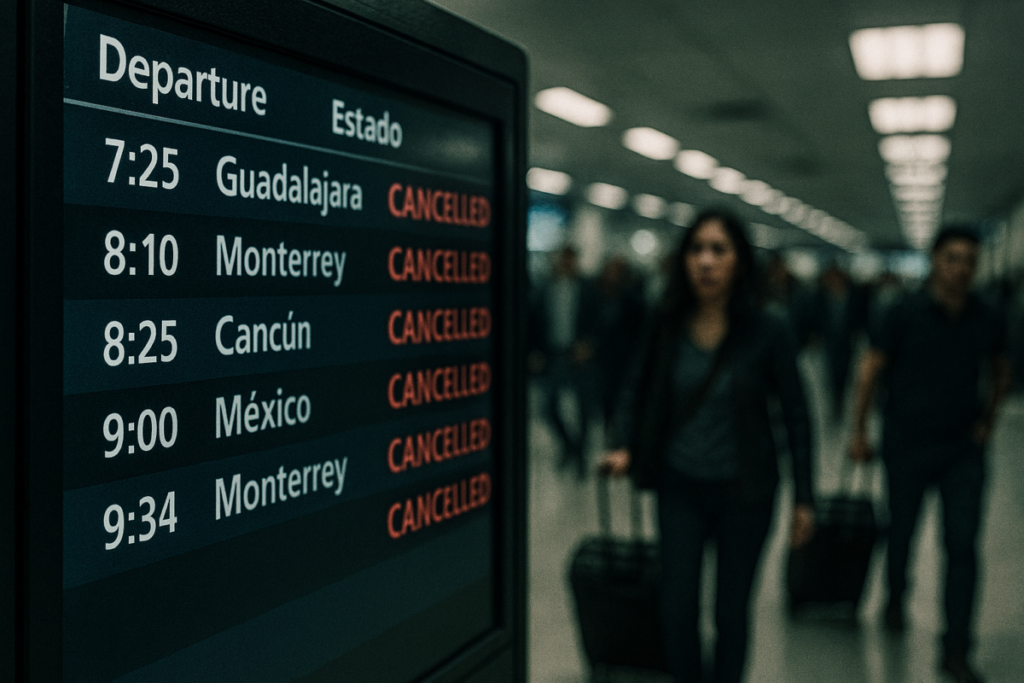
This is where things get immediately personal for hundreds of thousands of travelers, particularly those coming from the United States, Canada, and Germany.
Southwest Airlines suspended all operations at Puerto Vallarta International Airport. Alaska Airlines confirmed cancellations to and from Puerto Vallarta. Delta Air Lines canceled flights and issued travel waivers for passengers booked into Puerto Vallarta and Guadalajara.
American Airlines and United Airlines followed with cancellations to both cities. For Canadian travelers, Air Canada, WestJet, and Porter Airlines all appeared on the list as well.
Germany’s Lufthansa confirmed it was monitoring the situation and assessing its Mexico City and Cancún routes on an ongoing basis as of Monday morning.
Flights to Cancún, Los Cabos, and Mexico City were largely continuing, though airlines were reassessing individual routes hour by hour.
President Sheinbaum said she expected operations at affected airports to normalize by Monday or Tuesday, but airline decisions are ultimately driven by real-time security assessments, not political timelines.
If your flight was cancelled, you are in the same position many travelers found themselves in during the El Paso airspace closure. In that case, as in this one, knowing your rights as a passenger makes the difference between recovering your money and losing it.
US Department of Transportation rules require airlines to provide refunds for cancelled flights, full stop, regardless of the reason. European travelers flying from EU airports are protected under EU Regulation 261/2004, which provides additional compensation rights on top of refunds.
German travelers in particular should check with Lufthansa and tour operators directly, as package holiday protections under EU law may also apply.
What Happens Next?
Here is the part that mainstream travel headlines tend to skip past, but which anyone who follows Mexico closely already feels in their gut.
Killing El Mencho was the operationally difficult part. What comes next is where things get genuinely complicated and genuinely unpredictable. Security analysts are warning that the immediate aftermath of a decapitation strike on a cartel this size produces two simultaneous threats.
The first is retaliatory violence from loyalists . The second threat is more insidious: rival criminal organizations sensing weakness and moving in to contest territory.
The Sinaloa Cartel, despite its own fractures, still operates across much of Mexico. Regional groups are watching CJNG’s response with enormous interest, and some will act on what they see.
What This Means for Your Mexico Plans
If you have a trip to Mexico coming up, the practical advice is to watch this situation carefully over the next two to three weeks before making any irreversible decisions.
Cancún and Los Cabos remain largely unaffected. Mexico City is operating normally. Jalisco specifically (Guadalajara, Puerto Vallarta, the lake towns of Chapala and Ajijic) is where the situation remains most volatile, and where I would personally wait before booking or traveling.
If you are rethinking international travel more broadly and want to stay in North America for now, our guide to the 7 most visited US national parks to visit before you die is worth a read.
These are some of the most spectacular places on the continent, and unlike a beach town in Jalisco right now, they are not on anyone’s travel advisory list.
If you are specifically drawn to the American Southwest and the kind of landscapes that make you feel genuinely small in the best possible way, our deeper look at Yellowstone National Park covers everything from the best times to visit to what kind of traveler the park is best suited for, useful whether you are American, Canadian, or a German traveler planning a longer North America trip.
For travelers who want to understand the full range of options, our complete US national parks list ranks all 63 designated parks and gives you a realistic sense of what each one offers. If Mexico is off the table for the next few weeks, these are the kinds of alternatives worth having bookmarked.
One more thing worth saying clearly: this moment matters beyond the immediate travel disruption. El Mencho’s death removes the single most powerful figure in the global fentanyl supply chain.
The fentanyl crisis has reshaped communities across the United States, Canada, and increasingly Germany over the past decade. What happens to the CJNG in the coming months will have consequences that reach far beyond any airport cancellation board.
This is a story that touches every country that has felt the weight of North American drug trafficking, and it is far from over.
We will keep this post updated as new information comes in on flight restorations, travel advisory changes, and the broader security situation across Mexico.
If you are trying to decide what to do about an upcoming trip, stay close to official State Department and Global Affairs Canada advisories, and call your airline directly rather than waiting for an email. Situations like this move faster than airline notification systems do.
Stay safe, stay informed, and travel smart.
For more on destinations, safety tips, and travel disruptions as they happen, browse our latest travel coverage