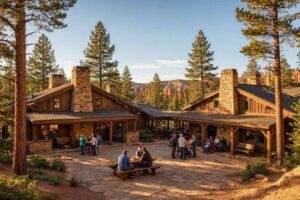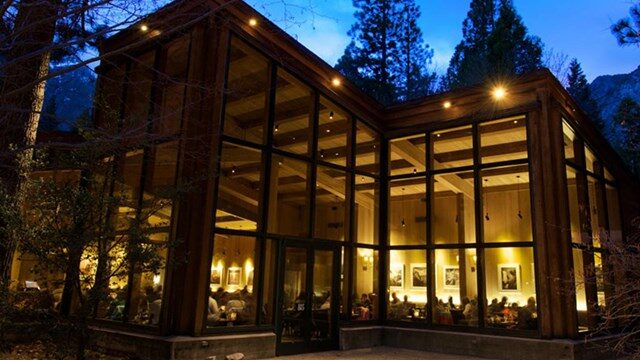
Yosemite National Park does not have a hotel shortage. It has a booking window problem.
Most of the accommodation inside the park, and the best options just outside its gates, disappears months before the summer season opens.
If you are searching for best hotels near Yosemite right now without a reservation, you are probably dealing with that reality firsthand.
The short answer to where to stay is inside the park if you plan far enough ahead, in the gateway towns of El Portal, Mariposa, or Groveland if you did not, and in Merced or Fresno if you need a fallback with actual availability and a more manageable nightly rate.
The long answer requires understanding how Yosemite’s lodging ecosystem actually works, because it is not like booking a hotel in most places.
Yosemite Lodging Guide
All lodging within park boundaries is managed by Yosemite Hospitality, a concessionaire operating under National Park Service oversight.
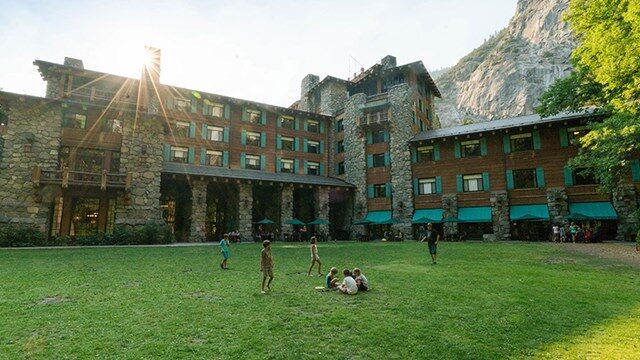
The range runs from the historic Ahwahnee Hotel, one of the great grand lodges of the American West, down to canvas tent cabins at Curry Village in Yosemite Valley.
There is no independent hotel development allowed inside the park, which keeps the experience cohesive but also keeps supply permanently limited.
The Ahwahnee
It sits at the east end of Yosemite Valley with views toward Glacier Point, and its rooms can run several hundred dollars a night during peak season.
For travelers coming from Canada or Germany where national park accommodation tends to either not exist at all or be far more utilitarian, the Ahwahnee represents something unusual. A full-service luxury hotel inside a wilderness park, with stone fireplaces and a dining room that has hosted heads of state.
It is genuinely worth experiencing if the budget allows and you can get a reservation.
Curry Village
Its sits at the other end of the spectrum. Tent cabins there are small, unheated canvas structures with cots and minimal furniture, positioned close together on a wooded flat in the valley.
Recent guests have described the experience as the most direct way to feel like you are actually living inside Yosemite for a few days rather than just visiting, and the access to valley shuttle stops and trailheads makes it functionally excellent despite the lack of amenities.
If you are staying in an unheated tent cabin in spring or fall, bring a sleeping bag regardless of what the daytime forecast shows. Night temperatures drop fast.
How to Access
El Portal sits three miles west of the park’s Arch Rock entrance on Highway 140, and it is the closest outside-park option for anyone who missed the internal booking window.
Properties here are small, most of them family-run, and they tend to sell out nearly as quickly as park lodging does.
The advantage is real, a 10-minute drive to the valley floor versus the 45 to 90 minutes you will spend coming in from Mariposa or Groveland during peak season, when Highway 140 carries more traffic than its two lanes were designed to handle.
Mariposa
Its about 30 miles southwest of the valley on Highway 140, offers more inventory and more price variation.
It is a proper small town with restaurants, a grocery store, and a historical museum worth an hour of your time.
Travelers who are road-tripping through California’s national parks corridor often find Mariposa a useful staging point, particularly if the itinerary includes both Yosemite and Kings Canyon National Park, which lies roughly two hours southeast through central California’s Sierra Nevada.
Groveland
Its on Highway 120 north of the park, is the gateway for travelers approaching from San Francisco.
The drive from Groveland to Yosemite Valley takes around 45 minutes outside of peak hours.
Properties there include both independent inns and a handful of vacation rentals that work well for families or groups traveling together and wanting more kitchen access than a standard hotel room provides.
Timing and Budget
High season runs from Memorial Day through Labor Day, and within that window, July and August push prices to their ceiling.
A mid-range hotel room in Mariposa or Groveland during peak July will typically run between $180 and $300 USD per night.
Canadian travelers will find the exchange rate adds roughly 35 percent to those figures, which makes shoulder season planning an even stronger financial argument.
May and early June offer better rates, lower crowd density in the valley, and Yosemite Falls running at full volume from snowmelt, which most people consider the most dramatic version of the park’s signature waterfall.
September is underrated across the board. The crowds thin noticeably after Labor Day, the temperature drops into a more comfortable range for hiking, and accommodation prices follow the demand curve down.
German travelers in particular tend to visit in July and August because those are the standard European vacation weeks, but September is objectively a better month to experience Yosemite if the schedule allows any flexibility.
For the full picture of what the park contains beyond the question of where to sleep, the NPS Yosemite planning page covers entrance fees, trail conditions, road closures, and shuttle maps in one place. The $35 vehicle entrance fee is valid for seven consecutive days and covers everyone in the car, which is worth knowing before you budget the trip.
Booking
Yosemite rewards people who plan early and punishes last-minute decisions more than almost any other major US national park.
If internal lodging is already gone for your dates, do not wait to see if something opens up. Book a gateway property now and work with what is available.
The park itself, the valley, the falls, Half Dome visible from the meadows, the quality of morning light on El Capitan, none of that changes based on where you slept the night before.
The accommodation is logistics. The park is the point.