Most people searching for Zion Canyon hiking trails want to know two things,which trails are worth doing and whether they need a permit.
The short answer is that the canyon has about thirty miles of maintained trails across three difficulty levels, that the shuttle system runs from March through November and determines how you reach most of them, and that only Angels Landing currently requires a permit to complete the final section.
Everything else is accessible on the day you arrive. That said, “accessible” and “easy to pull off” are two different things in Zion Canyon.
The Shuttle sets your schedule
Before any trail planning matters, the shuttle matters more. From March through November, private vehicles are not permitted on Zion Canyon Scenic Drive during operating hours.
You park in Springdale or at the visitor center and board a free shuttle that stops at nine points along the canyon. This is not a minor logistical footnote.
If you are arriving in summer and not at the trailhead by 8 a.m., you will spend part of your morning in a shuttle queue rather than hiking.
For visitors flying into Las Vegas from Germany, Canada, or the American east coast and landing mid-afternoon, this matters for how you structure your first full day.
Plan to be moving before the canyon heats up and the queues build. The shuttle runs until around 11 p.m. in peak season, so late afternoon starts work too, particularly for lower-elevation canyon walks.
The Easy Trails
The Riverside Walk is 2.2 miles round trip, paved the entire way, and runs along the Virgin River from the Temple of Sinawava to the mouth of the Narrows.
It requires no special preparation beyond water and footwear with any grip at all. Most people treat it as a warm-up or a consolation trail. That is a mistake.
The canyon walls at that section are some of the most dramatic in the park, and the light in the late afternoon hits the sandstone in a way that makes the walk genuinely worthwhile on its own terms. The Pa’rus Trail, at 3.5 miles, is also paved and allows dogs, making it the only trail in the park where you can bring a leash and a pet without issue.
The Canyon Overlook Trail is often overlooked precisely because it sits east of the main Zion-Mount Carmel Tunnel, accessible by car rather than shuttle, and is only a mile long.
What it gives you is a high-angle view over the canyon that few visitors see because getting there requires driving east rather than following the crowd toward the visitor center.
One hour and minimal effort, and you are looking out over the canyon from above.
Moderate Trails
The Emerald Pools trail system runs as a network through three tiers. The Lower Pool is half a mile and almost flat.
The Middle and Upper Pools add elevation and require the Kayenta Trail as an entry point, with total distances landing somewhere between two and four miles depending on which combination you choose.
The pools themselves are carved rock basins fed by seeping canyon walls, and when water levels are good, they produce hanging waterfalls over the red rock that are among the most photographed scenes in southern Utah.
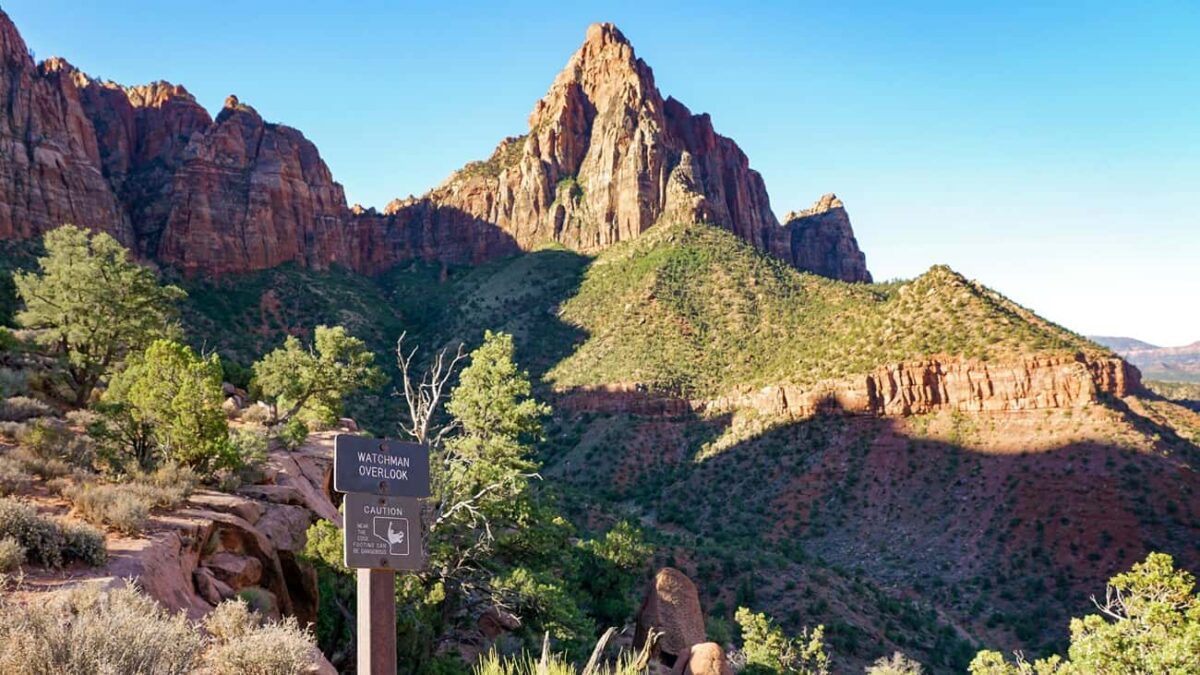
The Watchman Trail is a 3.3-mile loop that climbs above the campground area near the south entrance and gives good canyon views without requiring the shuttle or a permit.
It is the right choice for visitors who arrive late in the day or want a first-morning hike before the shuttle crowd builds.
Trip-planning costs add up fast on Utah road trips; understanding which trails you can reach independently from your parked car, without burning shuttle time, is worth thinking through before you arrive.
If you are traveling across multiple parks on a budget, our full guide to Zion National Park covers entry fees, the America the Beautiful pass, and what to spend on gear and accommodation in Springdale.
Angels Landing
Angels Landing is 5.4 miles round trip and gains 1,488 feet in elevation.
The final half mile runs along a sandstone fin with a single chain bolted into the rock to assist the ascent. Since 2022, everyone hiking beyond Scout Lookout to the summit must hold a permit issued through a lottery on recreation.gov.
Two lottery windows exist: a seasonal lottery that opens months in advance, and a day-before lottery that closes at 3 p.m. Mountain Time the day prior to your hike.
The application fee is $6 per group of up to six people, non-refundable regardless of outcome. If selected, you pay an additional $3 per person.
Mobile service is unreliable in the canyon, so the NPS permit page explicitly recommends downloading or printing your confirmation email before arriving at the trailhead.
Scout Lookout, the broad rock platform about 2.25 miles in, does not require a permit. For families or visitors who want the elevation gain and canyon views without the chains section, stopping at Scout Lookout is a legitimate and underrated choice.
The views are significant. The trail beyond it is genuinely exposed, and the NPS advises against attempting it in wet conditions, if there is any fear of heights in your group, or after dark.
The Narrows
The Narrows is Zion’s most distinctive hike and requires nothing except a willingness to walk upstream through the Virgin River inside a slot canyon with walls that reach a thousand feet above your head.
The bottom-up route from the Riverside Walk trailhead needs no permit for the first ten miles. The top-down route requires one.
Summer is when most people hike it because the air temperature is warm enough that wading through cold water is a relief rather than a hazard.
The risk that season is flash flooding. Monsoon storms between July and September can close the Narrows with little warning. Always check conditions on the NPS alerts page before heading in.
Spring runoff closes it entirely some years through April or May.
Fall is when the canyon is at its best for hikers who want cooler air, thinner crowds, and reliable access.
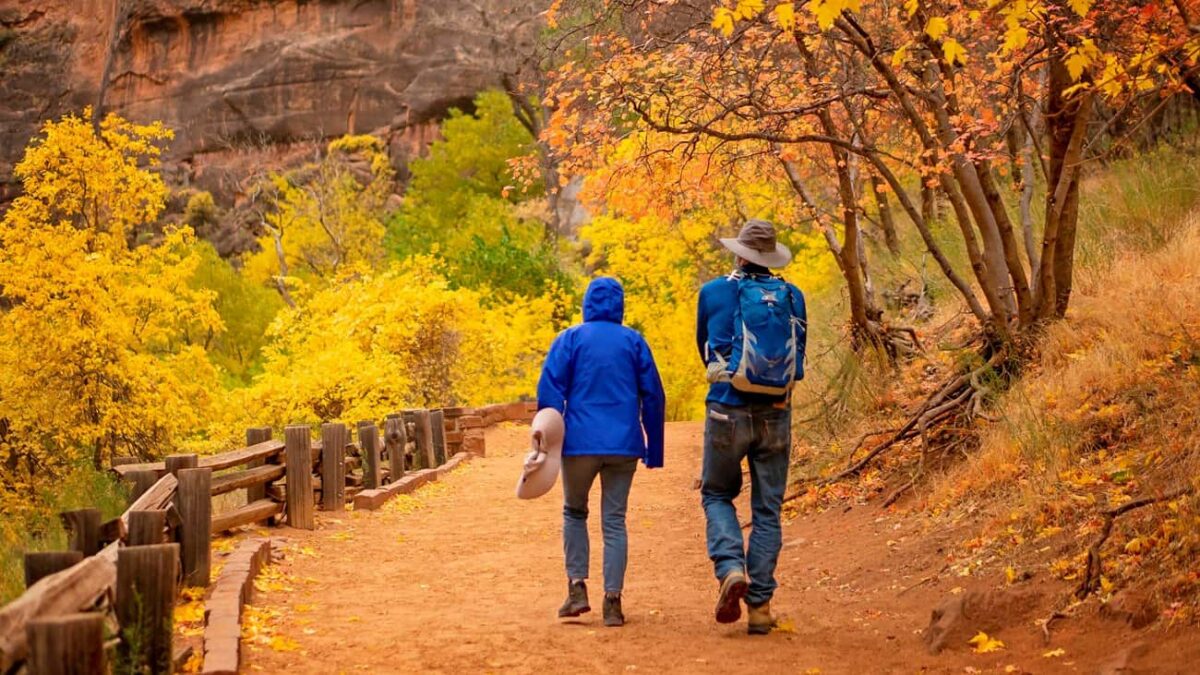
October in particular gives you the full trail menu, manageable shuttle wait times, and cottonwood trees turning gold along the river.
For a deeper comparison of how fall shifts the experience across both parks in the region, the guide to Bryce Canyon National Park is worth reading before you finalize your Utah itinerary.
Zion Canyon has thirty miles of trail and a permit system that sounds more complicated than it is. Most of it you walk into without paperwork.
The parts that require planning are worth the planning. Go early, carry more water than you think you need, and give the canyon at least two days.