Everglades National Park is in southern Florida, about an hour southwest of Miami off State Road 9336. This guide is part of our full US National Parks Guide, covering every park worth visiting across the country.
It covers 1.5 million acres of wetland, sawgrass prairie, mangrove forest, and marine habitat, making it the largest subtropical wilderness in the United States and one of the most ecologically significant protected areas on earth.
The vehicle entrance fee is $35 for a seven-day pass. Non-US residents aged 16 and older pay an additional $100 per person on top of that, a fee structure worth knowing before you budget the trip.
The park is open every day of the year, around the clock, though visitor center hours vary by season.
Most people arrive expecting swamps and alligators and leave having experienced something far more layered than that description suggests. The Everglades is not a single ecosystem.
It is a slow-moving river of grass, roughly 60 miles wide, that flows southward from Lake Okeechobee toward Florida Bay at a pace of about a quarter mile per day.
Everything living inside the park, from the roseate spoonbills in the shallows to the Florida panthers moving through the pine rocklands, depends on that flow being intact.
The fact that it still exists in any meaningful form is the result of decades of conservation effort and ongoing restoration work that is still underway.
The Everglades Unique Nature
The Everglades was the first national park in the United States established not for its scenery but for its biodiversity.
When it was designated in 1947, the reasoning was ecological rather than aesthetic, which was unusual at the time and set a precedent for how the park system would eventually think about protection.
That distinction matters because it shapes how the park asks visitors to engage with it. There are no dramatic canyon views or towering peaks here.
What there is instead is a functioning wetland system that supports over 360 species of birds, dozens of reptile species including the American crocodile and the American alligator sharing the same habitat, and a marine environment in Florida Bay that connects the freshwater interior to the Gulf of Mexico.
The park holds several international designations, including UNESCO World Heritage Site status, recognition as a Wetland of International Importance under the Ramsar Convention, and designation as an International Biosphere Reserve.
For German visitors accustomed to the rigorous conservation frameworks of European protected areas, those designations carry weight and signal that the Everglades operates at a level of ecological and scientific significance beyond the typical American tourist attraction.
The Seasons that Change Everything
The Everglades has a dry season running from roughly November through April and a wet season from May through October.
These are not subtle variations in weather. They represent fundamentally different park experiences, and choosing which one to visit in is the most important planning decision you will make.
The dry season is when most visitors go, and the reason is straightforward. As water levels drop, wildlife concentrates around the remaining pools and sloughs.
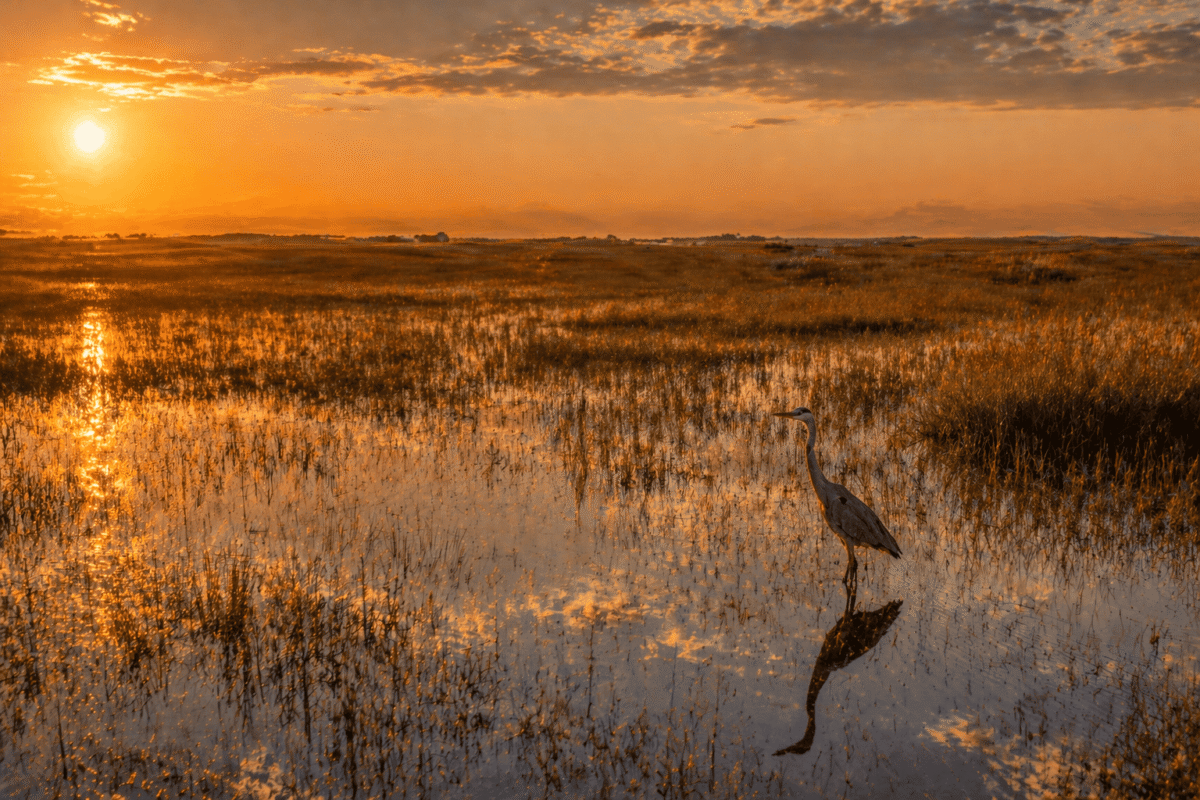
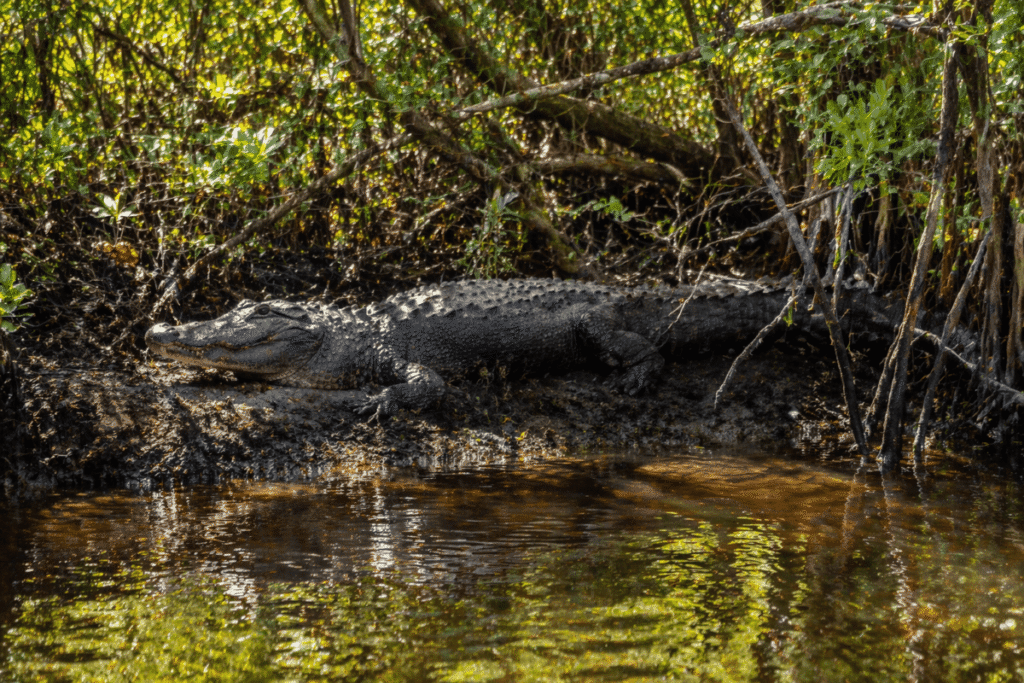
Wading birds gather in numbers that are genuinely difficult to process when you are standing in front of them. Alligators become easy to spot from the roadside.
Mosquitoes, which in the wet season reach population densities that no amount of repellent fully addresses, become manageable.
Temperatures average around 77 degrees Fahrenheit during the day and drop to around 53 at night.
From December through March in particular, the conditions are about as close to ideal as the park gets.
The wet season turns the park into something different and, in some ways, more honest. The landscape floods.
Birds disperse across millions of acres rather than concentrating at visible water sources.
The mosquitoes are serious. But the thunderstorm light over the sawgrass in August is unlike anything in the dry season, and the park is almost entirely yours.
Photographers who know what they are doing tend to return in summer specifically for that light.
How to Spend Your Time
The park has three main entrance areas, each offering a different experience.
The main entrance near Homestead gives access to the Royal Palm area, where the Anhinga Trail is one of the most productive wildlife-viewing walks in the entire national park system.
It is less than a mile long, paved, and in dry season so densely populated with anhingas, herons, alligators, and turtles at close range that it can feel almost theatrical.
The road continues 38 miles southwest to Flamingo, at the southern tip of the park on Florida Bay, where kayaking and canoeing into the backcountry mangrove channels is the defining experience.
The Shark Valley entrance on the northern edge of the park, off US Highway 41, offers a 15-mile paved loop through the interior of the sawgrass river.
Bicycles can be rented at the visitor center, and the loop passes an observation tower that gives a rare elevated view over the flat expanse of the park.
It is one of the most reliable spots in the Everglades for seeing large numbers of alligators in a single outing.
The Gulf Coast entrance near Everglades City is the starting point for the Ten Thousand Islands, a labyrinth of mangrove islands and tidal channels that opens into the Gulf of Mexico.
Guided boat tours run from here and give access to parts of the park that are genuinely impossible to reach any other way.
Costs and Tips
The $35 vehicle pass covers seven consecutive days and all three entrances. The America the Beautiful annual pass at $80 for US residents covers the entrance fee here as it does at other federal lands.
The $250 non-resident version of that pass waives the standard entrance fee and also covers the $100 per-person non-resident surcharge, which makes it significantly more cost-effective for Canadian or German visitors planning to see multiple parks on the same trip.
For anyone visiting more than two or three parks, the math on the annual pass is not complicated.
The park does not accept cash at any fee collection point.
Digital passes and credit or debit cards are the only payment methods accepted, which is worth confirming before you arrive at the entrance station.
If you are building a Florida itinerary and want to understand how the Everglades fits geographically alongside other parks and destinations in the region, the national park map by state is a practical starting point for visualizing the routes.
For staying current on conditions, trail closures, and any seasonal alerts before you visit, the NPS alerts page for Everglades is updated regularly and worth checking in the days before arrival.
Everglades and South Florida
The Everglades sits at the southern end of a natural Florida sequence. Biscayne National Park, which protects the northernmost living coral reef in the continental United States, is about 30 miles to the east and shares the same general Homestead access point.
Dry Tortugas National Park is accessible by ferry or seaplane from Key West, roughly two and a half hours southwest of the main Everglades entrance.
The three parks together cover marine, wetland, and island ecosystems that have almost no parallel elsewhere in the national park system.
Most visitors to southern Florida treat the Everglades as a day trip from Miami. That framing undersells it significantly.
Two days is the minimum to cover the Homestead entrance corridor and Shark Valley at a reasonable pace.
Three or more days opens up Flamingo and the Gulf Coast, which are where the park’s most remote and rewarding experiences actually live. The Everglades does not reveal itself quickly.
It rewards patience in a way that most parks built around dramatic scenery simply do not have to.