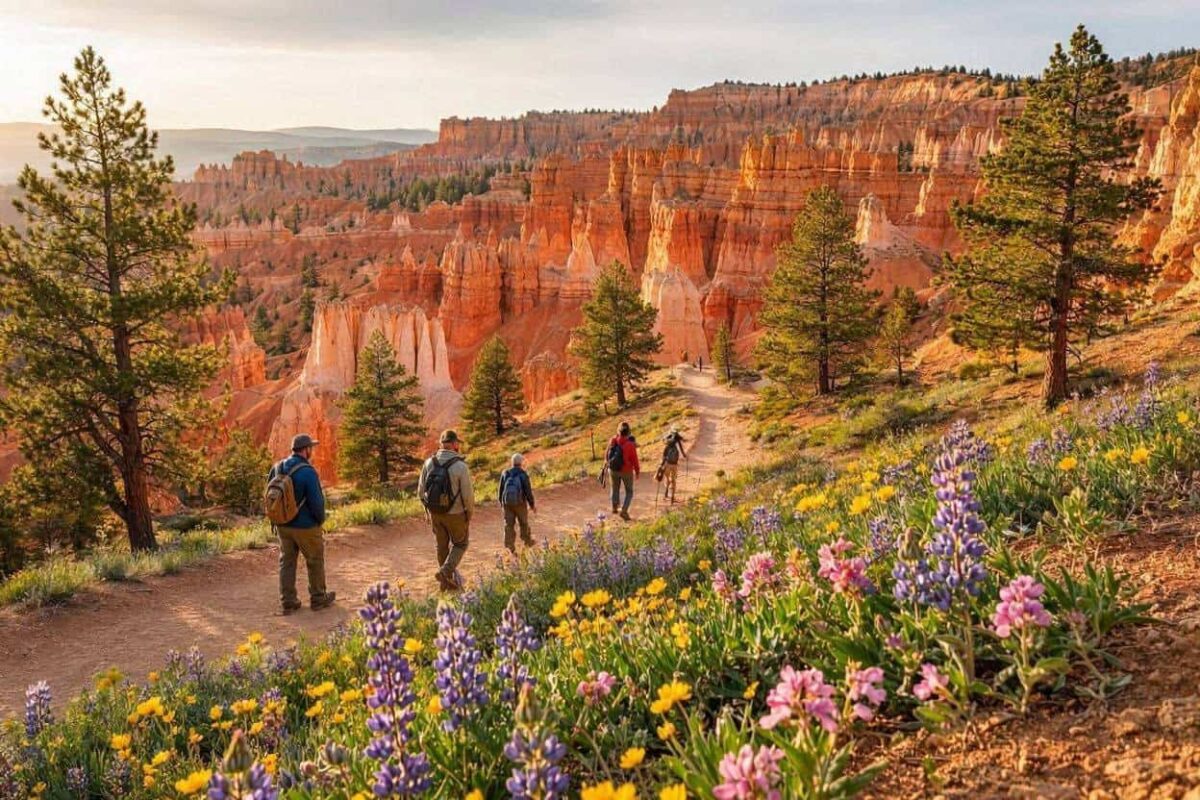
Bryce Canyon National Park is open every day of the year, and the best time to visit bryce canyon national park depends less on a single perfect month and more on what kind of experience you are actually chasing.
The park’s most popular window runs from May through September, covering the warmest weather and the widest range of ranger activities, but October through April holds its own appeal with fewer crowds, cooler air, and a snow-covered landscape that transforms the hoodoos into something most summer visitors never get to see.
The park sits above 8,000 feet, and that elevation shapes every season in ways that a quick weather check does not fully reveal.
Spring at Bryce Canyon
May is when Bryce Canyon shakes off the quiet of winter and the trails start filling again.
Temperatures in May average in the mid-60s Fahrenheit during the day, which is warm enough for comfortable hiking and cool enough to move at pace without stopping every twenty minutes for water.
The air is clear, the light is sharp, and the hoodoos catch the morning sun in ways that the hazy heat of July does not allow.
For visitors flying into Las Vegas or Salt Lake City and driving up, May gives the road trip a different character entirely from the summer rush.
Gas station stops through southern Utah are calm. The park entrance does not have a line.
Trailheads at Navajo Loop and Queen’s Garden have breathing room before 8 AM in a way that July simply does not.
June pushes into the high 60s and the full park infrastructure is up and running.
Ranger programs are back on the evening schedule, the lodge is fully operational, and the surrounding community of Bryce Canyon City has its restaurants and gear shops working at capacity.
June is the last genuinely uncrowded month before peak season takes hold, and for visitors with any scheduling flexibility it is worth choosing over July.
Summer Visits
July and August push average daytime temperatures into the high 70s to low 80s Fahrenheit, and while the weather is warm and manageable, these months bring frequent afternoon thunderstorms with heavy rain and lightning that require visitors to find shelter quickly.
The storms arrive with regularity in the early to mid-afternoon, which means trail planning needs to account for them rather than treat them as unlikely.
Getting caught above the rim on an exposed section of trail in a Bryce Canyon thunderstorm is not a minor inconvenience.
The solution that works for every visitor during summer is the same that start early and finish before noon.
Sunrise at Bryce Canyon in July is around 6 AM and the light on the canyon in that first hour is unlike anything the rest of the day produces.
Being on the Navajo Loop trail at 6:30 AM puts you in the canyon before most other visitors have finished breakfast.
By the time the crowds arrive you are already back at the car.
Summer is also when the park’s full ranger program calendar runs, including evening talks, guided walks, and the astronomy programs that take advantage of Bryce Canyon’s dark sky designation.
For families with children and for first-time visitors who want the interpretive layer alongside the scenery, summer delivers the most complete version of the park experience.
September Adventures
After Labor Day, Bryce Canyon shifts into a version of itself that many visitors prefer to July.
The crowds thin, accommodation rates drop, and the temperatures settle into the high 60s for days that feel made for hiking.
The light in September has a lower angle that brings out the orange and red of the hoodoos differently than summer light does, and the beginning of autumn color in the aspens at lower elevations adds a dimension the canyon does not have in midsummer.
Most facilities remain open through September and into early October.
The lodge is still running, ranger programs continue on a modified schedule, and the main trails are accessible without the summer permit pressure that some heavily visited parks require.
For Canadian visitors who can travel after Labor Day and for American travelers with post-summer flexibility, September is the month that consistently overdelivers relative to what people expect from it.
The Fall and The Winter
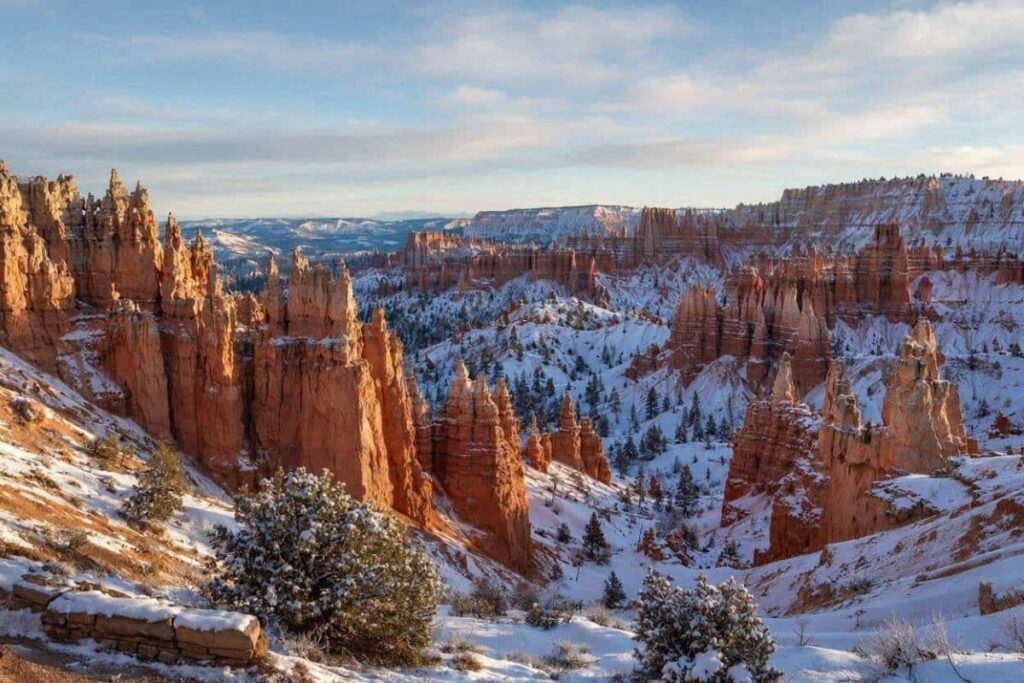
Snow can arrive as early as October, though there are usually still plenty of clear autumn days, and the bulk of snowfall lands between December and March, when the park offers cross-country skiing, snowshoeing, guided full moon snowshoe hikes, and winter astronomy programs.
The Bryce Canyon Snowshoe Program lends free snowshoes and poles to participants, which removes the gear barrier for visitors who want to try it without investing in equipment.
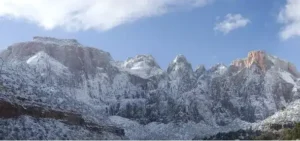
The hoodoos under snow are one of the more striking natural sights in the Southwest.
The red rock formations against white snow and a clear blue sky produce a visual contrast that photographs consistently underrepresent.
Visitors from Germany who are accustomed to Alpine winter conditions will find the cold familiar, though Bryce Canyon’s dry air makes it feel crisper than European mountain cold at equivalent temperatures.
Winter accommodation shifts to Bryce Canyon City and nearby Panguitch, where rates are considerably lower than peak summer pricing.
The park itself is quieter in a way that rewards visitors who find summer crowds counterproductive to what they came for.
Planning the rest of the trip alongside the timing decision is where the full picture comes together.
The best hotels near Bryce Canyon National Park guide on Tadexprof covers lodging options across every budget for each season.
And for readers building a wider Southwest itinerary, the camping at Rocky Mountain National Park guide offers the same seasonal logic applied to a Colorado park that pairs naturally with a Utah road trip.
Current road conditions, facility hours, and seasonal closures at Bryce Canyon are maintained on the official NPS Bryce Canyon plan your visit page, which is the authoritative source to check within a few days of any visit since conditions at elevation can shift without fixed notice.
Bryce Canyon gives something genuine to every season.
Summer gives you the full park, spring gives you the quiet, fall gives you the color, and winter gives you the canyon to yourself under snow.
The only wrong choice is arriving without knowing which version you came for.