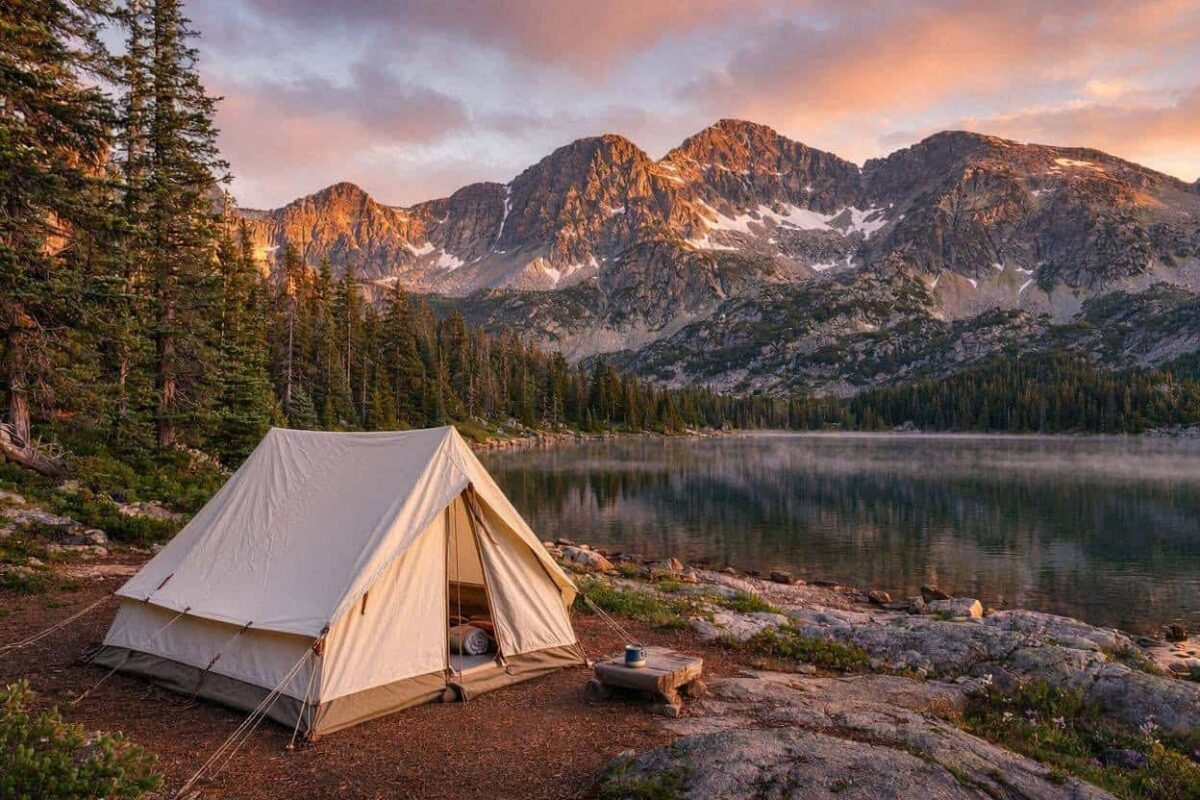
Camping at Rocky Mountain National Park means sleeping inside one of the most visited wilderness landscapes in the United States, and that privilege comes with a logistics layer that catches unprepared visitors off guard every summer.
The park has five established campgrounds.
Four of them require advance reservations through Recreation.gov and sell out months before peak season.
One operates on first-come, first-served. None of them have showers.
No campground inside the park stays open year-round except Moraine Park, which shifts to first-come in winter with reduced amenities.
If you are planning a summer trip and have not yet booked a site, that is the first thing to address before anything else in the itinerary.
Longs Peak Campground
Longs Peak Campground is the only site in Rocky Mountain National Park that does not require a reservation, and that single fact shapes how most last-minute visitors approach the park.
It has 26 tent-only sites tucked into forest at the base of Longs Peak, with vault toilets, potable water, and fire grates.
No electrical hookups, no showers, no cell service, no store.
It opens in July and runs through September, which limits its seasonal window compared to the reservation campgrounds that open in late May.
The campground sits nine and a half miles south of Estes Park on Highway 7, a mile in on Longs Peak Road.
The immediate proximity to the Longs Peak Trailhead is both its defining feature and the reason it fills by mid-morning on summer days.
Chasm Lake and the approach to the Longs Peak summit both begin here, and climbers starting pre-dawn starts pull into the lot before 4 AM on clear summer mornings.
If you arrive after 8 AM during July or August expecting a site, plan for an alternative.
At $30 per night it is the same cost as the reservation campgrounds, and the no-reservation policy is the only advantage it holds over them.
Aspenglen Campground
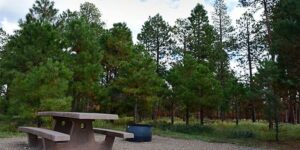
Aspenglen Campground sits just inside the Fall River Entrance on the eastern side of the park, 52 sites hidden in a ponderosa pine and meadow landscape below Deer Mountain.
The setting is immediately distinct from the more exposed campgrounds further into the park: most sites are shaded, the meadow area carries views of Deer Mountain, and the surrounding forest provides a degree of privacy that Glacier Basin cannot match.
The campground is a short walk from the Fall River Visitor Center, the Trailhead Restaurant, and National Gateway Stables, which offers horseback rides inside the park.
Nearby hiking includes trails into Little Horseshoe Park and around Deer Mountain, none of which require driving deeper into the park on mornings when the interior roads are already busy.
For RVs and trailers, the maximum length is 30 feet.
Aspenglen opens May 21 and runs through late September, with flush toilets, fire pits, food storage lockers, potable water, firewood and ice for sale, and an amphitheater for evening ranger programs.
No showers and no cell service, consistent with every other campground in the park.
For visitors entering through the Fall River gate and wanting to establish camp before exploring the park rather than after, Aspenglen solves the sequencing problem better than any other campground in the park.
Glacier Basin Campground
Glacier Basin Campground is the most centrally located campground on the Bear Lake Road corridor, sitting directly across from the Park and Ride Transit Hub where the park shuttle system originates.
The location is its defining practical advantage: getting to Bear Lake, Dream Lake, Emerald Lake, or the Glacier Gorge Trailhead without driving your own vehicle is straightforward from this campground in a way that no other in the park replicates.
The trade-off is exposure. Mountain pine beetle infestation required the removal of most trees from this area, and the result is a campground where the majority of sites sit without shade or meaningful wind protection.
The views of Hallett Peak and the surrounding peaks are consequently unobstructed and genuinely dramatic, but midday summer heat lands on these sites with full intensity.
The A and B loops retain more tree cover and fill first.
The campground holds 150 sites including 73 tent-only, with a maximum RV and trailer length of 35 feet.
It opens May 21 and runs through late September.
The proximity to the shuttle system matters most during peak summer when trailhead parking at Bear Lake fills before 7 AM.
Waking up at Glacier Basin and boarding the first shuttle of the morning puts you on the trail before the parking lots turn away vehicles, which is an operational advantage worth considering when choosing between campgrounds.
Moraine Park Campground
Moraine Park Campground is the park’s largest with 244 sites including 101 tent-only, 49 of which are walk-in sites positioned away from vehicle traffic.
The campground sits off Bear Lake Road above Moraine Park with views of Longs Peak and easy access to the Cub Lake Trail, Fern Lake Trail, and the meadow hiking around Beaver Meadows.
A park shuttle connects the campground to the rest of the Bear Lake Road system for visitors who prefer not to drive on high-traffic summer days.
Most sites at Moraine Park are tree-covered, which gives it the shade advantage that Glacier Basin lacks.
The walk-in tent sites in particular offer a degree of separation from the main campground loop that suits visitors who came for solitude rather than amenity proximity.
The maximum RV and trailer length here is 40 feet, the most generous in the park.
The campground opens May 21 and runs through late September before shifting to a first-come, first-served model through winter with more limited services.
Moraine Park is the campground that most repeat Rocky Mountain visitors settle on after trying other options.
The combination of size, tree cover, shuttle access, meadow proximity, and diverse site types covers the most range of camping styles and group configurations in the park.
Timber Creek Campground
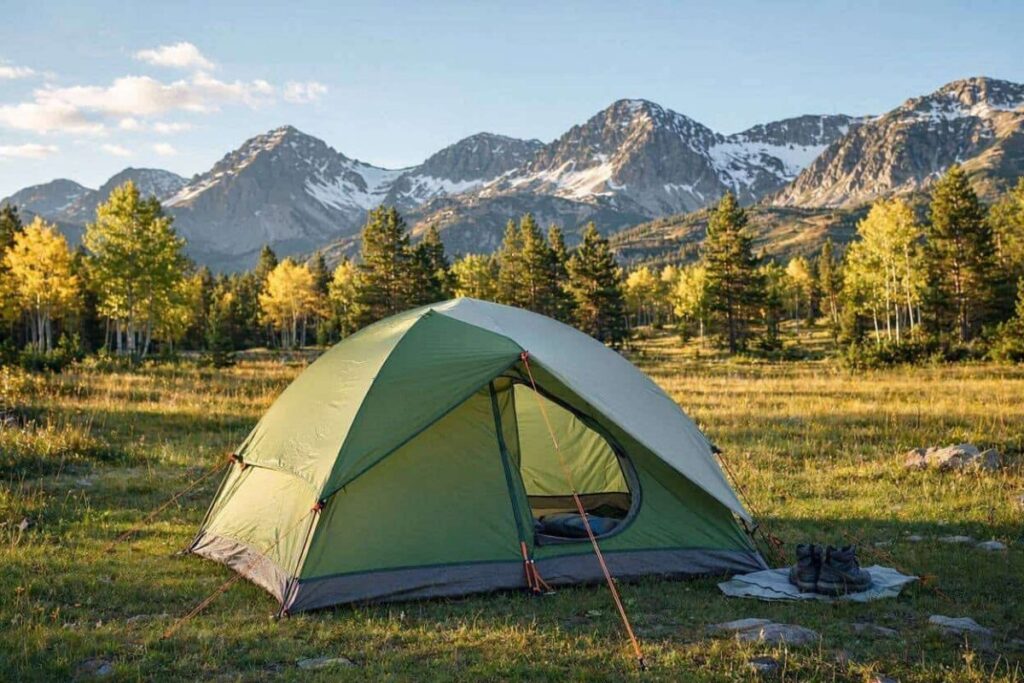
Timber Creek Campground is the only campground on the western side of the park, sitting in the Kawuneeche Valley alongside the Colorado River 8.4 miles north of the Kawuneeche Visitor Center.
For visitors approaching from Grand Lake rather than Estes Park, it is the only in-park camping option, and for travelers whose itinerary centers on the western valley rather than the Bear Lake corridor, it eliminates the cross-park drive that staying on the east side would require.
The surrounding landscape is the campground’s strongest argument.
The Kawuneeche Valley is the most reliable moose habitat in the park, and elk and deer move through the area regularly, particularly in the early morning.
Waking up to wildlife visible from the campsite is a more consistent experience here than at any of the eastern campgrounds.
The view of the Never Summer Mountains from the open sites is one of the more dramatic campground vistas in the national park system.
Note that Timber Creek is scheduled to close on August 10, 2026 for a sewer system rehabilitation project. Confirm current status before building a late-season trip around this campground.
Know Before Camping
No campground inside Rocky Mountain National Park has showers.
That detail is easy to overlook in the planning stage and difficult to miss after three hiking days in July.
Shower facilities are available in Estes Park and Grand Lake, and campground hosts can direct you to the nearest options.
Budget a stop into town every two or three days if hygiene infrastructure matters for the length of your stay.
Cell service is absent at every in-park campground.
This is not a minor inconvenience for families with children or international visitors managing travel logistics.
Download offline maps, trail information, and any reservation confirmations before leaving town.
The park’s campground reservation system and current availability are managed through the NPS Rocky Mountain National Park camping page, which is the authoritative source for fees, opening dates, and current site status.
Choosing the right campground at Rocky Mountain comes down to two variables: which side of the park your hiking itinerary centers on, and how much you value shade versus views.
For readers still working out the hiking plan that determines that answer, the best hikes in Rocky Mountain National Park covers every major trail with trail-level detail on distance, elevation, and what each one actually delivers.
And for those still deciding between camping and hotel accommodation in Estes Park, the best hotels near Rocky Mountain National Park guide covers the gateway town options across every budget level.
Rocky Mountain’s campgrounds fill because the park earned that demand.
Sleeping inside the boundary rather than driving in from Estes Park changes the texture of the trip in ways that are difficult to quantify until the first morning you walk out of a tent at 5 AM with Longs Peak directly in front of you and the trail already starting.