How to get to Bryce Canyon National Park is a question with a straightforward answer and a more nuanced one sitting just behind it.
The straightforward answer is that you need a car.
There is no public transportation that goes directly to the park, which means whether you fly into Las Vegas or Salt Lake City and rent a vehicle, or drive from home on a road trip, the final approach to Bryce Canyon is always by personal vehicle.
The more nuanced answer is that which airport you choose, which route you take, and how you plan to move around once inside the park all shape the trip significantly.
Nearest Airport to Fly
Las Vegas McCarran International Airport and Salt Lake City International Airport are both located approximately 270 miles from the park, each representing roughly a four-hour drive.
For most American travelers, the choice between them comes down to where cheaper flights land on a given travel date.
For German visitors flying transatlantic, both airports have strong international connections, with Las Vegas in particular drawing direct European service given its status as a major tourism hub.
Flying into Las Vegas has the advantage of numerous direct flights and puts you at the start of a southern Utah national parks road trip that flows naturally from Zion to Bryce Canyon and onward.
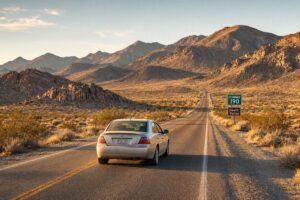
The route from Las Vegas to Bryce covers about 270 miles and takes four hours on I-15 north before cutting east through southern Utah.
It is a drive that rewards a passenger in the front seat with a window because the landscape changes character noticeably every hour, moving from Nevada desert through Cedar City’s high valley into the red rock plateau country of southern Utah.
Salt Lake City gives you a different route and a slightly different sequence.
From Salt Lake City, I-15 south to UT-63 gets you to the park entrance in approximately four hours, passing through Beaver and Panguitch before the final stretch down Highway 12 and then Highway 63 into the park.
This northern approach makes more sense for visitors combining Bryce Canyon with Arches, Canyonlands, or Capitol Reef, since the full Utah national parks loop sequences more naturally from Salt Lake.
For visitors who want to minimize driving time at the cost of flight options, Cedar City Regional Airport sits about 80 miles from the park and is served by Delta Airlines with connecting flights from Salt Lake City, making it the closest commercial airport to Bryce Canyon.
The trade-off is limited scheduling and no direct international connections, which restricts it primarily to domestic travelers who have already made a domestic connection and want to reduce ground time.
Driving to the Park
The most popular approach from Las Vegas uses I-15 north to exit 95, then Highway 20 east to US-89, south on 89 to Highway 12, and east on 12 to Highway 63, which leads directly into the park.
The visitor center sits one mile inside the park boundary.
This route passes through Panguitch, a small historic town with gas stations, grocery options, and several budget hotels that work well as a staging point if you prefer not to drive the full distance in one day.
The scenic alternative from the south runs through Zion National Park via Utah State Route 9 off I-15.
This approach adds distance but delivers one of the most visually dramatic approach roads in the American Southwest, moving through Zion’s canyon and red rock corridor before climbing out onto the plateau toward Bryce.
It adds time depending on Zion’s own shuttle and traffic situation, but for first-time visitors doing a multi-park itinerary, the sequence of driving through Zion and arriving at Bryce the same day is one of the best single travel days the Southwest offers.
From the east, Utah Highway 24 west and Scenic Byway 12 connect Capitol Reef National Park to Bryce Canyon in about three hours through some of the most dramatically isolated landscape in the country.
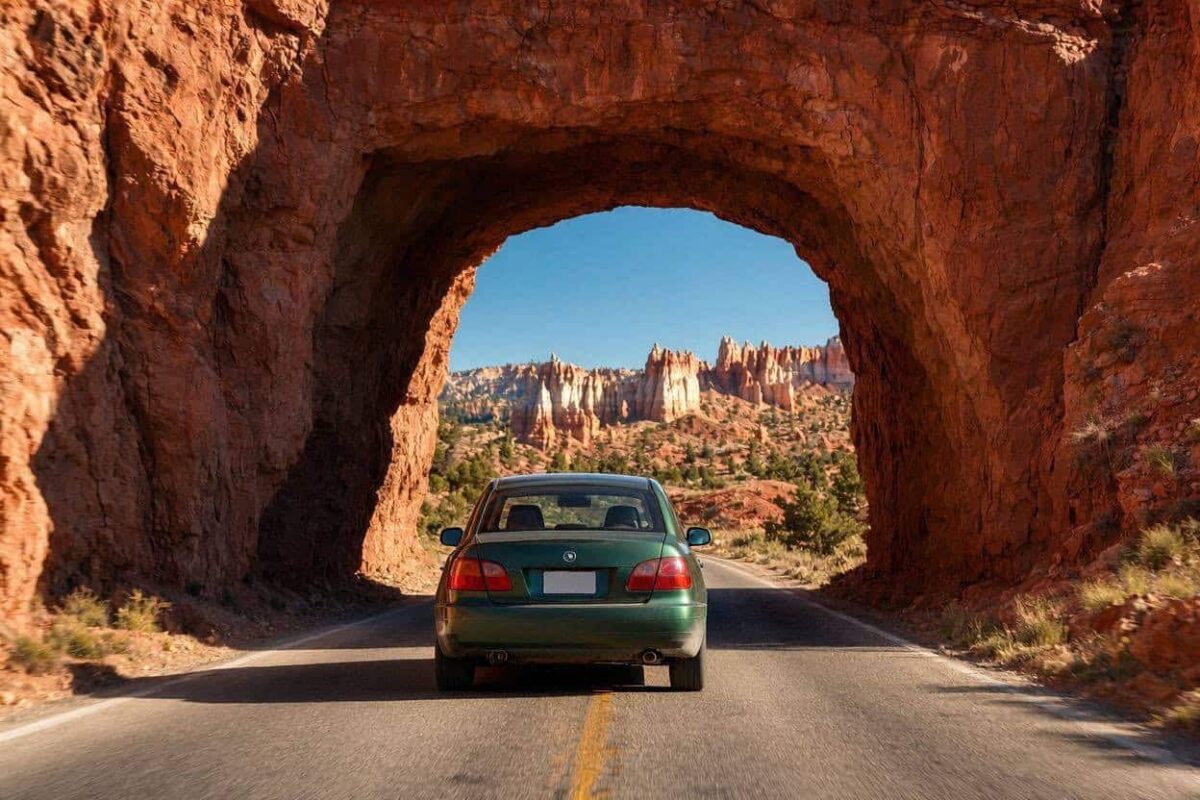
Highway 12 alone is considered one of the most scenic roads in the United States, running along narrow ridges between canyons with drop-offs on both sides. Take it slowly and stop often.
Getting Around the Park
Once inside Bryce Canyon, the strategy changes.
The park runs a free shuttle system from April through late October, and outside those months a personal vehicle is the only way to reach the viewpoints and trailheads.
During peak summer when the main parking areas along the rim fill before 9 AM, the shuttle is not merely convenient but practically necessary.
Driving into the park on a Saturday in July and expecting to park at Sunset Point or the Bryce Canyon Lodge area without a long wait is an optimistic plan that most visitors adjust after their first summer visit.
The NPS shuttle runs a hop-on hop-off service every ten minutes during peak hours from 8 AM to 8 PM between May and October, departing from the Ruby’s Inn staging area just outside the park entrance.
The route covers all the major viewpoints including Fairyland, Sunrise Point, Sunset Point, Inspiration Point, and Bryce Point, as well as the lodge and the visitor center.
For visitors staying at Ruby’s Inn or any of the Bryce Canyon City properties just outside the entrance, the shuttle eliminates the need to drive into the park entirely on busy days, which reduces stress and removes the parking variable from the morning plan.
For visitors arriving outside the shuttle season, the main park road runs 18 miles from the entrance to Rainbow Point at the park’s southern end, and the viewpoints are all accessible by car along this corridor.
The road is paved and manageable in any standard vehicle.
Pull-offs at each viewpoint have parking, though the lots are small enough that early arrival still matters on the busier shoulder-season weekends.
Note: I haven’t been to Bryce Canyon myself yet, though it’s on my list to visit soon. This guide is built from trusted travel sources and real visitor experiences in the meantime. Got a correction or something to add? Reach out to me or Tadexprof via the contact page.
Car Rental and Budget Tips
Car rental is the logistical foundation of any Bryce Canyon trip.
Rental options are available at both Las Vegas and Salt Lake City airports with the widest selection and most competitive rates of any pick-up point in the region.
Booking a rental car at the same time as flights locks in better rates than waiting until closer to the departure date, particularly for peak summer weeks when southern Utah’s national park demand drives rental prices considerably higher than base rates suggest.
A standard sedan handles every road in and around Bryce Canyon without issue.
There is no requirement for four-wheel drive on paved park roads, though a vehicle with reasonable clearance is useful if you plan to explore any of the unpaved forest roads on the Paunsaugunt Plateau surrounding the park.
Gas is available in Bryce Canyon City just outside the entrance and in Panguitch to the north, but nowhere inside the park itself.
Fill the tank before driving in.
Travel insurance is a practical addition to the Bryce Canyon trip budget, particularly for international visitors.
The park’s remote location means that a medical emergency or vehicle breakdown puts you further from urban infrastructure than most destinations, and a policy covering emergency assistance changes that calculation considerably.
For visitors building a wider Southwest itinerary around the Bryce Canyon leg, the best time to visit Bryce Canyon National Park guide on Tadexprof covers the seasonal conditions that affect road access and shuttle availability throughout the year.
And for those combining this trip with a Rocky Mountain National Park visit, the how to get to Rocky Mountain National Park guide covers the Colorado park’s transport logistics with the same level of detail.
Full current information on shuttle schedules, road conditions, and park entry requirements is maintained on the official NPS Bryce Canyon plan your visit page, which is updated seasonally and worth checking within a few days of arrival since shuttle start dates and road conditions can vary from year to year.
Getting to Bryce Canyon takes planning, but the planning pays off from the moment you turn off the highway and the plateau opens up in front of you.
The drive in is part of the experience, and the shuttle that takes over once you arrive gives the park back to you on foot, which is the only way to understand what those hoodoos actually look like up close.
If Acadia’s on your list, I’ve got a full breakdown of the best time to visit Acadia National Park here
Which airport is closest to Bryce Canyon?
Cedar City Regional Airport is the closest commercial option, about 80 miles from the park, served by Delta with connecting flights from Salt Lake City.
Las Vegas and Salt Lake City International are both roughly 270 miles out, about a four-hour drive, and offer far more flight options and international connections.
Do I need a car once I’m inside the park?
It depends on the season. From April through late October, a free shuttle runs every ten minutes during peak hours and covers all the major viewpoints, which is practically necessary in summer since rim parking fills before 9 AM.
Outside those months, a personal vehicle is the only way to reach the viewpoints and trailheads.