A Bryce Canyon National Park packing list is something most visitors think they can put together the night before the trip.
Then they get to the canyon rim at 7 AM with the wind cutting through a thin hoodie and no sun protection for a plateau that sits above 8,000 feet, and the packing question answers itself in the worst possible way.
Bryce Canyon sits at elevations between 8,000 and 9,100 feet across its rim and trails, the weather shifts without warning between seasons and within a single afternoon, and the nearest large grocery or gear store is a significant drive away.
Getting the packing right before you leave saves money, saves discomfort, and keeps the trip focused on the hoodoos rather than on what you wish you had brought.
What to Wear
The most important thing to understand about dressing for Bryce Canyon is the temperature range within a single day.
A morning hike in the canyon in late spring can start at 40 degrees Fahrenheit and finish at noon with temperatures in the low 70s.
July afternoons feel warm until a thunderstorm drops the temperature by 20 degrees in thirty minutes.
The layering system is not optional here, and what goes on that list changes depending on the season you are visiting.
If you are still deciding on your travel window, the best time to visit Bryce Canyon National Park guide on Tadexprof covers how each season changes conditions on the ground and what that means for the gear you carry.
Start with a moisture-wicking base layer that pulls sweat away from the skin during the climb.
Add a fleece or lightweight insulated jacket as the mid layer for the temperature variations above the rim and inside the canyon where shadows fall early.
A waterproof rain jacket belongs in the top of the pack every day from May through September when afternoon thunderstorms roll through the plateau with regularity.
The jacket earns its weight on the day it does not rain too, since wind chill at elevation makes it useful even in clear conditions.
Footwear matters more at Bryce Canyon than most visitors expect.
The Navajo Loop Trail descends switchbacks through loose sand and rock, and the canyon floor sections involve uneven terrain that punishes shoes without grip.
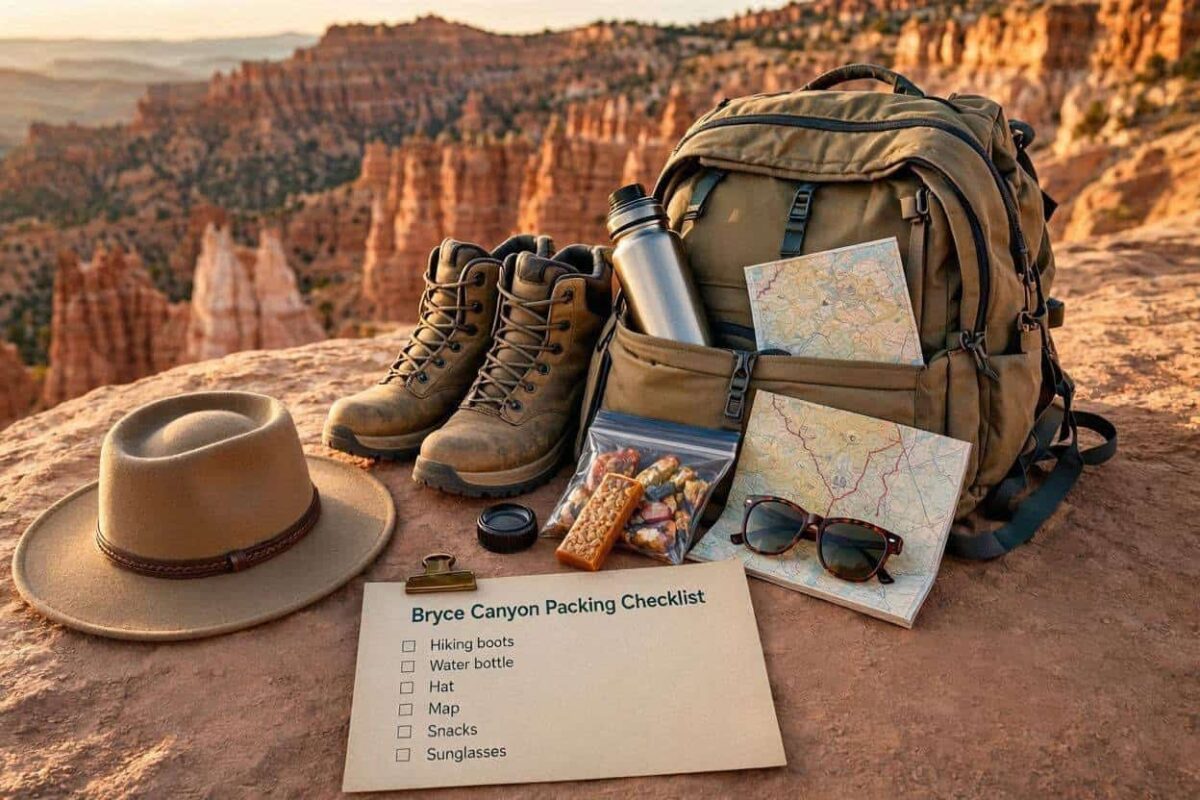
Sturdy hiking boots with ankle support are the right call for the canyon trails.
Trail runners work on the rim walk but become a liability on the steeper descents.
Whatever you choose, break them in completely before the trip.
New boots on a rocky canyon switchback in the first hour of the morning is a combination that produces blisters before the hoodoos even come fully into view.
A wide-brimmed hat handles both sun protection and wind, which is consistently stronger on the rim than in the canyon.
Sunglasses rated for UV protection are essential rather than accessory.
The elevation intensifies UV radiation significantly compared to lower elevations, and the reflected light off the canyon’s orange and white limestone compounds the exposure in ways that even a partially cloudy day does not fully mitigate.
What to Pack
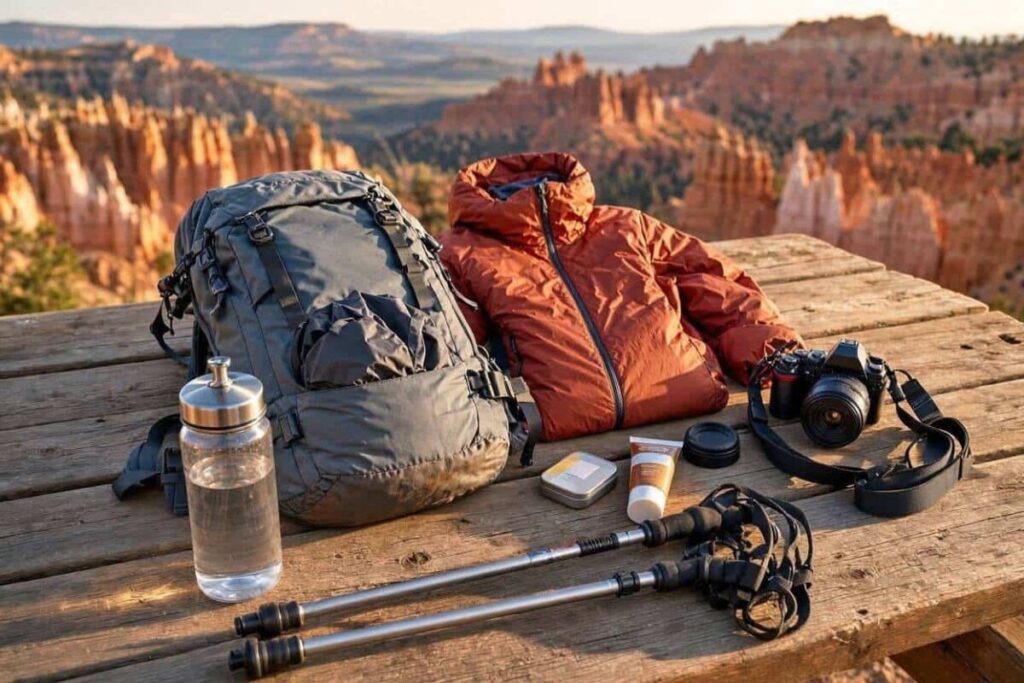
A daypack sized for five to eight liters carries everything a full Bryce Canyon hiking day requires without adding unnecessary weight.
Inside it, water is the non-negotiable priority.
Carry at least two liters per person for any hike beyond the short rim walk.
The dry high-altitude air dehydrates faster than most visitors from coastal or lower-elevation environments are accustomed to, and thirst is an unreliable signal at elevation.
Drink consistently throughout the day rather than waiting for the body to ask for it.
A camera or a smartphone with a reliable camera is the most common regret item among visitors who leave it behind.
Bryce Canyon produces light conditions that change character every hour, and the difference between the canyon at sunrise and at midday is significant enough to justify separate visits.
Binoculars extend wildlife viewing across the canyon’s depths where mule deer, pronghorn, and various raptors move through terrain that the naked eye can confirm but not observe in detail.
A map of the park trails belongs in the pack regardless of how confidently you know the route.
Cell service is absent throughout most of the canyon and inconsistent on the rim.
Downloading offline maps before arrival covers the navigation gap that phone service does not.
A portable battery bank keeps a phone functional across a full day of camera use, offline navigation, and the incidental battery drain that cold morning temperatures accelerate.
A compact first aid kit addressing blisters, small cuts, pain medication, and personal prescriptions rounds out the gear essentials.
Blisters on a descent are the most common minor injury in the canyon and the most preventable with moleskin applied before the boot rubs rather than after.
Pack the moleskin on top where it is reachable without emptying the bag on a trail junction.
Food to Pack
Bryce Canyon’s trails require more energy than flat hiking at lower elevations, and the caloric demand of altitude hiking on empty is felt faster than most people expect.
High-energy snacks, specifically trail mix, nuts, energy bars, jerky, and dried fruit, pack efficiently and provide sustained output through a long canyon descent and ascent.
Fresh fruit and sandwiches work well for the first day when they are still fresh.
For multi-day visits, shelf-stable options make more sense than fresh food that wilts in a hot car.
There is no food available inside the park beyond what the Bryce Canyon Lodge dining room and general store offer, and neither is close to the trailheads in the southern half of the park.
Bryce Canyon City just outside the entrance has basic grocery options, and Panguitch eighteen miles north has a wider selection.
Stock up before entering the park rather than planning a mid-day drive out for food.
For readers still sorting out where to sleep while building the rest of the trip budget, the best hotels near Bryce Canyon guide on Tadexprof covers every lodging option from the in-park lodge to the gateway town properties across all budget levels, with honest notes on which properties put you closest to the trailheads in the morning.
Sun Protection
Sunscreen rated SPF 30 or higher is the minimum for Bryce Canyon, and reapplication matters more here than at sea level.
The UV index at 8,000 feet is meaningfully higher than what most people are used to managing, and a full day on exposed canyon rim or open trail delivers cumulative sun exposure that catches visitors by surprise on the evening of day one.
Apply sunscreen before leaving the car, carry it in an accessible pocket, and reapply every two hours regardless of cloud cover.
Lip balm with SPF protection addresses what most sun care routines overlook.
Dry mountain air combined with elevated UV exposure dehydrates and burns lips faster than skin on the face.
It is a small item that earns its place in the kit by the afternoon of the first full hiking day.
Travel insurance is a practical addition to the Bryce Canyon budget that most visitors skip and some come to regret.
The park’s remote location means that a medical emergency puts you significantly further from hospital infrastructure than most travel destinations, and a policy covering emergency medical care and evacuation changes the financial risk of the entire trip for international visitors especially.
For German travelers in particular, US emergency medical billing operates on a scale that European healthcare systems do not prepare you for.
Current trail conditions, weather advisories, and facility information at Bryce Canyon are maintained on the official NPS Bryce Canyon plan your visit page, which is the right place to check a day or two before arrival since conditions at elevation can shift without a fixed schedule.
Packing well for Bryce Canyon is not about bringing everything.
It is about covering the categories that the elevation, the weather, and the distance from town create.
Get those right and the canyon gets to be about the canyon.