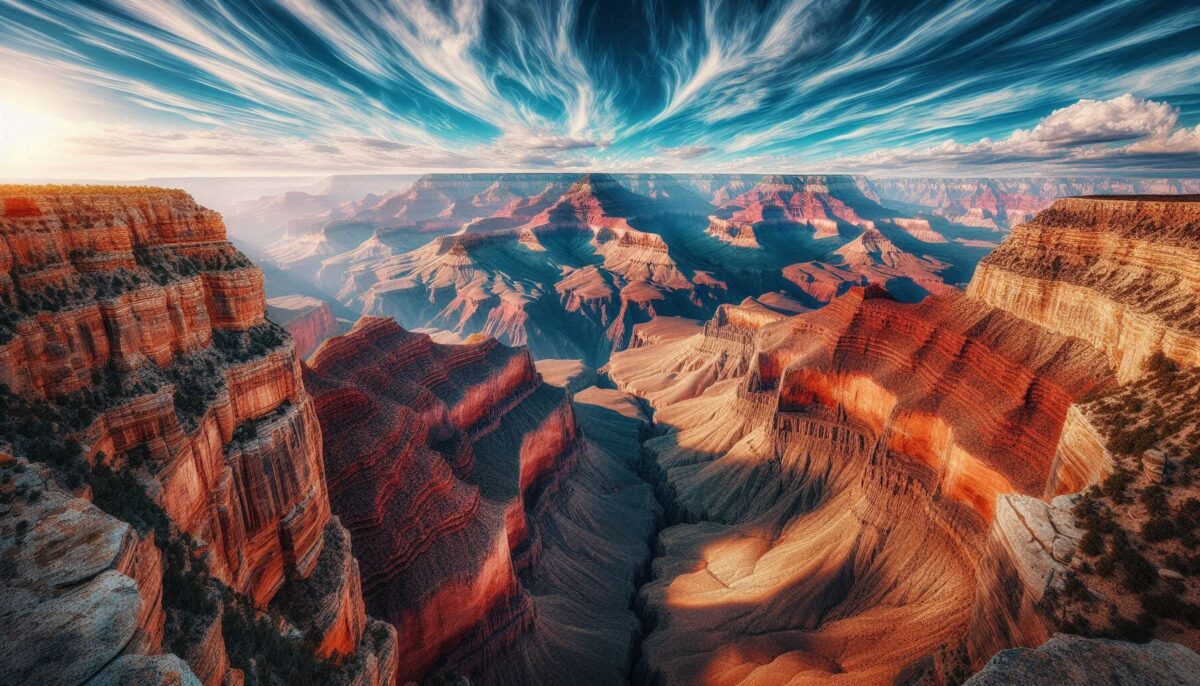
What is the Grand Canyon National Park? This guide is part of our full US National Parks Guide, covering every park worth visiting across the country.
It is a gorge carved by the Colorado River into the high plateau of northwestern Arizona, stretching 277 miles from east to west, reaching 18 miles across at its widest point, and plunging roughly one mile from the rim to the river below.
Those are the numbers. The experience of standing at the edge for the first time and trying to process what the eyes are seeing is something the numbers do not prepare anyone for.
How many people visit Grand Canyon National Park each year?
The park receives over four million visitors annually, making it one of the most visited US national parks in the country.
Travelers come from across the United States, Canada, Germany, and every corner of the world, many of them carrying the Grand Canyon on their bucket list for years before the trip actually happens.
And the visit, almost without exception, exceeds whatever expectation had been building.
Is the Grand Canyon worth visiting?
That question answers itself the moment a person steps to the South Rim for the first time. What follows is everything needed to plan a visit that goes beyond simply standing at the edge and taking a photograph.
Why Most Visitors Choose the South
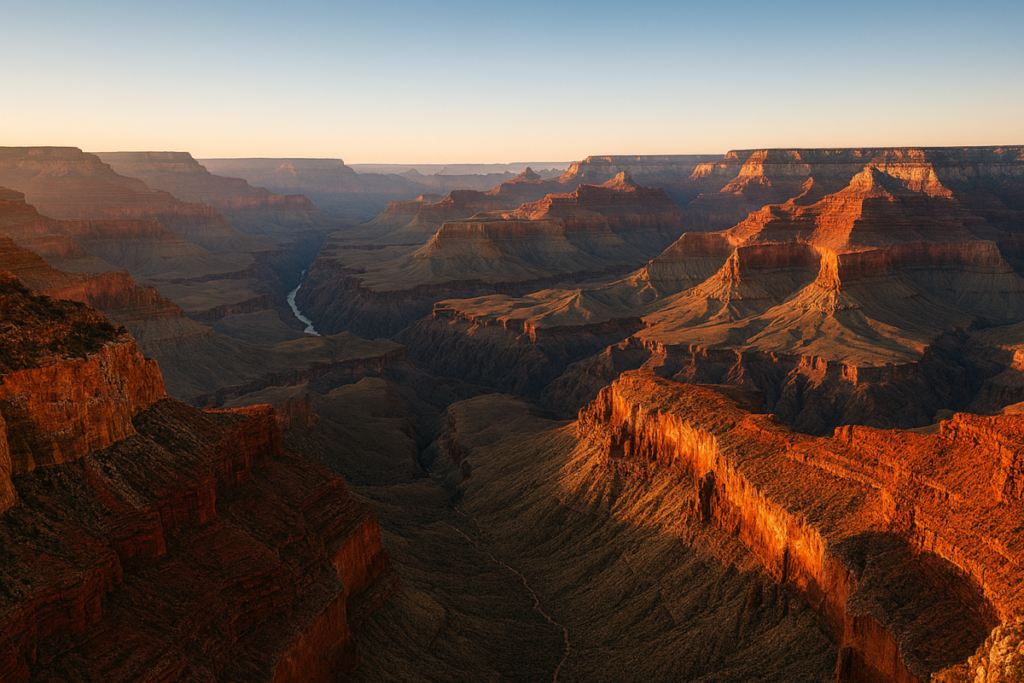
Grand Canyon National Park has two accessible rims, the South Rim and the North Rim, and they offer fundamentally different experiences.
The South Rim is open year-round, sits at roughly 7,000 feet elevation, and receives the overwhelming majority of the park’s visitors.
It has multiple visitor centers, a free shuttle system connecting the major viewpoints, historic lodges, restaurants, and trail access ranging from easy paved walks to serious backcountry routes. For first-time visitors, the South Rim is the right starting point.
The North Rim sits about 1,000 feet higher than the South and offers a noticeably different perspective into the canyon.
The views are arguably more dramatic, the crowds are significantly thinner, and the surrounding landscape of dense spruce and fir forest gives the whole area a different character.
The trade-off is accessibility. The North Rim is only open from mid-May through mid-October, the road in is longer, and the facilities are more limited. For travelers who have already visited the South Rim and want a different angle on the canyon, the North Rim is well worth the effort.
Travelers planning a broader Southwest itinerary that includes the Grand Canyon alongside Zion, Yellowstone, and Yosemite should read the guide to the most visited US national parks on Tadexprof, which covers all seven top parks with practical planning advice for visitors from the US, Canada, and Germany.
The Best Viewpoints
Mather Point is where most visitors get their first look into the canyon. It sits close to the main visitor center, which means it is almost always busy, but the view it offers is genuinely spectacular regardless of how many people are sharing it.
Lipan Point and Navajo Point further east along Desert View Drive offer comparable views with considerably fewer crowds, particularly in the early morning hours when the light hits the canyon walls at a low angle and turns the rock from brown to deep red and orange.
Desert View Watchtower at the eastern end of the South Rim is one of the most interesting structures in the entire national park system.
Designed in 1932 by architect Mary Colter and inspired by the building style of the Ancestral Puebloan people, the tower rises 85 feet and offers an observation deck more than 5,000 feet above the canyon floor.
Inside, murals by Hopi artist Fred Kabotie depict scenes from ancient Native American life. It is worth the drive out and the climb up.
On the North Rim, Toroweap Overlook in the remote Tuweep area stands apart from every other viewpoint in the park.
The drop from the clifftop to the Colorado River below is roughly 3,000 feet, nearly vertical, and the sense of exposure is unlike anything on the more developed South Rim.
Getting there requires driving miles of unpaved rocky road that demands a high-clearance vehicle, which is exactly why most visitors never make it and those who do feel like they have found something genuinely secret.
What to Know Before You Go
The Rim Trail along the South Rim is the park’s most accessible hike.
Almost entirely paved, it runs between the South Kaibab Trailhead near Yaki Point and Hermits Rest, passing viewpoints, the main visitor center, the Yavapai Geology Museum, and the historic El Tovar Hotel along the way.
It is flat enough for most fitness levels and long enough to fill a full day if walked in its entirety.
During summer weekends it can feel more like a pedestrian highway than a trail, which makes an early morning start worth the effort.
Below the rim is where the canyon reveals itself at a completely different scale, and less than five percent of visitors ever go there.
The South Kaibab Trail descends steeply from the South Rim and reaches Ooh-Aah Point about a third of the way down, a spectacular viewpoint that gives a genuine sense of canyon depth without committing to the full descent to the river.
The Bright Angel Trail is the safest and best-equipped route into the canyon, with shade structures, emergency phones, toilets, and water refill stations along its 9.5-mile length to Bright Angel Campground near the Colorado River.
The single most important thing any hiker needs to understand about the Grand Canyon is the heat inversion. As elevation drops, temperature rises, not the other way around. The descent feels easy and the temptation to keep going is strong.
The return climb in midday summer heat with low water reserves is where rescues happen.
The National Park Service recommends starting any below-rim hike before dawn, carrying one liter of water per hour of hiking, eating salty snacks to replace electrolytes, and turning around based on time elapsed rather than distance reached.
The National Park Service Grand Canyon website publishes current trail conditions, permit requirements, and seasonal closures that every visitor should check before heading below the rim.
Wildlife: Grand Canyon National Park
The canyon supports a surprisingly rich variety of wildlife given how extreme the environment is.
Elk appear regularly along the more secluded sections of the South Rim Trail and along Desert View Drive, particularly in the early morning and evening hours.
The Abert’s squirrel, a tassel-eared species found almost nowhere else, is a constant presence along the rim and almost impossible to miss.
Bighorn sheep inhabit the canyon walls and are most often spotted by hikers who venture below the rim. Mule deer and javelina move through the ponderosa pine forests behind the rims.
The Kaibab Plateau behind the North Rim supports one of the largest unfenced bison herds in the country.
The canyon is also a globally important bird area with 447 known species recorded within park boundaries.
The California condor, one of the rarest birds in North America, was reintroduced to the Grand Canyon in the 1990s after coming close to extinction and can now be spotted soaring over the rim on thermals with a wingspan that reaches nearly ten feet. Every overlook provides a good vantage point for scanning the sky with binoculars.
When to Visit?
Spring and autumn are the best seasons for most visitors. March through May brings mild temperatures, good light for photography, and wildflowers in the canyon depths.
September through November offers similar conditions on the South Rim while the North Rim remains open through mid-October. Both shoulder seasons see fewer visitors than the peak summer months without the weather extremes that make summer hiking genuinely dangerous.
Summer brings the highest visitor numbers and the most intense heat, particularly below the rim where temperatures regularly exceed 100 degrees Fahrenheit at the canyon bottom.
Early morning starts and a commitment to being back at the rim before midday make summer hiking manageable but demand strict discipline.
Winter on the South Rim is an underrated time to visit. The crowds thin dramatically, the entrance fee remains the same, and snow on the canyon rim above the rust-colored walls creates a visual contrast that summer visitors never see.
The North Rim closes through winter but the South Rim operates year-round with full services.
For Canadian visitors, the Grand Canyon sits within comfortable driving distance of Las Vegas, which serves as a major international gateway with direct flights from Toronto, Vancouver, and Calgary.
German visitors flying into Las Vegas or Phoenix will find the canyon a two to four hour drive depending on the route.
The park entrance fee is 35 dollars per vehicle and the America the Beautiful annual pass at 80 dollars covers the Grand Canyon and every other federal land site in the country for twelve months, making it the obvious choice for anyone visiting more than one park.
Where to Stay, Lodging
Lodging inside the park on the South Rim books up months in advance for peak season dates.
El Tovar Hotel, the historic lodge sitting directly on the rim, is the most sought-after and the most difficult to get. Bright Angel Lodge and Maswik Lodge offer more accessible options at lower price points while still keeping visitors inside the park boundary.
Camping at Mather Campground near the South Rim village requires advance reservations during busy months.
The gateway town of Tusayan sits just outside the south entrance and offers a range of hotels, restaurants, and a IMAX theater showing a film about the canyon’s history that many visitors find useful as an introduction before heading in.
Williams, about an hour south on Route 66, has more accommodation options at lower prices and serves as a practical base for budget-conscious travelers.
Travelers building a longer US itinerary around national parks should also read the complete US national parks list on Tadexprof, which ranks all 63 parks and helps with planning a trip that covers multiple destinations efficiently.
The oldest rocks exposed at the bottom of the Grand Canyon are approximately 1.8 billion years old.
The canyon itself began forming around five to six million years ago as the Colorado River carved downward through the Colorado Plateau. Native Americans have lived in and around the canyon for at least 12,000 years.
Spanish explorers reached the South Rim in the 16th century.
John Wesley Powell led the first documented river expedition through the canyon in 1869. Theodore Roosevelt visited in 1903 and declared it beyond human improvement. The park was established in 1919.
All of that context matters when standing at the rim because it shifts the experience from sightseeing into something closer to perspective.
The canyon was not made for visitors. It was made by time, water, and geology on a scale that makes human presence feel briefly and usefully small.
That feeling is what millions of people travel from across the United States, Canada, Germany, and the world to find. And the canyon delivers it, reliably, every single time.