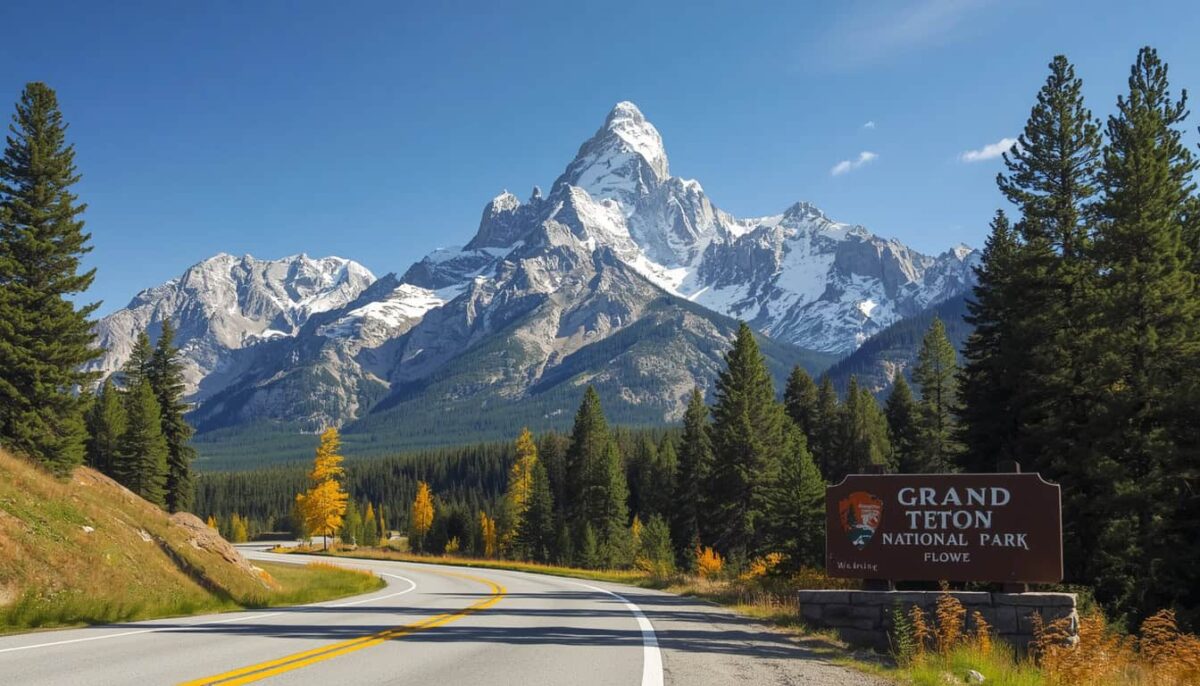
Getting to Grand Teton National Park comes down to three decisions: whether you fly or drive, which airport or highway makes sense given where you are starting from, and which entrance you use once you arrive.
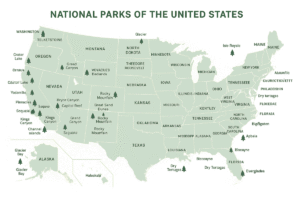
The park sits in northwestern Wyoming, roughly 285 miles northeast of Salt Lake City and about 485 miles northwest of Denver.
Jackson Hole Airport is the closest commercial airport and the only one in the country located inside a national park boundary.
If you are asking how to get to Grand Teton National Park, the honest answer is that it depends entirely on your origin city, your budget, and whether you plan to combine the trip with Yellowstone, which most visitors do.
Traveling By Air
Jackson Hole Airport
Is the most convenient option for flying into Grand Teton, located literally inside the park, offering one of the most dramatic landing approaches in commercial aviation as the Teton Range fills the window during descent.
American Airlines, Delta, and United fly into Jackson Hole year-round with direct service from Denver, Salt Lake City, Dallas, Chicago, and several other major hubs.
For American travelers booking from the coasts, direct flights into Jackson eliminate the rental car leg from a distant hub entirely.
You step off the plane and you are already inside the park.
The trade-off is cost. Jackson Hole Airport consistently prices higher than regional alternatives, and during peak summer travel the difference can be significant.
Salt Lake City International Airport
It’s about 300 miles south of the park, offers potentially lower fares and all major airlines fly into it, with the option to rent a car for the roughly five-hour scenic drive north or take a shuttle service into Jackson.
For German travelers flying transatlantic, Salt Lake City is the more practical hub, with stronger international connections and a far wider range of routing options than Jackson Hole can offer.
Idaho Falls Regional Airport
The Aiport sits about two hours from the park and is sometimes cheaper to fly into than Jackson Hole, accessible via Highway 22.
It is the overlooked middle option: closer than Salt Lake, cheaper than Jackson on many travel dates, and served by enough carriers to make it worth pricing before committing to either of the more obvious alternatives.
Traveling By Road
For visitors driving from the south, the standard approach is Highway 89 north from Salt Lake City through the Snake River Canyon into Jackson, then continuing north into the park via the Moose Entrance.
This drive takes roughly four and a half to five hours from Salt Lake and runs through rural towns, scenic farmland, and the dramatic canyon stretch of the Snake River before depositing you in Jackson.
It is a genuinely good drive, not merely a transfer, and the Snake River Canyon section in particular is worth having a passenger alert for.
From Denver, the drive runs seven to nine hours depending on the route.
Most visitors take I-25 north to I-80 west, then Highway 191 north through Wyoming.
It is a long day of driving and is best broken up with a night in or near Rock Springs or Pinedale if you are not pressed for time.
The Hoback Canyon stretch south of Jackson on Highway 191 is one of the more scenic approaches to the park from that direction.
Visitors coming from the north, including those completing a Yellowstone trip first, simply drive south on Highway 89 through Yellowstone’s South Entrance, which connects directly into Grand Teton along the eastern shore of Jackson Lake, passing Colter Bay Village and Jackson Lake Lodge before reaching the park’s most scenic viewpoints.
There is no formal entrance station when entering Grand Teton from Yellowstone’s south side, but a separate park pass is required.
For anyone combining both parks in one itinerary, this north-to-south approach through Yellowstone first is the most logical sequence, since it puts the dramatic Teton views in front of you on the drive out rather than the drive in.
Entrances to Grand Teton Park
Grand Teton has three main entrances and an unofficial fourth.
The Moose Entrance
This Entrance is on the southern end is by far the busiest, used by travelers coming from Jackson or Teton Village, connecting directly to Teton Park Road and providing the quickest access to Jenny Lake and Signal Mountain.
The Moran Entrance
This is on the eastern side is considerably quieter and positions you close to Oxbow Bend, Willow Flats, and Jackson Lake. The Granite Canyon Entrance offers a slower scenic route into the park from the west side, closer to Teton Village.
The unofficial fourth entrance
This is the Flagg Ranch approach from Yellowstone’s south gate, which sits inside the John D. Rockefeller Jr. Memorial Parkway connecting the two parks.
Visitors entering this way drive south along Jackson Lake without passing through a formal Grand Teton entrance station, though the park pass is still required to access Teton Park Road.
For visitors staying in Jackson, the Moose Entrance is the default.
For those staying at Jackson Lake Lodge or Colter Bay, the Moran Entrance eliminates unnecessary driving through the crowded southern end of the park.
The choice of entrance is worth making deliberately, particularly during July and August when the Moose Entrance can back up at peak hours.
Travel Within the Park
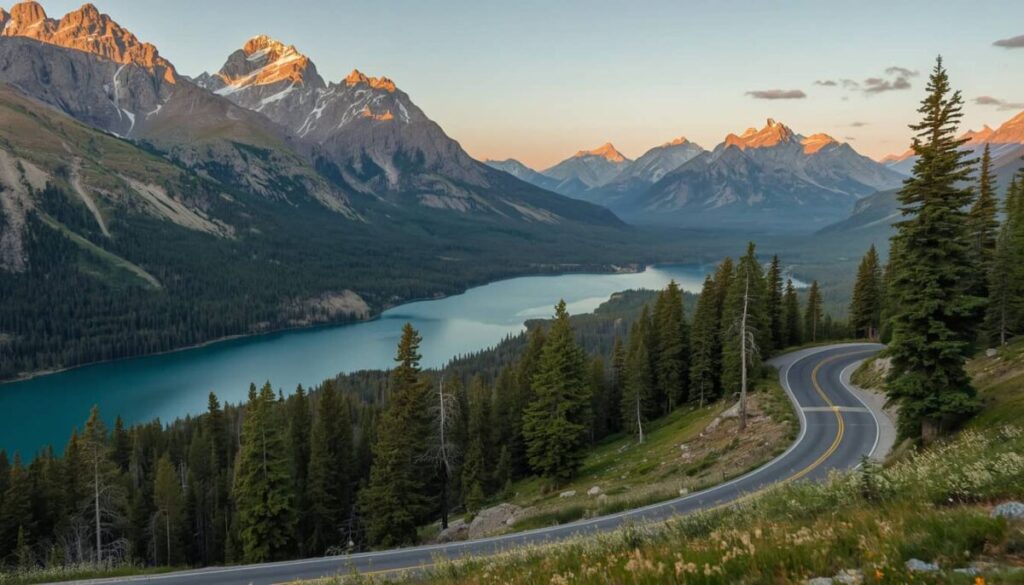
A rental car is not optional at Grand Teton. The park has two main roads running through it:
Teton Park Road, the inner scenic route that runs closer to the mountains and connects Jenny Lake to Signal Mountain, and Highway 89, the outer road that follows the eastern edge of the valley.
Both are paved and manageable in a standard vehicle.
Gas stations exist inside the park, so running out of fuel is not a realistic concern, but prices are higher than in Jackson.
The START Bus provides free town service throughout Jackson roughly every thirty minutes, and Alltrans runs a paid shuttle from downtown Jackson to various locations within the park during summer.
For visitors staying in Jackson without a rental car, the shuttle makes day trips into the park possible, though it limits how early you can arrive at trailheads, which matters considerably in peak season when parking fills by 8 AM.
The park’s complimentary lodge shuttle connects Jackson Lake Lodge, Colter Bay, Jenny Lake, and downtown Jackson on a first-come basis during the summer season.
For Canadian travelers driving down from Alberta or British Columbia, the most direct route crosses into Montana and picks up Highway 89 south through Yellowstone, making the Grand Teton approach a natural extension of what is already one of the great scenic drives in North America.
The full journey from Calgary to the park runs roughly ten to eleven hours and rewards a two-day pace with a night in Bozeman or West Yellowstone.
Electric Vehicles and Road Conditions
Charging infrastructure is available at Jackson Hole Airport, throughout the town of Jackson with more than sixty stations, and at Teton Village with both Level 2 and Level 3 ports.
Inside the park itself, charging is limited, so EV drivers should plan accordingly and arrive with a full charge from Jackson.
The park’s roads are paved and present no significant challenges for any standard vehicle in summer. Winter is a different matter.
The Teton Park Road closes on November 1 and does not reopen until around May 1, which means all winter driving routes through the park run on Highway 89.
Road conditions in winter require checking before departure, and the Wyoming Department of Transportation road condition line is the authoritative source for current status.
The full directions, entrance information, and seasonal road closure dates are listed on the Grand Teton National Park official NPS directions page, which is the most reliable resource for current access conditions before any trip.
For readers planning the lodging strategy alongside their route, the best hotels near Grand Teton National Park guide on Tadexprof covers both in-park and Jackson gateway options across all budget levels.
And for anyone building a combined Yellowstone and Grand Teton itinerary, how to get to Yellowstone National Park covers the northern park’s transport logistics in the same depth.
The drive to Grand Teton, regardless of which direction you come from, is not the part of the trip you endure to get to the good stuff.
In most cases, it is the first good stuff.
The Snake River Canyon, the Hoback, the southern approach from Jackson with the peaks rising suddenly ahead of you: the park starts earning its place before the entrance station comes into view.