Getting to Rocky Mountain National Park is more straightforward than most visitors expect, and more consequential than most realize.
How to get to Rocky Mountain National Park is one of the first questions any traveler asks when building a Colorado itinerary.
The park sits in north-central Colorado with two gateway communities on opposite sides of the mountains: Estes Park on the east and Grand Lake on the west.
Which one you enter from determines which roads you drive, which trails you access first, and how your entire itinerary sequences.
Most visitors arrive through the east side via Estes Park, which sits about 66 miles from Denver and connects to the park’s most visited attractions including Bear Lake, Trail Ridge Road, and the elk meadows.
The west side through Grand Lake is quieter, less driven, and worth building into any trip that has more than a day or two to spend in the park.
Denver International Airport
Denver International Airport is the closest major airport to Rocky Mountain National Park with a wide choice of commercial airlines and strong international connections.
For American travelers flying in from the coasts, it is the standard hub.
For German visitors making the transatlantic journey, Denver has direct service from Frankfurt and Munich on Lufthansa, making it one of the most accessible US national park gateways from Europe without a domestic connection.
For Canadian travelers, direct flights from Calgary, Toronto, and Vancouver land at Denver with enough frequency to make it a realistic entry point for a Rocky Mountain itinerary.
From the airport the drive to Estes Park covers roughly 70 to 80 miles depending on the route and takes between ninety minutes and two hours.
That distance is short enough to arrive at the park the same day as an international flight, which most experienced travelers do rather than spending a night in Denver unnecessarily.
Denver to Estes Park Routes
There are three main driving routes from Denver to Estes Park, and the choice between them depends on your priorities.
The fastest and most direct is via Boulder on Highway 36, covering 66 miles in about ninety minutes.
Take I-25 north to Exit 217 and follow US Highway 36 through Boulder and Lyons before climbing into the mountains toward Estes Park.
The Boulder section adds a stop worth making if you arrive with time on your hands: Pearl Street Mall, a pedestrianized strip of independent restaurants and outdoor gear shops, works well as a lunch stop before the final push into the mountains.
The second route runs via Highway 66, slightly longer at 71 miles, again about ninety minutes, and follows I-25 north to Exit 243.
It passes through Longmont and Lyons before joining the same final approach into Estes Park.
The difference between this and the Highway 36 route is minimal in practice, and the choice matters more during peak summer when Boulder traffic slows the 36 corridor.
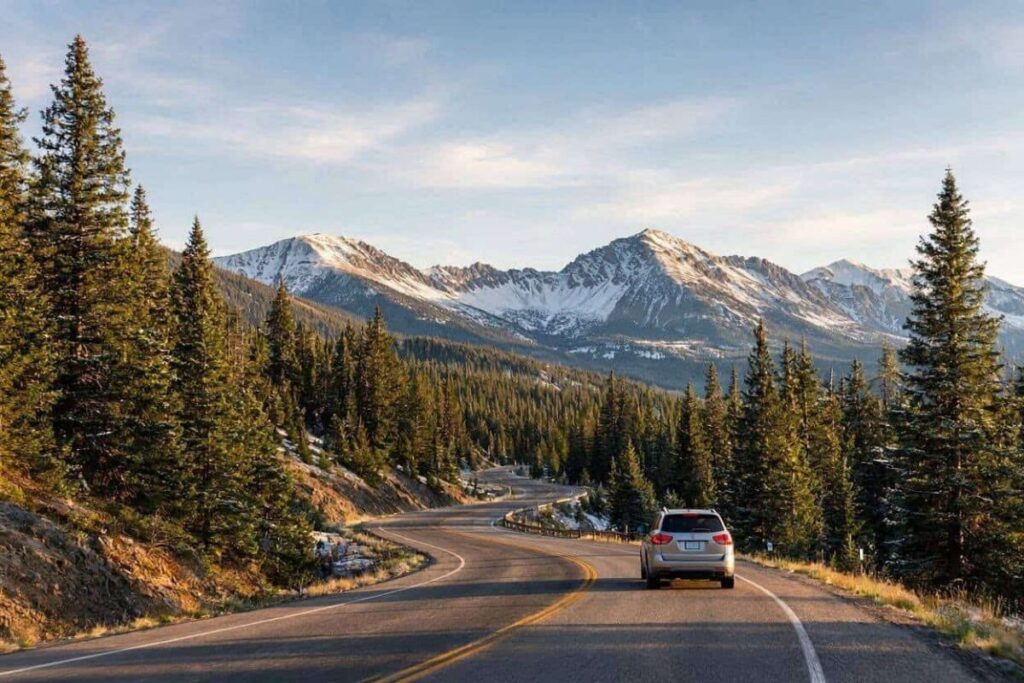
The third option is the Peak to Peak Scenic Byway, a 108-mile drive taking two and a half to three hours that trades efficiency for scenery.
Take I-70 west to Exit 244, connect to State Highway 119 through Nederland, then follow State Highway 72 to State Highway 7 into Estes Park.
This route runs through historic mining towns, aspen groves, and some of the most dramatic mountain scenery in Colorado.
It is the right choice for travelers who have an afternoon to spare and want the approach to the park to be part of the experience rather than merely a transfer.
A fourth option worth noting for visitors coming from Loveland, Fort Collins, or northern Colorado is US Highway 34 through the Big Thompson Canyon.
This is a dramatically scenic canyon drive that delivers you into Estes Park from the east.
Check current road conditions before using it since construction and weather-related delays can add twenty minutes or more to the drive in certain seasons.
Grand Lake and the West Side
The west side of Rocky Mountain National Park is accessed through Grand Lake, a small town on the shore of Colorado’s largest natural lake about 61 miles from I-70 west of Denver.
Take I-70 to Exit 232 at Empire, follow US Highway 40 east to Granby, then US Highway 34 north to Grand Lake.
The drive takes between ninety minutes and two hours.
Highway 40 can close or have restrictions in winter due to snow, making the west side entrance more weather-dependent than the Estes Park approach.
From Kremmling, the drive is shorter at 42 miles, taking about an hour via Highway 40 east to Granby and then north to Grand Lake.
For travelers coming from the Western Slope of Colorado or from Utah, the Grand Lake entrance is geographically the more logical approach and avoids driving through Denver entirely.
The west side reward for the extra effort is a different park.
The Kawuneeche Valley runs along the Colorado River’s headwaters and is the most reliable moose habitat in the entire park.
The crowds on the west side trails are a fraction of what the Bear Lake corridor sees on a summer weekend.
For travelers who have visited Rocky Mountain before and already know the eastern highlights, a west-side itinerary centered on Grand Lake offers the park in a form that most visitors never encounter.
Transportation Options
For visitors who arrive by plane and prefer not to rent a car, several options exist though none replaces the flexibility of driving.
A commercial shuttle service runs between Denver International Airport and Estes Park with advance booking, which covers the airport-to-gateway portion of the journey efficiently.
The Estes Park Visitor Center runs a free shuttle service into the park during the summer season, connecting the town to the park’s Bear Lake and Moraine Park transit hubs where internal park shuttles take over.
CDOT’s Bustang service provides seasonal transportation from Denver Union Station to Estes Park on weekends from late May through October, with stops along US Highway 36 in Westminster, Broomfield, Boulder, and Lyons.
Riders connect at the park’s Park and Ride Transit Hub and transfer to the Bear Lake or Moraine Park shuttles from there.
A Bustang ticket and a separate park entrance pass are both required.
The internal park shuttle system is extensive and free once you are inside, running frequently along the Bear Lake Road corridor and making car-free trail access genuinely practical during peak season when parking at popular trailheads fills well before 9 AM anyway.
The nearest gas stations, EV charging stations, grocery stores, restaurants, and lodging are all in Estes Park and Grand Lake rather than inside the park itself. Plan fuel and food before the entrance station rather than assuming availability inside.
Entry Planning
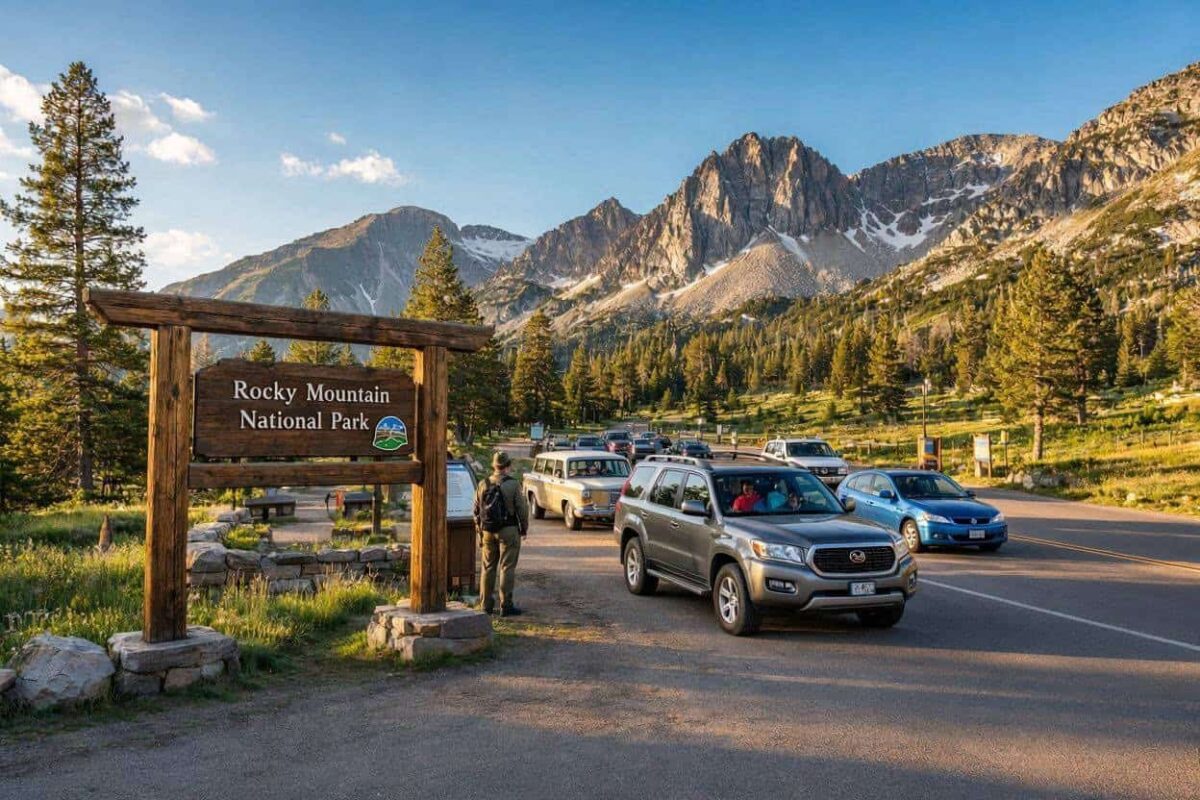
Rocky Mountain National Park requires timed entry permits during the peak season from late May through mid-October.
Permits are available through Recreation.gov and must be secured before arrival.
They open on a rolling basis and sell out on peak summer weekends.
The permit covers a specific entry window, and arriving outside that window means waiting or being turned away at the entrance station.
This system was introduced because summer demand had overwhelmed the park’s infrastructure, and it now functions as a real constraint rather than a bureaucratic formality.
An America the Beautiful annual pass covers the park entrance fee for an entire calendar year and pays for itself within two or three visits to federal lands across the country.
It is available at any park entrance station or through Recreation.gov.
For visitors combining Rocky Mountain with other parks in a wider Colorado or western itinerary, it is one of the better value decisions in the trip planning budget.
Full details on timed entry requirements, entrance fees, and current access conditions are maintained on the Rocky Mountain National Park official NPS page, which is updated seasonally and reflects the most accurate information before any visit.
A Rocky Mountain trip that is planned well at the logistics level rarely disappoints.
Knowing how to get there is only the first layer.
The lodging decision shapes how much driving you do each morning before the trails, and the best hotels near Rocky Mountain National Park guide on Tadexprof breaks that down by neighborhood and budget so you are not making that call blind.
Timing matters just as much.
Trail Ridge Road closes in October and the timed entry system runs from late May, which means the calendar determines almost everything else about what the park allows you to do.
If you have not settled on your dates yet, read the best time to visit Rocky Mountain National Park guide first before booking anything else.
The drive into Rocky Mountain National Park, regardless of which route or which side of the mountains you come from, does not feel like a transfer once you leave the highway behind.
The canyon roads, the aspen corridors, the first glimpse of the peaks above the treeline: the approach earns its place in the trip before the entrance station comes into view.