The best time to visit Rocky Mountain National Park depends entirely on what you are trying to get out of the trip.
If you want full trail access, open roads, and every park service running at capacity, July and August deliver that without compromise.
If you want the elk rut, golden aspen groves, and meaningfully fewer people sharing the trail with you, September is the answer most experienced visitors give.
If you want the park to yourself entirely and do not mind snowshoes instead of hiking boots, January and February offer a version of Rocky Mountain that the summer crowd never sees.
The park is open year-round, but Trail Ridge Road, the highest continuous paved highway in the United States at 12,183 feet, controls the calendar.
When it opens, the park opens. When it closes, the alpine section goes with it.
Summer Period
July is the busiest month of the year in Rocky Mountain National Park, drawing over 900,000 visitors. That number is not an abstraction.
It translates to parking lots at Bear Lake filled by 8 AM, entrance lines backing up Highway 36, and trailheads that feel less like wilderness and more like a popular urban park on a Saturday morning.
The timed-entry permit system, which runs from late May through October, was introduced precisely because summer demand had overwhelmed the park’s infrastructure.
Permits must be reserved through Recreation.gov before arrival, and they sell out on peak summer weekends within minutes of becoming available.
None of this means summer is the wrong choice. It means it requires planning.
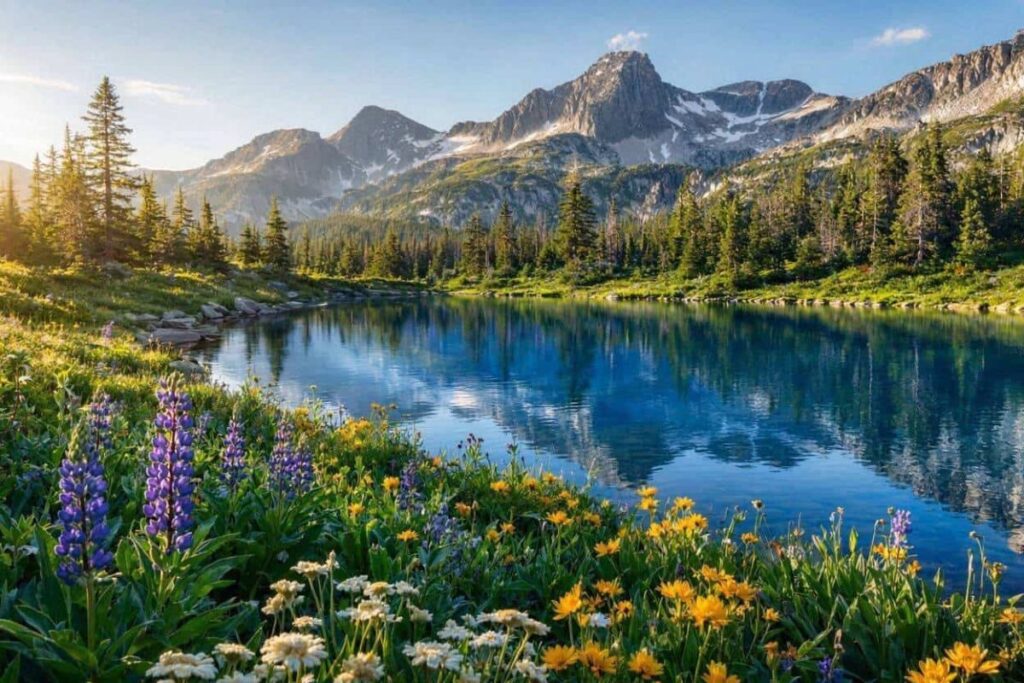
The high country puts on a show in summer with bright green grasses and alpine wildflowers, and days are generally warm with mornings starting clear and sunny before intense afternoon thunderstorms roll in.
For American families whose school calendars dictate a July or August trip, for German visitors who build summer vacation plans months in advance, and for Canadian travelers combining Rocky Mountain with a wider Colorado road trip, summer remains the only viable window.
The strategy that separates a good summer visit from a frustrating one is simple, be on trail before 7 AM, be below treeline before early afternoon, and accept that the most popular trailheads will not offer solitude at any hour.
Wildlife in summer can be found along Trail Ridge Road itself, where elk move into the tundra areas, and bighorn sheep, marmots, and pika are visible in the world above treeline.
Coyotes, deer, moose, and other wildlife appear at lower elevations.
The Kawuneeche Valley on the park’s western side is consistently productive for moose sightings throughout the summer months and sees a fraction of the eastern side’s foot traffic.
September
September is widely considered the best overall month for a Rocky Mountain visit, matching July’s weather quality while drawing meaningfully fewer crowds and adding the elk rut as a wildlife event that no other month delivers.
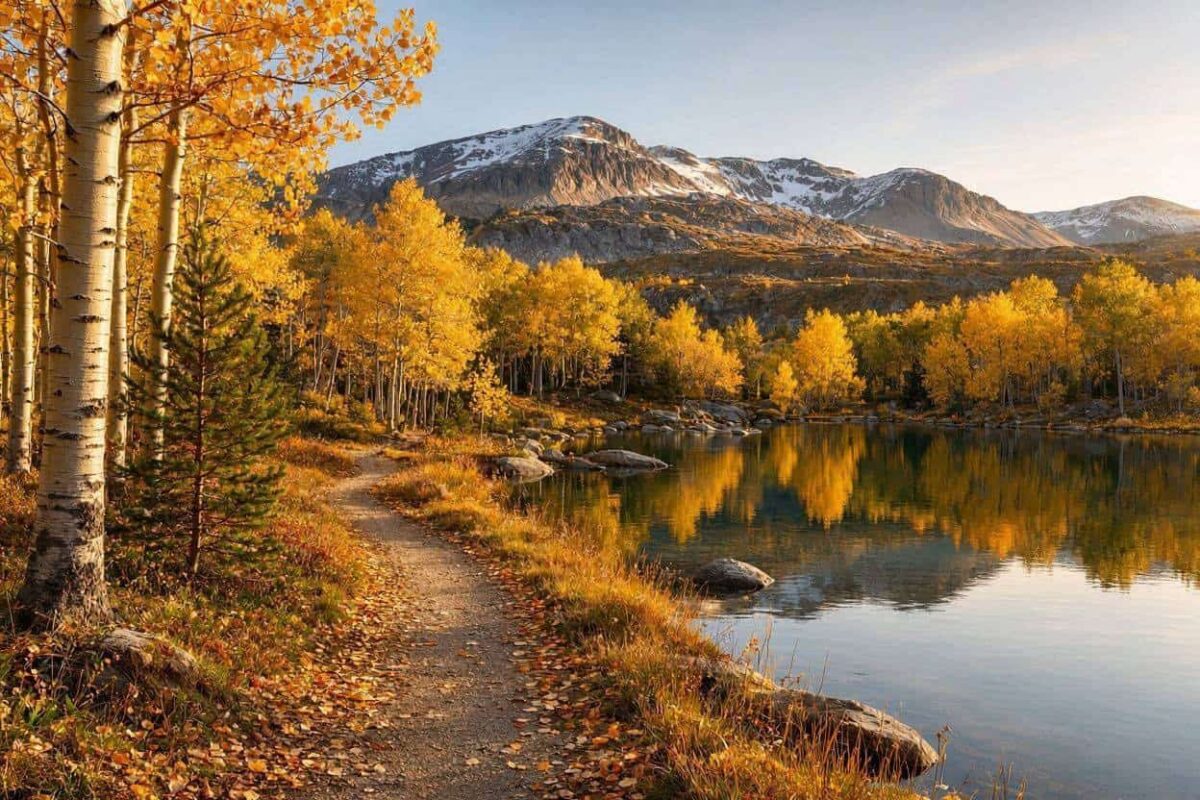
The aspen groves turn gold in late September, creating the most visually distinctive landscape the park offers across any season.
The combination of wildflower-season access still intact, autumn color beginning, elk bugling across the meadows at dawn and dusk, and summer crowds mostly gone makes September the month that experienced Rocky Mountain visitors keep returning to.
The elk viewing areas draw real crowds at sunset in September, which has stopped being a secret.
The advice from experienced visitors is to go at dawn instead: better light, fewer people, more active elk.
Give the elk room. Rangers manage the meadows closely during the rut, and a bull in October has no patience for proximity.
Trail Ridge Road typically closes for the season in mid-October, weather depending, making early October the last window for the full park experience until late May.
Temperatures in September drop considerably compared to July at elevation, with mornings carrying a genuine chill above 10,000 feet.
An extra insulating layer and waterproof boots are not optional in this window.
The reward for that preparation is a park that feels returned to itself after months of summer pressure.
Spring Season
Spring is a shoulder season with fewer crowds, a mix of snow and spring blossoms, milder weather at lower elevations, and higher elevations still carrying significant snow cover.
Average temperatures range from the low 30s to the high 50s Fahrenheit, and Trail Ridge Road typically stays closed until late May or early June depending on snowpack.
May is the month that rewards careful planning rather than casual arrival.
Elk and moose are active in the valleys, waterfalls like Alberta Falls and Chasm Falls run at full volume on snowmelt, and moose calving season begins in the Kawuneeche Valley.
The crowds have not arrived, and on a clear May morning with fresh snow on the peaks and wildflowers beginning in the meadows, the park justifies every bit of the planning flexibility it requires.
The critical check before a May trip is Trail Ridge Road’s current status, since the opening date varies annually by snowpack and does not follow a fixed calendar.
June represents the transition from shoulder season to peak.
By mid-June Trail Ridge Road is typically open and the park is functionally accessible at all elevations.
Wildflowers peak in late June and early July across the subalpine and alpine zones.
Crowds build through June but do not reach July density until the final weeks of the month, which makes late June the most underrated window in the park’s calendar for visitors with scheduling flexibility.
Winter Period
Portions of Trail Ridge Road and the entire Old Fall River Road are closed during winter, but popular areas like Hidden Valley, the Kawuneeche Valley, Bear Lake, and Wild Basin remain accessible.
Skiing, snowshoeing, sledding, and wildlife viewing are the primary winter activities, and the park offers ranger-led snowshoe walks throughout the season.
The east side trails from Bear Lake become snowshoe routes through silent frosted forest in winter, and a trail that holds two hundred people on a July morning might hold a dozen in January.
Dream Lake frozen and wind-scoured under a clear winter sky is one of the best photographs in the park.
For visitors who are comfortable in cold weather and have the gear for it, winter Rocky Mountain is not a compromise version of the park.
It is a categorically different and genuinely compelling experience.
For German visitors accustomed to Alpine winter conditions, the temperature range in Rocky Mountain from December through February, typically between 15 and 35 degrees Fahrenheit at Estes Park elevation, is familiar in character if not identical in degree.
The infrastructure in Estes Park remains operational through winter, with hotels, restaurants, and equipment rental available throughout the season.
Traction devices and poles are recommended for all winter trail use given icy and snow-packed conditions.
The Trail Ridge Road
Trail Ridge Road usually opens in mid-May and shuts down by mid-October when snow accumulates.
At 12,183 feet, it is always at the mercy of the weather.
Even when the road is open, conditions at the top can change rapidly with snow, high winds, and near-freezing temperatures possible any month at elevation.
The road’s opening and closing dates are the single most important planning variable for any Rocky Mountain visit that includes the high alpine zone.
A trip planned around the high country in early May may find the road closed.
A late October visit assumes the window is still open and may arrive to find it shut after an early storm.
The NPS Rocky Mountain National Park road conditions page is the authoritative source for current status and should be checked within a few days of any visit where Trail Ridge Road access matters.
For readers building a wider national park itinerary around a Rocky Mountain trip, the best time to visit Grand Teton National Park guide on Tadexprof covers the Wyoming park’s seasonal logic in the same depth, and the best hotels near Rocky Mountain National Park guide covers the Estes Park lodging strategy across all budget levels for each season.
Rocky Mountain National Park does not have a wrong season.
It has seasons built for different travelers with different goals and different tolerances for crowds, weather, and logistical complexity.
Knowing which one you are before booking is the decision that determines whether the trip meets your expectations or simply meets the park.