A Death Valley National Park packing list comes down to one adjustment most first-time visitors get wrong.
This is a desert, not a furnace around the clock, and the packing needs to account for both ends of that swing.
Daytime highs in summer regularly clear 120 degrees, but Furnace Creek mornings and evenings can drop into the 50s even in peak season, and winter nights fall close to freezing.
Pack only for the heat and you’ll be cold twice a day.
Pack only for the cold and you’ll be miserable by 10 a.m.
Layering Tips
The single most useful item on this list is a lightweight layering system rather than any one piece of gear.
A breathable base layer, something synthetic or merino wool rather than cotton, holds up through a sweaty midday hike and still keeps you warm once the temperature drops after sunset.
A packable fleece or light insulated jacket handles the early mornings and evenings, especially if sunrise at Zabriskie Point or Dante’s View is on the itinerary, since those overlooks sit at higher, colder elevations than the valley floor.
A windbreaker earns its place too, since Death Valley gets genuinely windy, and long pants protect against both sun exposure and the scrub brush along less-maintained trails.
Sun & Footwear
Sun protection matters here more than in almost any other American national park, given how little shade exists across most of the landscape.
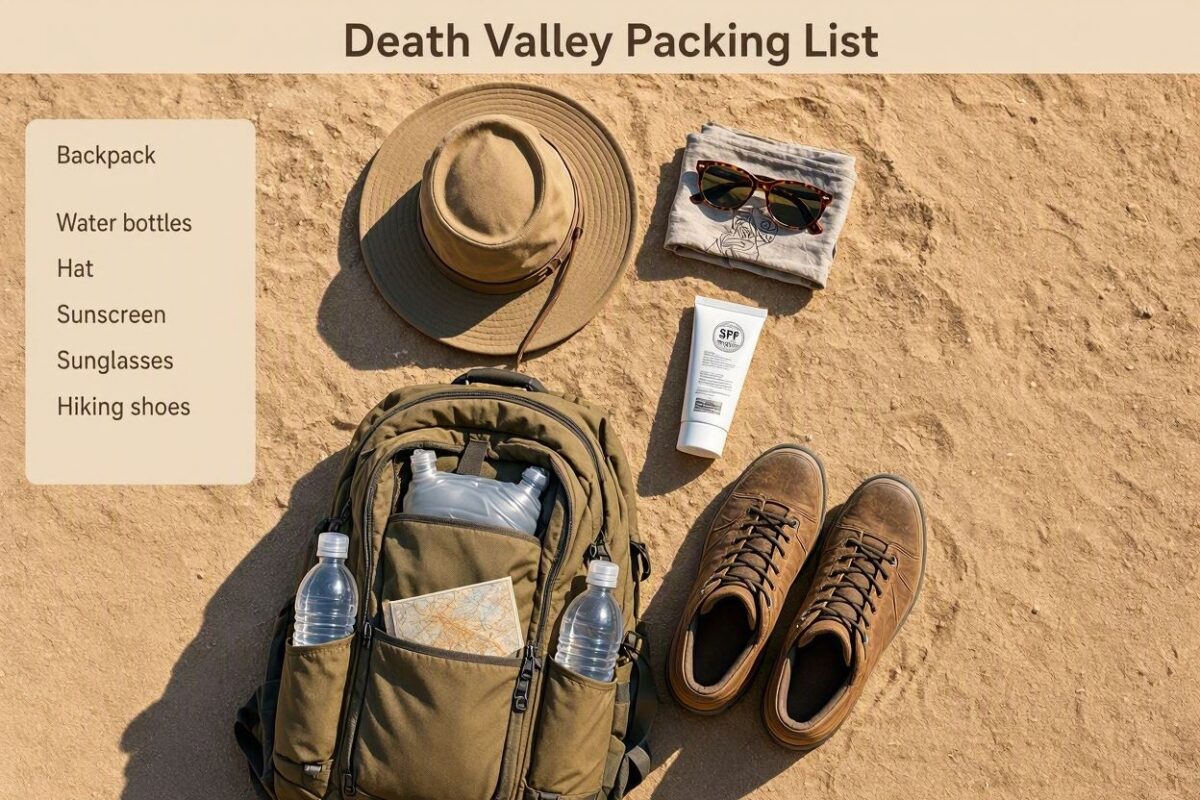
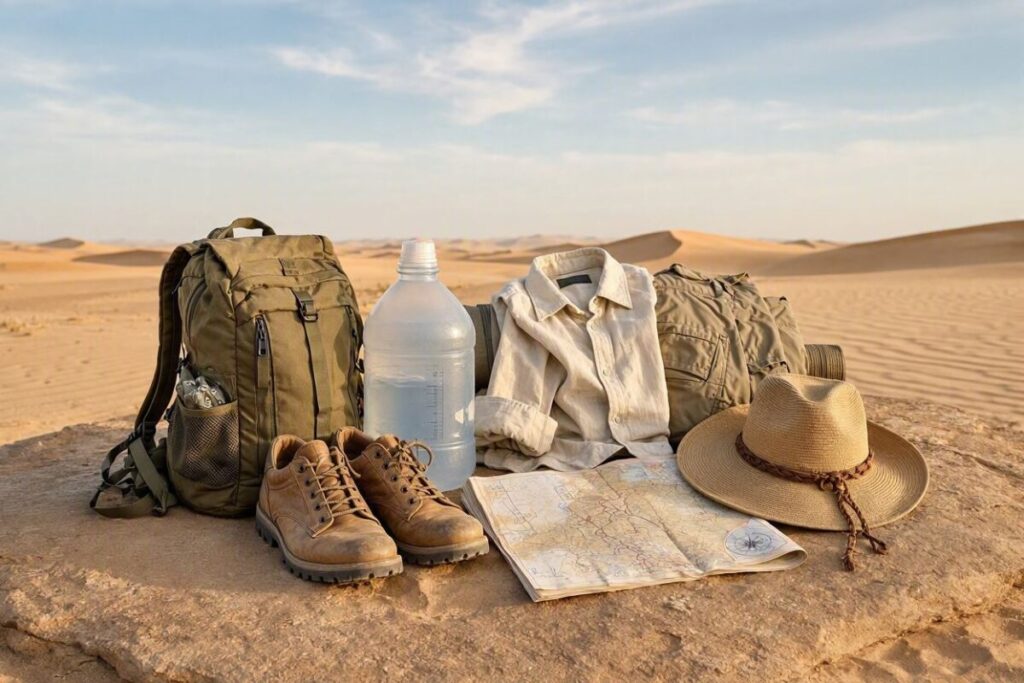
A wide-brim hat or structured cap, real sunglasses rather than cheap ones, and sunscreen reapplied more often than feels necessary are all non-negotiable.
Footwear deserves more thought than people give it too.
Breathable hiking shoes work better than heavy boots for most of the park’s trails, and counterintuitively, shoes with less aggressive tread often grip better on the smooth, sandy rock around Golden Canyon and Mosaic Canyon than deep-lug hiking boots do.
Safety Essentials
The National Park Service recommends at least one gallon of water per person, per day here, not as a suggestion but as a baseline for avoiding dehydration in a place where heat exhaustion and heat stroke are genuine, documented risks every summer.
A wide-mouth bottle or hydration bladder makes that easier to manage on the trail, and keeping extra water in the car matters just as much, since roadside breakdowns in Death Valley can turn into real emergencies given how far apart help and cell service actually are.
A portable power bank is worth packing too, both for navigation backup and because charging opportunities thin out fast once you’re away from Furnace Creek.
International travelers renting a car for the first time in this kind of terrain should also give real thought to whether their travel insurance or rental coverage actually accounts for a breakdown in a remote desert park, since standard policies don’t always.
Packing Guide
Winter visitors, from December through February, should add real cold-weather gear, gloves, a warm hat, and an extra insulating layer, since valley temperatures can sit in the 30s and 40s at sunrise.
Spring, the park’s busiest season, brings milder days but also the occasional flash flood, so a lightweight rain shell is worth the small amount of space it takes up, even though rain itself stays rare.
Summer visitors need to think less about clothing and more about heat management directly, a cooler with ice for the car, a wide-brimmed sun umbrella if hiking at all, and a full tank of gas before heading into any stretch without services.
Fall, from October through November, is milder and drier than the other seasons, but evenings still call for a warm layer, and it’s a good season for travelers who’d rather trade a little cooler daytime weather for smaller crowds.
What Not to Bring
A few things are worth leaving at home.
White clothing picks up dust and trail grime fast and rarely survives a Death Valley trip looking the way it did in the suitcase.
New, untested hiking shoes are a bad idea anywhere, but especially here, where blisters can turn a full day of driving between distant trailheads into a wasted one.
And formal clothing has no real use inside the park itself, though it’s worth packing separately if the itinerary includes a stop in a city like Palm Springs or Las Vegas afterward.
None of this requires an elaborate gear list, just a bit more intentionality than a typical warm-weather trip.
The how to get to Death Valley National Park guide on Tadexprof is worth reading alongside this one, since a few items on this list, extra water, a paper map, a power bank, matter as much for the drive in as they do once you’re on a trail.
And once the packing is sorted, the best hotels near Death Valley National Park guide on Tadexprof covers where to base yourself, since that decision changes how much gear you actually need to carry versus leave in the room.
For the most current heat and safety guidance directly from the source, the National Park Service’s Death Valley safety page is worth checking close to departure, since conditions here can shift quickly even within a single week.
Pack for both extremes, not just the one the park is famous for, and the rest of the trip tends to take care of itself.
Do I need warm clothes if I’m visiting Death Valley in summer?
Yes. Even in peak summer, Furnace Creek mornings and evenings can drop into the 50s, so packing only for the heat leaves you cold twice a day.
A lightweight layering system, a breathable base layer, a packable fleece, and a windbreaker, handles both the sweaty midday hike and the temperature drop after sunset.
What kind of shoes work best for Death Valley trails?
Breathable hiking shoes generally beat heavy boots for most of the park’s trails.
Shoes with less aggressive tread often grip better on the smooth, sandy rock around Golden Canyon and Mosaic Canyon than deep-lug hiking boots do, so it’s worth rethinking the instinct to pack heavier footwear.