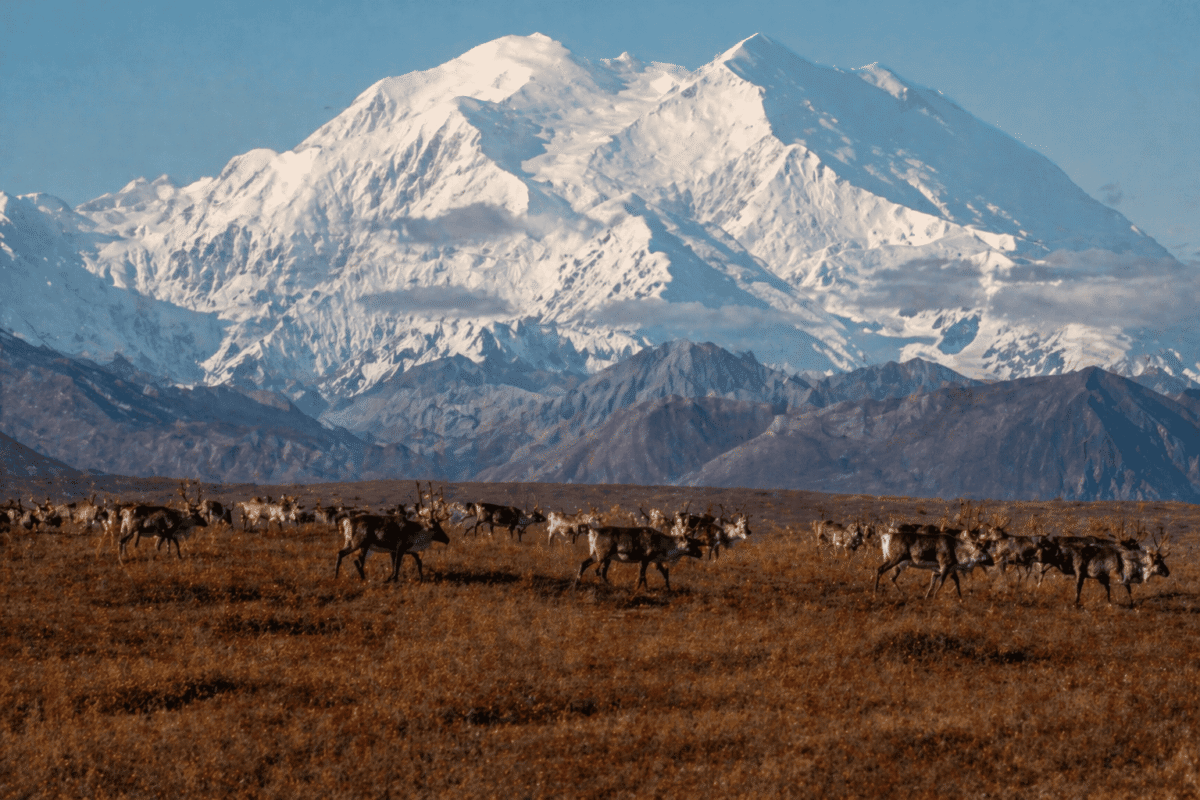
Denali National Park and Preserve is in the interior of Alaska, about 240 miles north of Anchorage and 125 miles south of Fairbanks along Parks Highway.
The entrance fee is $15 per person for a seven-day pass, with children 15 and under admitted free.
The park covers six million acres, making it larger than the entire state of New Hampshire, and it has exactly one road running through it.
At the center of everything is Denali itself, the highest peak in North America at 20,310 feet. On average, only about 30 percent of summer visitors actually see the mountain.
Clouds cover it the rest of the time, and most people go anyway.
That ratio says something useful about what kind of place this is. Denali is not a park you visit to check off a list.
It is a park you visit to be inside something genuinely enormous, where the wildlife is wild in the way that word is supposed to mean and where the infrastructure exists to help you access the wilderness rather than insulate you from it.
How to Get There
Most visitors fly into Ted Stevens Anchorage International Airport, rent a car, and drive the Parks Highway north to the park entrance.
The drive takes roughly four to five hours depending on stops.
Fairbanks is the closer option for visitors flying from northern Canada or connecting through Seattle, and the drive south to the park from Fairbanks runs about two and a half hours.
The Alaska Railroad operates a route between Anchorage and Fairbanks that stops directly at the park entrance, and it is worth considering seriously.
The train cuts through landscape that is not visible from the highway, runs on a reliable schedule through summer, and removes the logistical pressure of driving in a state where distances and road conditions require more planning than most visitors expect.
For German travelers in particular, who tend to build longer itineraries and are comfortable with rail travel, the train option fits naturally into a multi-week Alaska trip.
Road To the Park
Private vehicles are permitted on the first 15 miles of Denali Park Road, up to the Savage River area. Beyond that, the road is closed to private cars.
To go deeper into the park, visitors must board one of the park’s buses, which is a deliberate design choice that keeps traffic low and wildlife undisturbed across the remaining 77 miles of road.
The bus system divides into two categories. Transit buses are non-narrated and allow riders to hop on and off wherever they choose, which suits hikers and photographers who want to move at their own pace.
Tour buses carry a naturalist guide who narrates the route, identifies wildlife, and provides context about the geology and ecology of the park.
The Tundra Wilderness Tour, running about six hours and costing around $144 per adult including the entrance fee, is the one most visitors choose for a first trip.
The Natural History Tour at roughly $116 per adult covers the park’s history alongside wildlife and is a strong option for visitors with younger children or those who prefer a more structured experience.
Tour bus seats sell out early, sometimes months before the summer season opens.
Booking through the official NPS reservation system as soon as dates are confirmed is not optional advice for anyone visiting between June and August. It is a practical necessity.
Things to Explore and Do
The wildlife is the reason most people come, and Denali delivers on that in a way that few parks in the lower 48 can match.
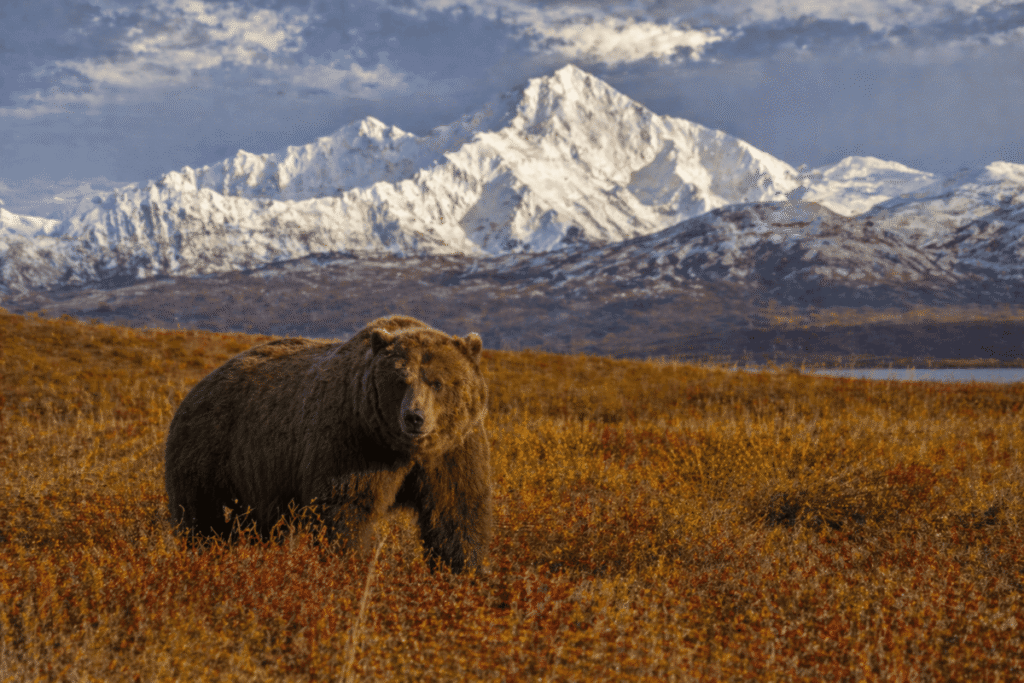
Grizzly bears, wolves, caribou, moose, Dall sheep, and fox all live here in numbers large enough that sightings on a full-day bus ride are common rather than lucky.
The road travels through open tundra for much of its length, which means animals are visible at distances that allow for real observation rather than a distant blur through trees.
Binoculars and a telephoto lens are genuinely useful here, not just optional accessories.
Hiking in Denali operates differently from most national parks.
There are maintained trails near the park entrance, including the Savage River Loop at Mile 15, the Horseshoe Lake Trail, and the Mount Healy Overlook Trail, which climbs steeply and rewards the effort with views across the Alaska Range.
Beyond the entrance area, the park has no trail system in the backcountry.
Experienced hikers move off-trail across open tundra using topographic maps, which is a genuinely remote experience that attracts visitors from around the world who find the structured trail systems of parks like Zion or Bryce Canyon too managed for what they are looking for.
Our posts on Zion National Park and Bryce Canyon National Park cover those parks in full if your itinerary runs south through Utah after Alaska.
The sled dog kennels near the visitor center are one of the more unexpected highlights of any Denali visit.
Denali is the only national park in the United States that maintains a working kennel, and the sled dog teams have been part of park operations since the 1920s.
Rangers use the dogs for winter patrols and backcountry work when motorized transport is impractical. The daily demonstrations run through summer and are free with park admission.
Entry
The $15 per person entrance fee covers seven days and is accepted in cash or card at the visitor center, which is where fees are paid since the park has no traditional entrance station.
The America the Beautiful annual pass at $80 covers the entrance fee and is the smarter financial choice for anyone visiting more than a handful of federal recreation sites in a year.
A Denali Annual Pass at $45 covers four adults for twelve months and is the best value for families or small groups planning multiple visits.
Bus tours are not covered by any interagency pass. They are a separate cost and a significant one for families.
A couple taking the Tundra Wilderness Tour pays roughly $288 before adding camping or lodging. Factoring transportation, accommodation, and tour costs into the trip budget before booking is worth doing carefully.
Alaska is an expensive destination by any measure, and Denali specifically rewards visitors who plan their spending in advance rather than making decisions at the park entrance.
Camping inside the park runs from six campgrounds with reservations strongly recommended in summer.
Riley Creek Campground near the entrance has 142 sites and is open year-round, making it the most accessible option for visitors arriving without a fixed schedule.
When to Visit
The summer window from mid-May through mid-September is when the park operates at full capacity, buses run the full road, and wildlife is most active.
Late May and early September offer slightly thinner crowds with the same wildlife and better odds of clear skies for mountain views.
June and July are peak season in every sense, including price and competition for bus seats and campsites.
Winter brings an entirely different park. The road closes to vehicles beyond Mile 3, services reduce dramatically, and daylight shrinks to a few hours.
What remains is a chance to see the aurora borealis, snowshoe through silent forest, and experience a version of Alaska that cruise ship passengers and summer road-trippers never encounter.
For visitors building an off-season itinerary, it is worth knowing that snowshoes and ice grippers are available to rent free at the winter visitor center.
Denali does not offer the kind of experience where you walk a paved loop for two hours and feel satisfied.
It is a park built around the idea that wilderness should be large enough to get genuinely lost in and wild enough to remind you what that word means.
Most visitors leave having seen a fraction of what is there. That is not a failure of planning. It is the point.