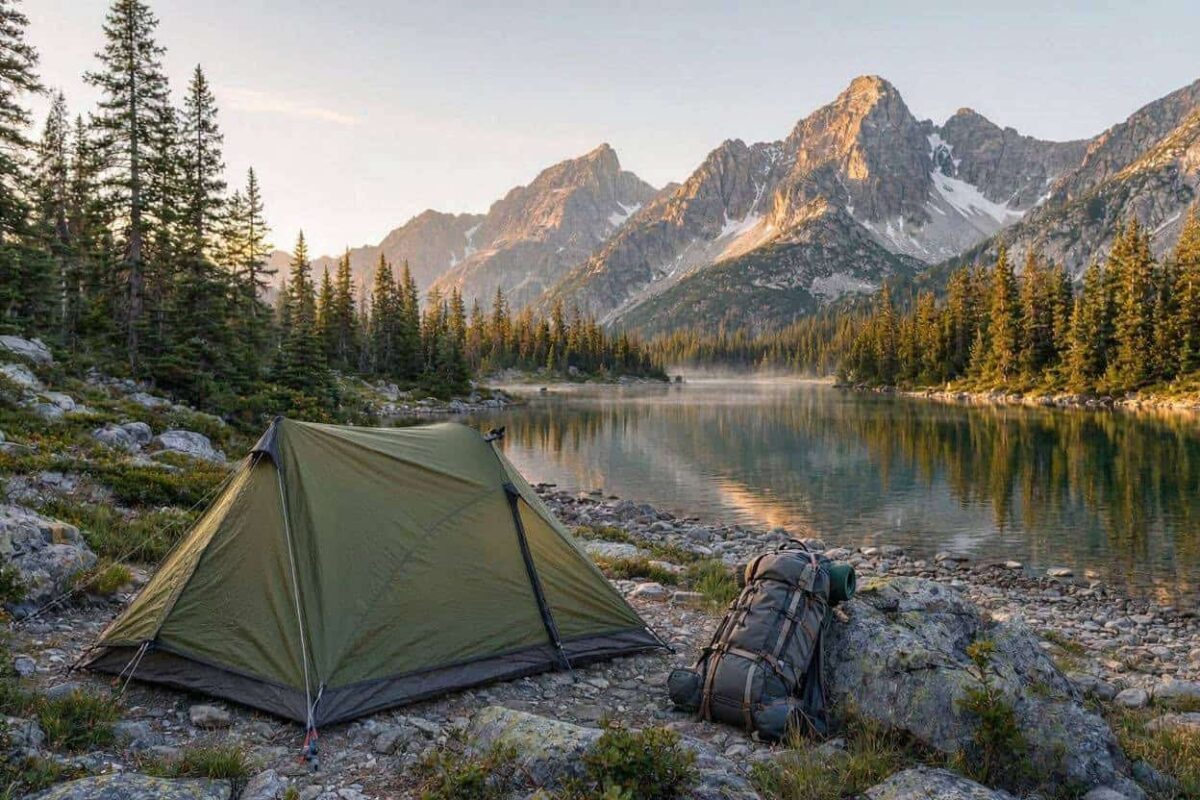
Camping at Grand Teton National Park means waking up with the Teton Range outside your tent door, and that single fact justifies every logistical effort it takes to get a site.
The park has seven campgrounds with a combined capacity that fills fast, a reservation system that opens six months in advance on Recreation.gov, and rules specific enough that arriving unprepared costs you real time and money.
If you are asking whether reservations are required, the answer is yes for most campgrounds.
If you are asking how early to book, the answer is the moment the six-month window opens for your target dates. Everything else flows from those two facts.
How the Reservation System Works
Securing a campsite at Grand Teton requires planning well ahead, as all campgrounds in the park now take reservations up to six months before your arrival date through Recreation.gov.
That means if you want a site in mid-July, your booking window opens in mid-January.
For peak summer dates, especially at Jenny Lake which is the most sought-after campground in the park, that window closes within hours of opening.
The practical approach for American travelers planning a summer trip, Canadian families building a western parks itinerary, or German visitors targeting the July window is to set a calendar reminder for exactly six months before your intended arrival date and be ready to book the moment the system opens.
Walk-in sites are available at Jenny Lake and Colter Bay for visitors without reservations, but these are limited and fill early in the morning on peak days.
Showing up without a reservation and expecting a site on a Saturday in July is a gamble that most experienced visitors do not take.
The maximum stay is seven days at Jenny Lake and fourteen days at all other campgrounds, with no more than thirty days permitted in the park per year.
Jenny Lake Campground
Jenny Lake Campground is eight miles north of Moose and is the park’s most popular campground by a significant margin.
It has forty-nine sites, accepts tents only, and has a strict vehicle policy: one vehicle per site, under fourteen feet long and eight feet tall.
Trailers and pop-up tops are prohibited.
The sites sit among evergreens and glacial boulders a short distance from Jenny Lake itself, which means the sound of the water and the proximity to the canyon trailheads define the camping experience here more than the campground infrastructure does.
For hikers, the location is unmatched.
Cascade Canyon, Hidden Falls, and Inspiration Point all begin within walking distance.
The boat shuttle across Jenny Lake departs nearby.
Arriving at the trailhead before 7 AM is possible when you are sleeping thirty feet away in a way that no hotel stay in Jackson replicates.
If there is one campground in Grand Teton that rewards booking the moment the reservation window opens, it is this one.
Colter Bay Campground
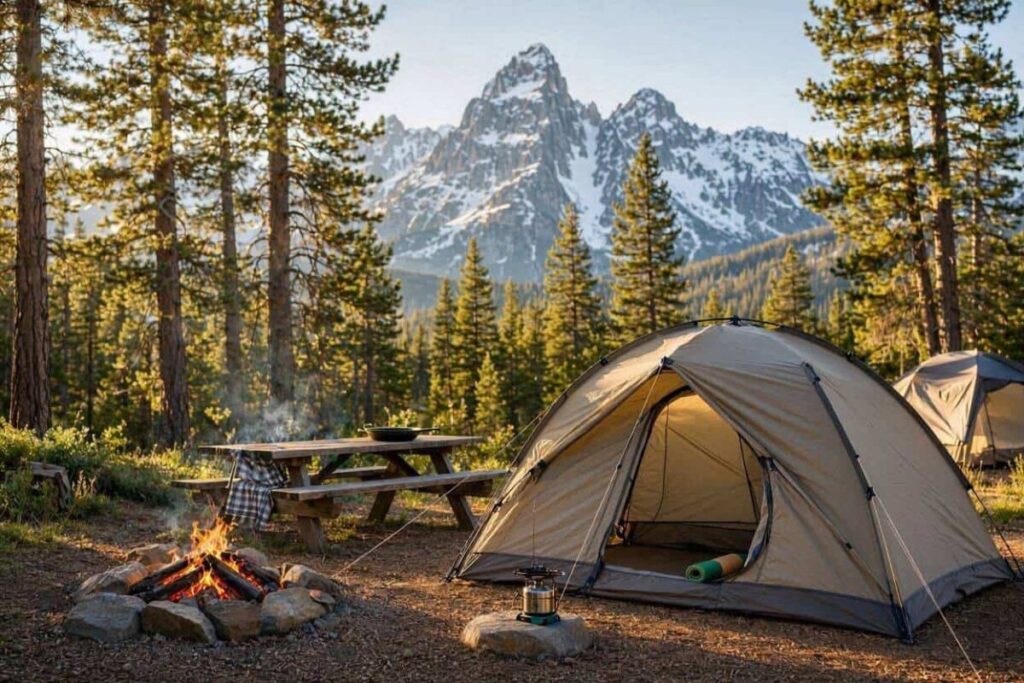
Colter Bay Campground sits twenty-five miles north of Moose with 335 sites, eleven group sites, thirteen electric hookup sites, a trailer dump station, and public showers and laundry nearby at Colter Bay Village.
It is the most versatile campground in the park, accommodating tents, trailers, campers, and RVs in a wooded setting close to Jackson Lake.
The campground fills in the afternoon on peak summer days, which means arriving before noon gives you the best selection of available sites.
Jackson Lake and its marina are within easy reach, with boat rentals, guided fishing, and lake cruises departing from the docks.
The Colter Bay Visitor Center, which includes an Indian Arts Museum worth a genuine hour of attention, sits close to the campground.
For families who want a base with services and activities on the doorstep, Colter Bay delivers more infrastructure than any other in-park camping option.
The Colter Bay RV Park is a separate facility within the village offering full hookups, showers, and laundry for 112 sites.
Advance reservations are required.
This is the most fully serviced RV option inside the park and the one that eliminates the trade-off between wilderness proximity and modern amenity.
Gros Ventre Campground
Gros Ventre Campground sits 11.5 miles south and east of Moose along the Gros Ventre River with more than 300 sites, five group sites, and thirty-six electric hookup sites.
The landscape here differs from the wooded campgrounds further north.
Sites are set in a mix of sagebrush, beneath cottonwoods, and adjacent to the river, which gives Gros Ventre a more open, valley-floor character than the forested northern campgrounds.
The campground opens in early May, earlier than most other park campgrounds, which makes it the best option for visitors arriving in the shoulder season before Jenny Lake and Signal Mountain open.
The Gros Ventre River provides wildlife viewing from the campsite itself, with moose in the willows being a reliable early morning presence.
For visitors who find the northern campgrounds too crowded and want a quieter base with easy access to the southern end of the park and to Jackson, Gros Ventre is the most underrated option in the park.
Signal Mountain Campground
Signal Mountain Campground sits nine miles north of Jenny Lake with eighty-one sites, twenty-four electric hookup sites, and a vehicle size limit of thirty feet.
The campground offers a mix of spruce and fir trees, hillsides, and lake and mountain views that are among the most varied of any campground in the park.
Signal Mountain Lodge and marina sit adjacent, providing a camp store, restaurant, and boat rental access within walking distance.
The central position is Signal Mountain’s strongest argument.
From here it takes roughly the same drive time to reach the park’s northern attractions at Colter Bay and Jackson Lake as it does the southern trailheads at Jenny Lake and Lupine Meadows.
For visitors attending multiple park destinations across a multi-day stay, this is the most logistically efficient campground base.
Public showers and laundry are available at Signal Mountain Lodge, which addresses the one practical limitation of any extended camping stay in the park.
Headwaters at Flagg Ranch
Headwaters Campground and RV sites at Flagg Ranch sits in the John D. Rockefeller Jr. Memorial Parkway, five miles north of Grand Teton’s northern boundary and just south of Yellowstone’s South Entrance.
It has 175 spacious sites in a spruce-fir forest, full hookup RV sites with 20 and 50 amp electric, camper cabins, a dump station, showers, and laundry. Sheffield’s Restaurant and Saloon on site handles meals without requiring a drive.
For travelers doing a combined Yellowstone and Grand Teton itinerary, the Flagg Ranch position eliminates the long daily drive between the two parks that makes staying in Jackson logistically demanding.
An early start on Yellowstone’s southern attractions, the Lewis Falls, Shoshone Lake, and the Pitchstone Plateau, is realistic from this campground without the two-hour round trip that a Jackson base requires.
For more on planning the Yellowstone camping side of that itinerary, the camping at Yellowstone National Park guide on Tadexprof covers the northern park’s campground options and reservation strategy in detail.
Lizard Creek and the Grassy Lake
Lizard Creek Campground at the north end of the park about thirty-two miles north of Moose had sixty sites in a spruce and fir forest with one side adjacent to Jackson Lake.
It was closed in 2025 and its status for future seasons should be confirmed through the park before planning a trip around it.
For visitors open to a more primitive experience, the Grassy Lake Road running west from Flagg Ranch has twenty campsites with vault toilets and bear-resistant food storage lockers but no potable water.
These sites are free of charge and available first-come, first-served beginning June 1.
For self-sufficient campers with water filtration and the willingness to leave reservation logistics behind, this is the most affordable camping option in the entire park corridor and significantly quieter than any of the managed campgrounds.
Camping Tips
Campfire safety follows strict park standards. Fires must be dead out, meaning cold to the touch, before leaving a site or going to sleep.
All food and scented items must be stored in hard-sided vehicles at all times, not in tents or soft-sided coolers, which is a grizzly country requirement that applies equally to picnic areas and campsites.
Leave No Trace applies throughout the park, and the campground staff enforce it consistently.
Equipment rental is available in Jackson for visitors who arrive without full gear.
Teton Mountaineering on North Cache Street, Skinny Skis, and Wilson Backcountry Sports all carry sleeping bags, pads, tents, stoves, backpacks, and bear spray for rent or purchase.
For visitors flying into Jackson Hole Airport from Denver, Salt Lake City, or international connections through those hubs, renting gear in Jackson rather than checking it on a flight is a practical option that the town’s outdoor retail infrastructure makes straightforward.
All campground reservations, current availability, and fee information are managed through the Recreation.gov Grand Teton campground page, which is the only authoritative source for booking and should be the first stop before any other planning decision.
For readers working through the full Grand Teton trip planning sequence, the best hikes in Grand Teton National Park guide on Tadexprof covers the trail options that make choosing the right campground location matter as much as booking the site itself.
Camping inside Grand Teton is not the budget compromise. It is the better version of the trip.
The mornings alone justify the reservation effort, the light on the peaks before the day visitors arrive, the sound of the river from inside a sleeping bag, the particular quiet of a park that has not yet filled with cars.
Book early, pack right, and the campground becomes the best part of the itinerary.