A Rocky Mountain National Park packing list looks straightforward until you realize you are preparing for a place where the temperature at the trailhead and the temperature at the summit can differ by thirty degrees on the same afternoon.
The park sits between 7,500 and 14,259 feet above sea level.
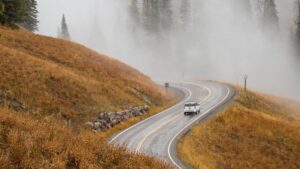
Trail Ridge Road, the highest continuous paved highway in the United States, sits at 12,183 feet where the air is thin, the sun is brutal, and the weather turns without warning.
Getting the gear right before you leave Estes Park is not optional.
There are no large stores inside or near the park.
The closest Walmart or Target is at least an hour’s drive away, which means anything you forget stays forgotten until the trip is over.
Unpredictable Weather
The single most important thing to understand about packing for Rocky Mountain is that the elevation creates its own weather system, one that has nothing to do with what Denver looked like when you left the airport.
A warm summer morning in Estes Park at 7,500 feet can become a near-freezing afternoon on the tundra above 11,000 feet with high winds and a sky that shifted from clear blue to charcoal grey in under an hour.
Afternoon thunderstorms in July and August are not occasional events. They are a planning assumption.
Lightning above treeline is the park’s most consistent weather hazard, and being caught on an exposed ridge when a storm rolls in is the most avoidable mistake most visitors make.
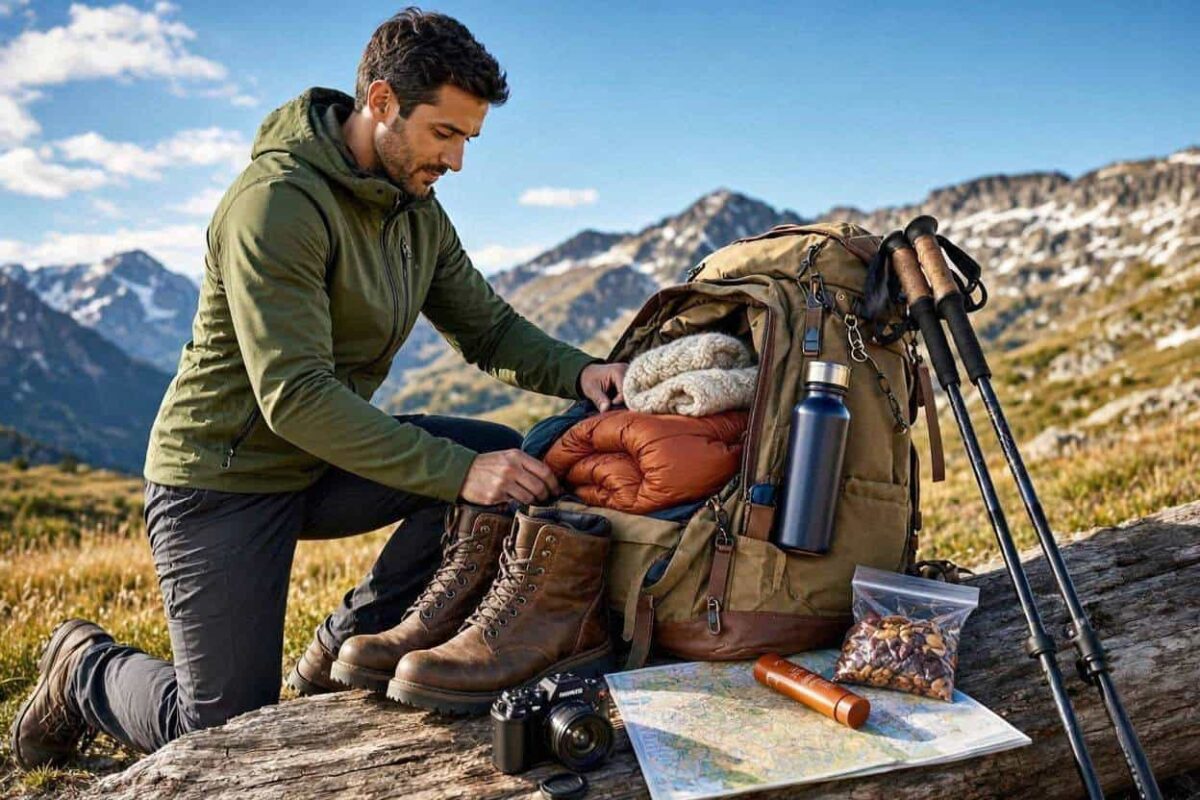
The layering system is the answer, and it works only if every layer is actually in the pack.
A moisture-wicking base layer manages sweat during the climb.
A fleece or midweight insulated jacket handles the temperature drop above treeline.
A waterproof breathable rain jacket covers the afternoon storm scenario.
A warm hat and gloves are not winter items here.
They belong in every pack from May through September, stored at the bottom until the summit wind makes them immediately relevant.
Avoid cotton in every layer.
Jeans and cotton t-shirts absorb moisture and retain it, which creates a hypothermia risk in wet conditions at elevation that has no equivalent on a lowland trail in summer.
Sun Protection
At Rocky Mountain’s elevations the UV radiation index is significantly higher than at sea level, and the intensity increases with every thousand feet gained.
Most visitors who grew up near the coast or in European climates underestimate what that means in practice.
A full day on Trail Ridge Road or the exposed tundra section above the Alpine Visitor Center delivers a sunburn that standard sun care habits would not have predicted.
Sunscreen rated SPF 30 or higher applied and reapplied throughout the day is the baseline.
Sunglasses with UV400 protection are equally important, since the reflected light off snow, granite, and open tundra compounds the direct UV exposure in ways that unprotected eyes feel the next morning.
A sun hat with a brim covers the face and neck during the long exposed sections where tree cover disappears entirely.
German visitors arriving from central Europe in July should recalibrate their sun protection habits significantly for this environment.
The elevation effect is real and it accumulates across a full hiking day faster than most people anticipate.
Hydration Tips
Mountain air is dry. The combination of low humidity, high elevation, and sustained physical effort dehydrates the body faster than hiking at sea level, and the sensation of thirst often lags behind the actual fluid deficit at altitude.
Altitude sickness, which ranges from mild headache and fatigue to more serious symptoms, is made significantly worse by dehydration.
Drinking consistently throughout the day rather than reacting to thirst is the approach that keeps the afternoon on the trail feeling manageable rather than punishing.
Carry at least two liters of water per person for any hike beyond a short loop. For multi-hour hikes above treeline, more is better.
Lip balm with UV protection addresses what dehydrated mountain air does to skin within a few hours of exposure.
Hand lotion and general moisturizer make a real difference over a multi-day trip at altitude in a way that seems unnecessary until the third day when your skin disagrees with you.
These are small items that weigh almost nothing and address the cumulative effect of an environment that pulls moisture from the body more efficiently than most visitors are used to.
Hiking Essentials
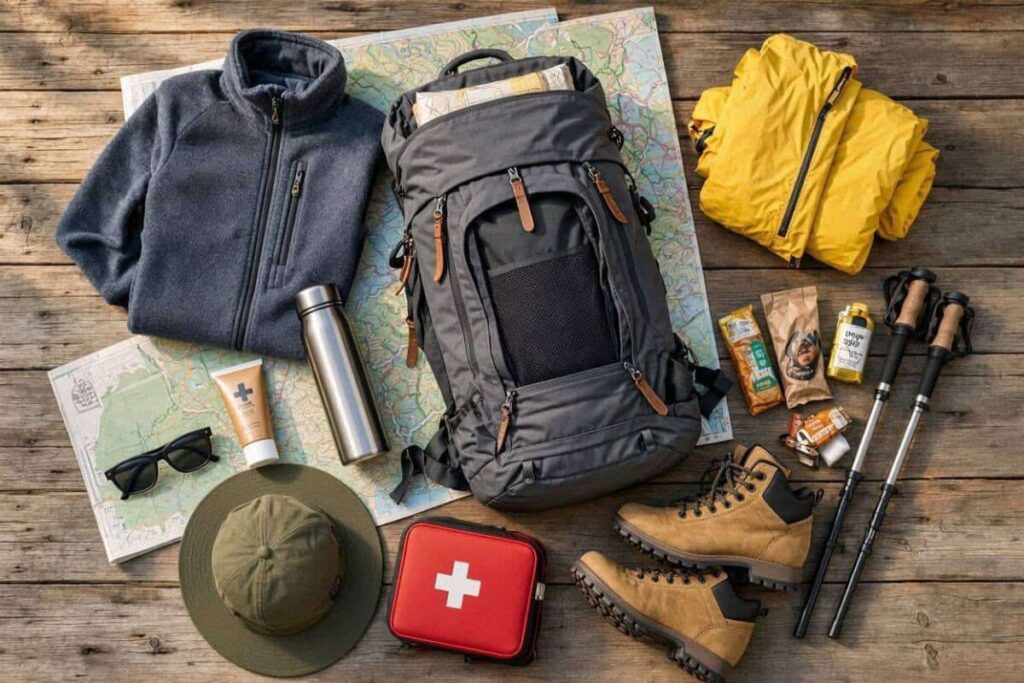
Hiking boots with ankle support are the right choice for Rocky Mountain’s trails, which combine dusty dry sections with rocky stream crossings, muddy patches after afternoon rain, and loose scree on the steeper approaches.
Trail runners work on the easier lake loops but become a liability on the rockier terrain above treeline where ankle stability matters on uneven ground.
Whatever footwear you choose, break it in completely before the trip.
The combination of elevation, distance, and the uneven mountain terrain exposes every weak point in a new boot that a neighborhood test walk does not.
A backpack sized for a day hike carries everything the trail requires without adding the weight of an overnight pack.
Inside it: water, food for the day, the layering system, a small first aid kit, a headlamp with spare batteries, sunscreen, and a map of the trail.
Cell service is absent throughout most of the park’s backcountry, which makes the headlamp and the paper map more than redundant precautions.
Getting caught above treeline after dark without a light source turns a manageable late return into a serious problem.
Binoculars belong in the pack for any visitor who came partly for the wildlife.
Elk, moose, bighorn sheep, marmots, and pika are all present in the park and active at distances that make the naked eye insufficient for anything beyond confirming their presence.
A camera with a long lens, at least 400mm, handles wildlife photography at the distances the park requires.
Approaching wildlife for a better photograph is both illegal and genuinely dangerous in this ecosystem. The lens does the work that proximity cannot.
What to Expect at the Park
There are no large grocery stores, pharmacies, or outdoor gear retailers inside the park or within easy driving distance.
Estes Park has local outdoor shops including Estes Park Mountain Shop and small grocery options, but the selection is limited and the prices reflect the location.
For visitors flying into Denver from the coasts, from Canada, or internationally from Germany, the practical approach is to stop at a Denver outdoor retailer or large grocery store on the way up and treat that stop as part of the trip logistics rather than an optional detour.
REI has a Denver location on East Colfax that covers every gear gap before the mountain drive north.
Travel insurance is worth adding to the budget for any Rocky Mountain trip, particularly for international visitors unfamiliar with US medical costs.
A helicopter evacuation from a remote backcountry trail runs into tens of thousands of dollars without coverage.
A policy with emergency evacuation and medical coverage changes the financial risk calculation on the entire trip.
The National Park Service Rocky Mountain packing and preparation page covers safety guidelines and activity-specific preparation that should be read alongside any gear checklist before arriving at the entrance station.
Packing well for Rocky Mountain is less about accumulating gear and more about understanding what the elevation, the weather, and the distance from urban infrastructure actually demand.
A pack that answers every category, layering, sun, hydration, navigation, first aid, and food, leaves you free to experience the park rather than manage its variables.
That is the point of the list.
For readers who want to sort out accommodation before finalising the gear, the best hotels near Rocky Mountain National Park guide on Tadexprof covers Estes Park lodging across all budget levels.
And if you are still deciding when to go, the timing decisions that affect everything from trail access to crowd levels are covered in full on the best time to visit Rocky Mountain National Park guide.